


The absence of serious research centers within Islamic movements and political parties in the Arab world is no longer just a lack of organizational structure or a weakness in financial resources; it has become a fundamental entry point for understanding the crisis of the Arab political mind and the nature of its relationship with knowledge and power. How can a political organization claim to possess a societal project while lacking the scientific institutions capable of analyzing reality, testing its perceptions, and anticipating its transformations? And how can it aspire to manage the state when it has failed to build knowledge institutions that help it manage its ideas and review its choices?
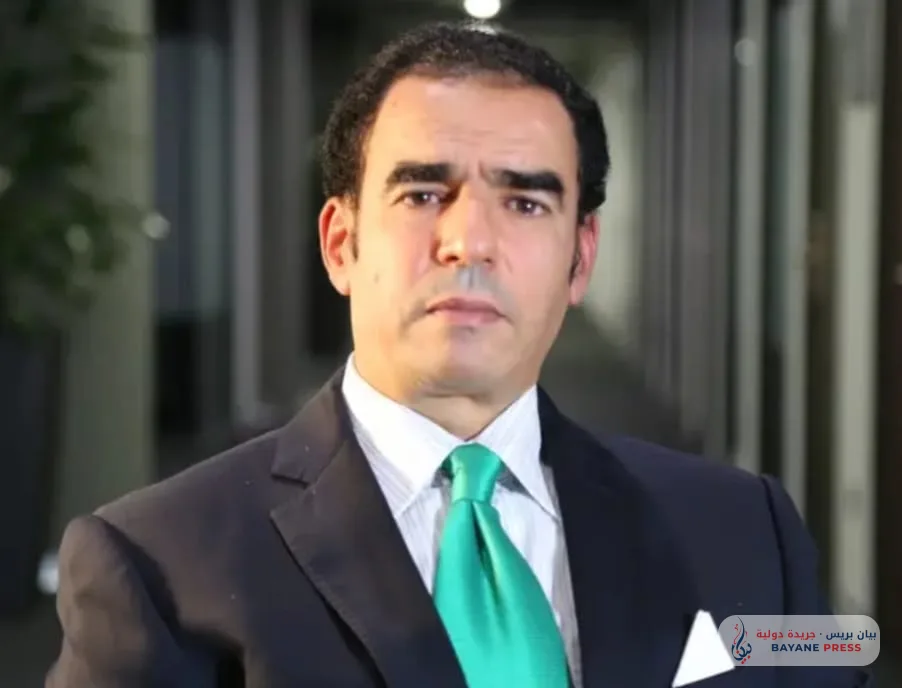
In the context of an intellectual debate on the organizational and theoretical challenges facing Islamic movements, Moroccan researcher Dr. Mohamed Hachach raised an observation that goes beyond the immediate organizational question. He linked the inability of these movements, and other components of the Arab political landscape, to establish serious and independent scientific research centers to the nature of the intellectual structure still governed by the obsession with activism and the pursuit of power. This observation reveals a structural flaw that is not linked to any specific partisan reference, but to the very conception of politics: Is it merely a battle to reach and manage power, or a project to produce knowledge, build alternatives, and shape the future?
From the Logic of Mobilization to the Logic of Knowledge
Large sectors of Islamic movements and Arab parties, with their various nationalist, leftist, and other backgrounds, emerged in environments dominated by ideological mobilization and the struggle for legitimacy and representation. Therefore, the priorities of attracting members, expanding bases, mobilizing the masses, and contesting elections took precedence over investing in scientific research and strategic thinking.
There is nothing inherently worthy of criticism in political mobilization itself, as it is a fundamental function of political organizations. However, the problem begins when it shifts from being one of the party's functions to a logic that governs its entire structure, subjecting theoretical thinking and internal criticism to the requirements of recruitment and organizational loyalty. At that point, the political mind regresses from producing knowledge to consuming slogans, and from building strategic visions to managing reactions.
Modern politics is no longer managed by passionate speeches and seasonal electoral programs; it has become a complex industry of decision-making in which economic and social indicators, demographic shifts, geopolitical balances, technological developments, and future scenarios intersect. Without research institutions capable of deconstructing and anticipating these transformations, political organizations remain chasing events and surprised by their repercussions, rather than being able to understand them and influence their trajectories.
Here lies the paradox: organizations that aspire to possess power but do not invest enough in possessing the knowledge that makes their practice rational and sustainable.
The Independence of Research and the Limits of Partisan Loyalty
The deeper ailment does not lie solely in the scarcity of financial resources or the weakness of human capabilities, but in the crisis of intellectual and institutional independence and in the nature of the relationship between knowledge and partisan decision-making. Many research initiatives linked to parties have remained captive to the organizational structure and leadership references. Some have turned into justificatory institutions whose studies are summoned to legitimize pre-made decisions, and whose data are employed to support predetermined positions instead of subjecting political choices to examination, criticism, and review.
A serious research center is not a device for producing studies that please the leadership, but an institution that tests hypotheses, deconstructs policies, reveals flaws, and allows for the review of organizational and intellectual axioms. Its independence does not mean disconnection from politics or the absence of an intellectual frame of reference, but rather possessing methodological freedom in research and reaching results even when they contradict the perceptions of the funding body or the choices of its leadership.
Partisan funding does not necessarily conflict with independence when institutional and methodological guarantees are in place to prevent the submission of results to direct political will. The value of think tanks is measured by the reliability of their knowledge and their ability to provide testable alternatives and question decisions, not by the number of studies and seminars or their degree of proximity to the leadership. An institution that cannot criticize the entity that funds it is not a research center, but an intellectual extension of its organizational apparatus.
The Crisis of Renewal: When Faces Change and the Mind Remains the Same
The absence of research centers is inseparable from the crisis of leadership and intellectual renewal facing Arab political parties and movements. Rejuvenation is not achieved simply by replacing leaders with younger ones or assigning organizational positions to youth, but requires renewing the tools of thinking, the nature of the questions posed, and the relationship between political experience and scientific knowledge.
Youth are not just an electoral asset or a mobilization energy to be summoned during elections, but a knowledge and social resource capable of questioning the organizational heritage, absorbing digital and cultural transformations, and producing new perceptions regarding society, the state, and the future. However, these potentials remain disabled when renewal is reduced to redistributing positions within the same organizational structure without reviewing the logic of its operation. Thus, rejuvenation becomes a change in ages, not in mentalities.
Related to this is the weakness of partisan media, in which large sectors of political organizations have not invested enough to develop a sober discourse capable of addressing society across its various generations. Media is not just a means to promote positions and defend choices, but a space for interpreting transformations, expanding public debate, and turning knowledge into societal awareness. When research and media institutions decline and youth and student bases weaken, the party loses its ability to renew its relationship with society, and its organizational decline becomes an expression of its inability to understand transformations, not just a result of fleeting electoral competition.
Language and Openness to Global Knowledge
The crisis of linguistic isolation is no less dangerous than the crisis of independence. Politics in today's world is no longer confined to the national sphere, and understanding international transformations cannot be achieved by relying on closed knowledge sources. Think tanks that influence decision-making operate within vast research networks and invest in multilingualism to expand the scope of knowledge, communication, and influence.
This is not about preferring one language over another or diminishing the central value of Arabic, but about realizing that language is a tool for accessing knowledge, building scientific partnerships, and following the strategic discourses of states and international institutions. Therefore, a research center aspiring to influence needs to possess the tools of research and communication in multiple languages, primarily Arabic and English.
Whoever cannot read the world in its languages and address it in them remains exposed to being a subject of analysis and classification rather than an actor in producing knowledge about it. Linguistic openness, in this sense, is not a cultural luxury but a condition for cognitive and political independence.
From Diagnosing the Crisis to the Conditions for Overcoming It
Overcoming this incapacity is not achieved simply by establishing new research centers or allocating budgets for studies and organizing seminars on intellectual renewal, because an institution created within a structure that does not accept criticism and where knowledge is subject to considerations of organizational loyalty will be nothing but a reproduction of the crisis with new tools.
What is required is to rebuild the relationship between the party and knowledge, between leadership and scientific research, and between intellectual reference and methodological independence. This is done by establishing research institutions that are independent in their management and scientific programs, with sustainable and transparent funding and mechanisms for evaluating their output according to scientific standards, not according to the degree of their compatibility with the leadership's orientations.
It also requires attracting specialized competencies in economics, public policy, sociology, international relations, and strategic studies, and opening the field for young generations to participate in producing knowledge, building partnerships with universities and independent think tanks, and engaging in international research networks.
But most importantly, research results must become an actual part of the decision-making cycle: from preparing electoral programs and developing public policies to evaluating the performance of elected officials and anticipating transformations, all the way to issuing critical reports on the party's own performance and making their results available for public debate. Knowledge that does not find its way to decision-making remains limited in impact, and decisions that are not based on it remain exposed to improvisation and misjudgment.
This does not mean turning parties into universities or reducing politics to academic research; each has its functions. What is required is a complementary relationship that preserves the independence of research, ensures its presence in formulating general choices, and establishes a political culture that makes admitting mistakes a corporate virtue, criticism a condition for renewal, and reviewing choices a normal practice, not a threat to the leadership.
From Possessing Power to Possessing the Ability to Think
The dilemma facing Islamic movements and Arab political parties is not just the absence of research centers, but the absence of a vision that makes knowledge an integral part of the political organization's function. A party that views power as the ultimate goal of its existence may treat scientific research as a means to improve its chances of reaching it, but it will not necessarily grant it its independence and will not easily accept that its results become a tool for questioning the leadership and reviewing its choices.
As for a party that views politics as a long-term societal project, it realizes that knowledge is not just a means to reach power, but a condition for exercising it rationally and a lever for developing society and building public policies that respond to the actual needs of citizens, not just to opportunistic electoral calculations.
Arab societies do not only need parties that are more capable of mobilization, but parties that possess the tools of understanding, analysis, and planning, and that can move from crisis management to building alternatives, from consuming ideas to producing them, and from invoking the past to justify the present to anticipating the future.
Perhaps the most telling paradox is that some political organizations aspire to possess state power while they have not succeeded in building knowledge institutions capable of questioning their internal power. They want to rule society but do not allow the critical mind to review their ideas, and they demand transparency and accountability while their strategic choices remain immune to scientific review.
How can someone who has not learned to listen to knowledge manage power well? And how can an organization that does not possess independent institutions to correct its course convince society of its ability to correct the course of the state?
Politics that does not produce knowledge remains a prisoner of the moment, and politics that does not accept criticism condemns itself to repeating failures. The problem is not just that Arab political parties and movements lack research centers, but that some of them still act as if possessing power makes possessing the mind that understands, practices, and questions it unnecessary.
Abdallah Mashnoun
A journalist based in Italy and an observer of political affairs.
Interested in Arab affairs, migration issues, and research into thought and Islam.

Comments (0)
No comments yet. Be the first to react!