

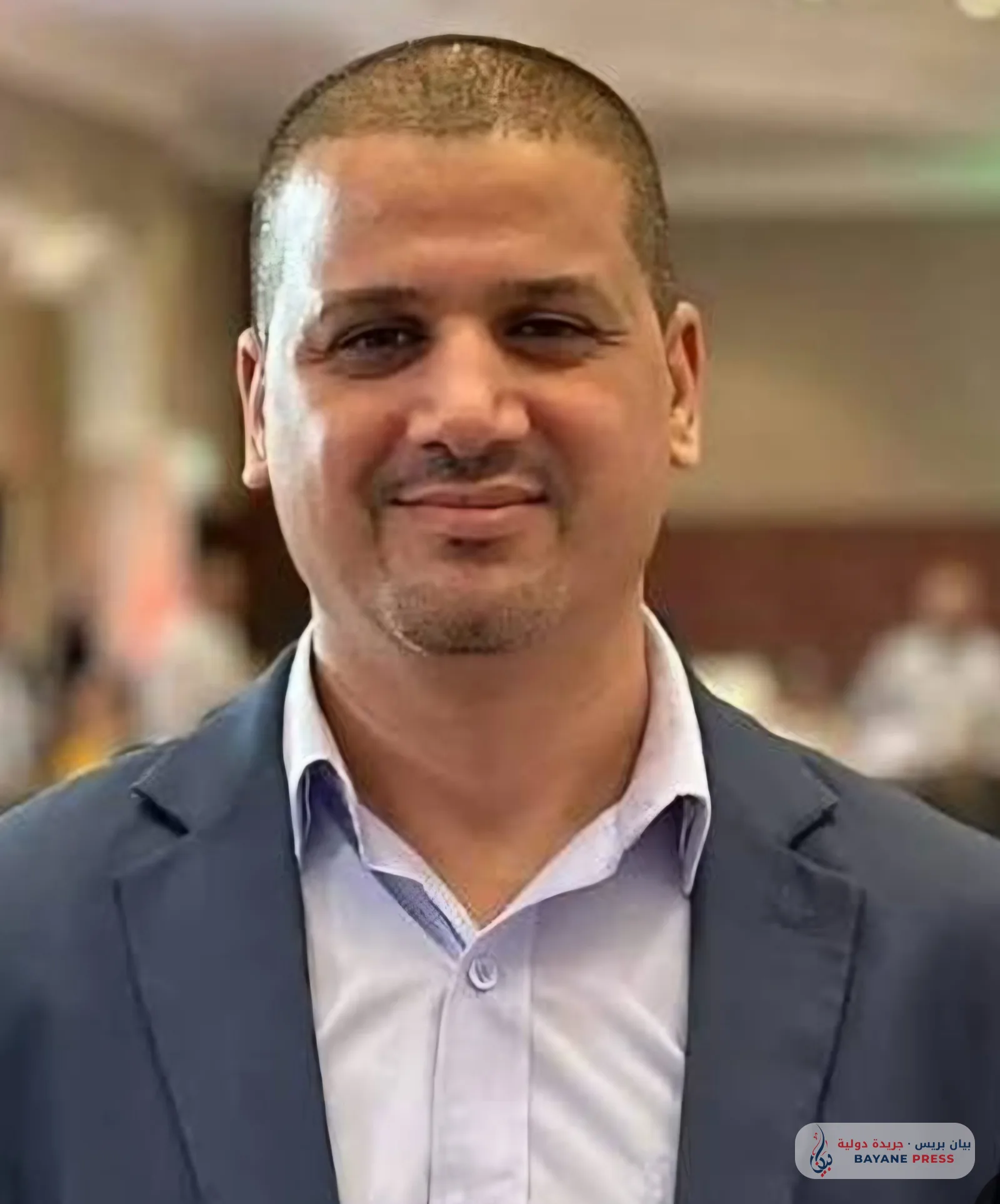
The ruling issued by the Chéraga court in the Algerian capital on Sunday, November 8, 2026, against journalist and poet Abdelali Mezghiche, has brought the issue of the relationship between media practice and the limits of freedom of expression back into the spotlight. The court sentenced him to three years of effective imprisonment and a fine of 200,000 Algerian dinars, in a legal case linked to social media posts that has drawn significant attention from journalistic, cultural, and human rights circles since its inception.
The judicial decision came after approximately nine months of Mezghiche being held in pre-trial detention, following charges of five misdemeanors, including publishing content deemed harmful to national interest, inciting unarmed assembly, and spreading false information. During the trial session held on October 25, the public prosecutor had requested a sentence of five years of effective imprisonment and a fine of the same amount, before the court decided to reserve the case for deliberation and deliver its verdict on November 8.
The case dates back to February 5, 2026, when Algerian security services arrested the journalist in the capital, before presenting him on the 9th of the same month to the competent judicial authorities, where a decision was issued to place him in the Koléa correctional facility. On February 22, the Indictment Chamber of the Algiers Court upheld the pre-trial detention decision and rejected the release request submitted by his defense team, meaning he remained in custody until the primary verdict was issued.
According to information provided by media outlets and human rights organizations, the case is linked to posts Mezghiche published on his Facebook account, in which he discussed the state of tension in the Djanet region, southeastern Algeria, following the imprisonment of local figures and the resulting discontent among some residents. His page had more than 130,000 followers, which gave his posts significant reach beyond traditional media activity.
Among the events mentioned in media coverage of the case was Mezghiche's publication of a photo of former Algerian Prime Minister Abdelaziz Belkhadem during an unannounced visit to the Djanet region, in the context of efforts reported by the press to calm local disputes. However, available information does not allow for confirmation that this specific post was the direct cause of his conviction, especially since the full texts of the posts in question and the precise details of all charges have not been published in a way that allows for independent verification.
During the trial, Mezghiche denied the accusations against him, maintaining that the information he published was accurate and had been verified, and that his activity fell within the scope of journalistic work. He was defended by a team including lawyers Fatiha Rouibi and Abdallah Haboul, who presented their arguments to the court, emphasizing the professional nature of the published content. Following the verdict, lawyer Abdallah Haboul announced the defense team's intention to file an appeal before the Algiers Court, meaning the case has not yet reached its final judicial stage.
Abdelali Mezghiche's presence is not limited to social media platforms; he is a well-known Algerian media and cultural figure. He worked at the Public Establishment of Algerian Television since June 2005, following experience in print journalism, and also hosted and produced cultural programs. In addition to his media career, he is known for his interest in poetry and literature, having published three poetry collections: "Because You Are Not Like All Women" in 2002, "More Love" in 2017, and "A Man in the Last Gale" in 2023, as well as participating in cultural activities and events both inside and outside Algeria.
The journalist's arrest had sparked solidarity reactions prior to the verdict, most notably a petition signed last March by 36 writers, journalists, and academics, in which they demanded his provisional release, emphasizing the need to consider the exceptional nature of pre-trial detention and to guarantee the rights of those under judicial investigation.
The Committee to Protect Journalists (CPJ) also intervened in the case on February 10, when it called on Algerian authorities to release Mezghiche and drop the charges against him, expressing concern over the use of security and national interest-related charges to prosecute journalists for their posts. The organization stated that protecting the freedom of media work requires enabling journalists to cover public issues without fear of custodial sentences due to their professional activity.
The ruling against Mezghiche once again puts the question of the balance between the requirements of law enforcement and the protection of press freedom to a practical test, especially when journalists' personal posts overlap with their professional activity and their coverage of socially or politically sensitive issues. While the prosecution is based on charges stipulated in Algerian legislation, the defense maintains that what its client published falls within the scope of expression and reporting, a dispute that is expected to form a central focus in the appeal stage.
Between a primary court ruling of three years of imprisonment and a defense team preparing to challenge it, the case of Abdelali Mezghiche remains open to new judicial developments, at a time when the debate transcends the fate of a single journalist to a broader question regarding the space available for media work, the limits of legal responsibility for publishing, and the guarantees that should surround a journalist's right to report facts and discuss public affairs.
Comments (0)
No comments yet. Be the first to react!