


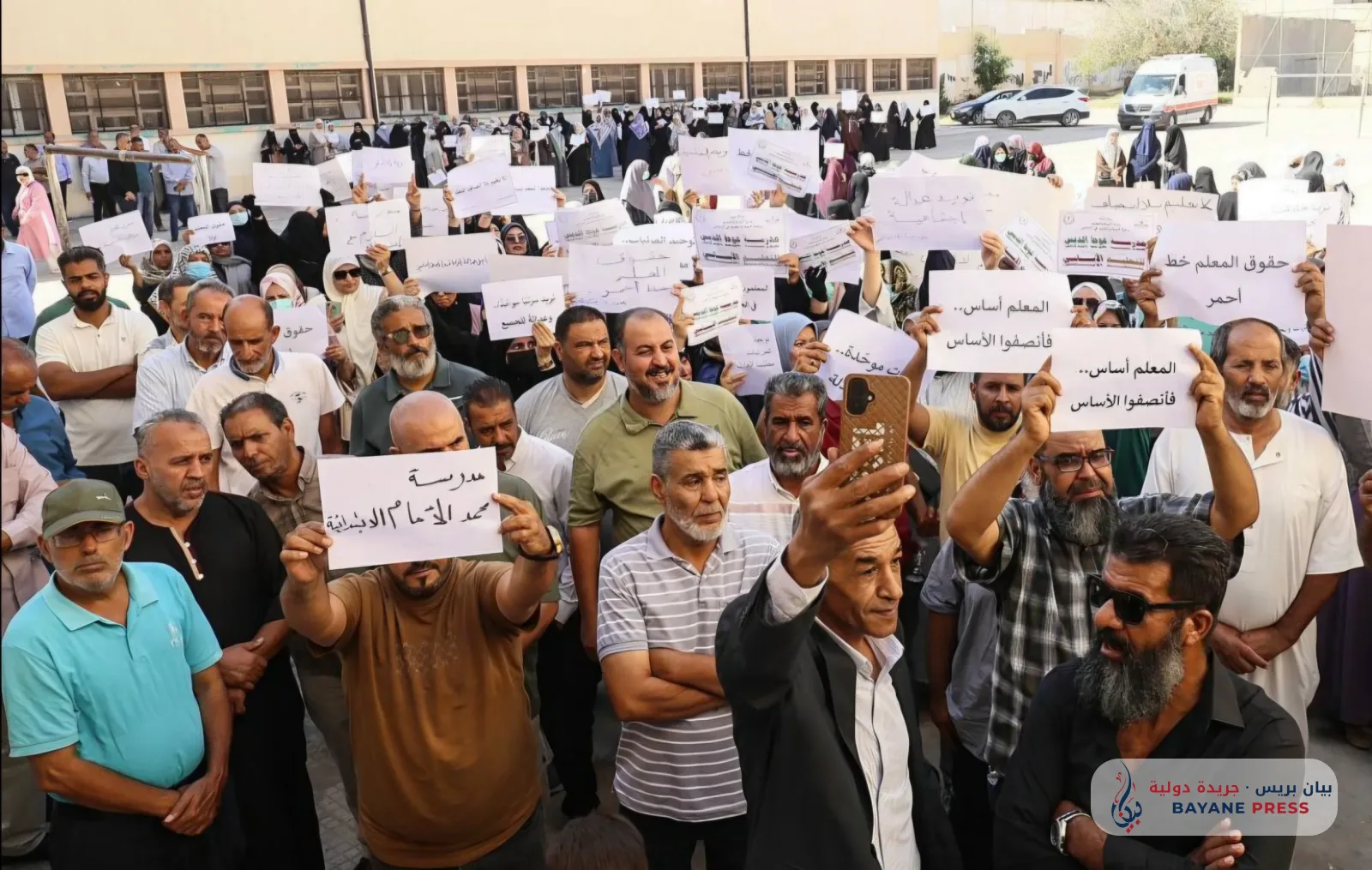
The education crisis in Libya enters a new phase of tension between official institutions and labor unions, following the Internal Security Agency's announcement of an agreement to reopen schools and resume classes, at a time when teacher representatives remain steadfast in their financial and professional demands, rejecting the resolution of the dispute through security interventions.
The announcement followed a meeting held by the agency on Saturday, November 7, 2026, with the participation of several teachers' union leaders and education supervisors from various municipalities. The meeting was dedicated to discussing the reasons behind the disruption of the academic year and the repercussions of continued school closures on Libyan students and families.
According to the statement issued by the Internal Security Agency, the discussions resulted in an agreement directing schools under the participating educational offices to open their doors immediately and resume activities, while emphasizing the importance of insulating the educational process from disputes that could affect the country's stability.
The agency argued that the continued suspension of studies does not only deprive students of education but also impacts social stability, pointing to what it described as attempts by certain parties to exploit teachers' demands to achieve goals beyond the professional and union framework.
However, the announcement of the agreement has not ended the controversy. The General Teachers' Union expressed its rejection of the summoning of several of its representatives by security authorities, maintaining that the existing dispute requires substantive solutions that address legitimate demands, rather than pressure aimed at ending the strike.
The roots of the crisis trace back to ongoing protests since September 13, during which teachers have been demanding improved wages, the implementation of a unified salary scale, the payment of financial arrears and dues for contract workers, and the provision of health insurance.
In a new development, the Tripoli Central Teachers' Union issued a legal memorandum on Monday, calling for respect for the independence of union work and rejecting any measures involving threats or coercion against teachers for their participation in peaceful protests.
The union emphasized that resolving the crisis requires institutional dialogue and the fulfillment of financial and professional obligations, stressing that protecting students' right to education should not come at the expense of the legal and social rights of teachers.
These developments place Libyan authorities before a dual challenge: ensuring the regularity of studies and protecting the future of students, while simultaneously finding an acceptable settlement for the teachers' situation. Despite the announcement of recent understandings, a comprehensive return to classrooms remains contingent upon the extent to which educational institutions and union bodies respond to them—a matter not yet confirmed by independent field data covering all affected schools.
Comments (0)
No comments yet. Be the first to react!