


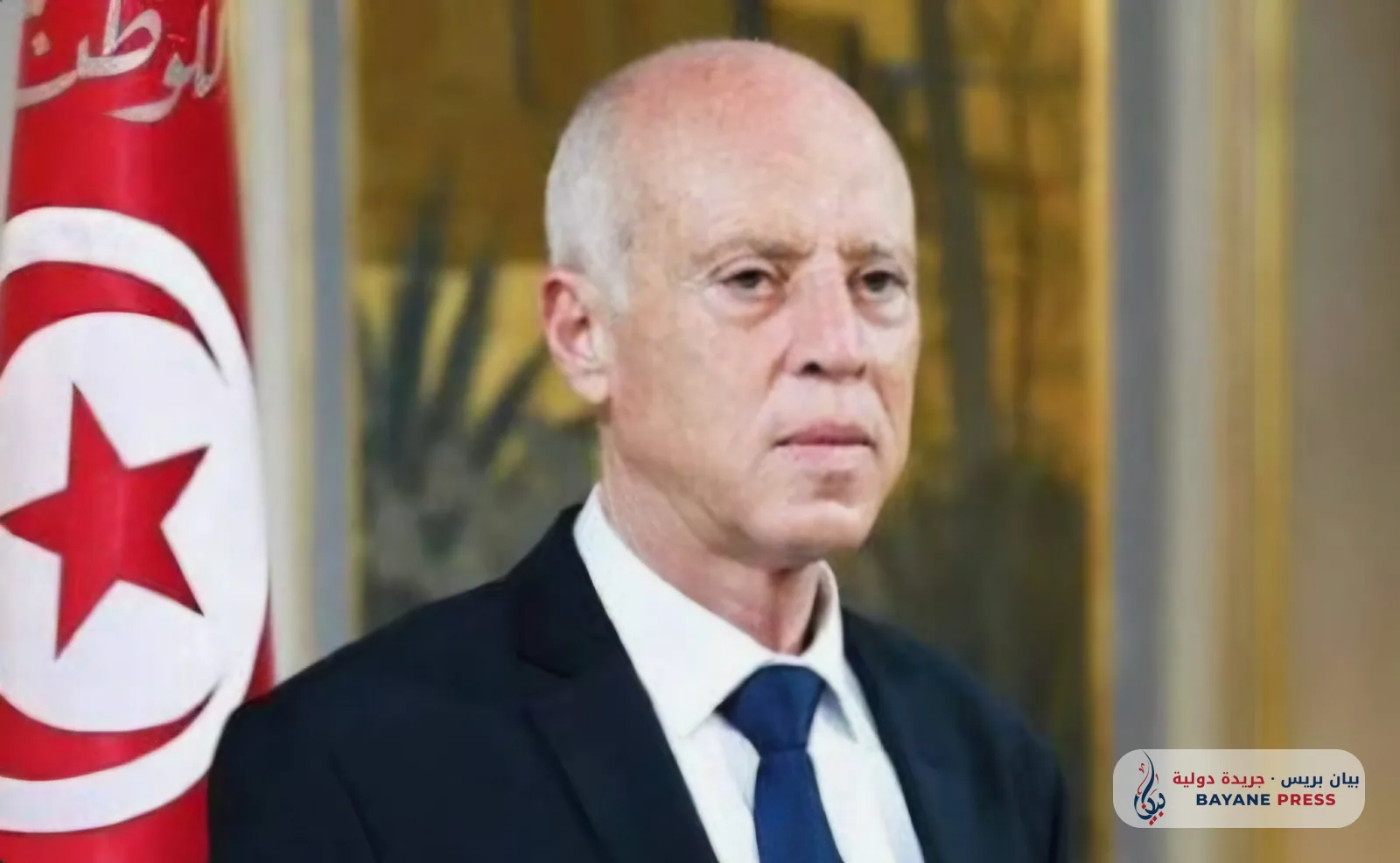
Tunisian President Kais Saied has reignited debate over the causes of the series of crises the country has faced over the past months, after speaking of suspected deliberate planning behind forest fires and water supply disruptions, arguing that the coincidence of these events cannot, from his perspective, be explained by mere chance.
The President's remarks came during a field visit on Sunday, November 8, 2026, to the Bargou region in the Siliana Governorate, on the occasion of the National Tree Day celebration, where he participated in reforestation activities in areas affected by the fires that swept through parts of the forest cover last summer.
Saied stated that the occurrence of the fires in conjunction with water supply disruptions and rising temperatures raises questions that require investigation and the determination of responsibilities, noting that some of the incidents he spoke about were, according to him, the result of pre-planned acts.
The Tunisian President went on to mention the existence of confessions attributed to individuals suspected of involvement in those events, confirming that the judiciary will take charge of determining responsibilities and holding accountable anyone proven to have participated in, planned, or funded criminal acts.
Saied linked these developments to other economic and social conditions, including rising prices and the disruption of certain essential services, accusing networks linked to what he calls the "former system" of seeking to regain their influence by creating crises and destabilizing state institutions.
However, these accusations, despite coming from the highest authority in the country, were not accompanied in published press reports by independent judicial details identifying the accused or evidence proving an organized link between the fires, water outages, and price hikes, which keeps them within the realm of presidential statements that require the completion of investigations and the announcement of their results.
The presidential visit included areas damaged by the fires that broke out in late August and early September, which destroyed, according to local data, more than two thousand hectares of forest land, including pine forests and olive trees, with no deaths recorded according to the data published about those fires.
In another part of the visit, the President recalled the events of November 8, 1954, when Tunisian mountainous regions witnessed clashes between resistance fighters and French colonial forces, emphasizing that defending the country's independence and sovereignty requires, in his view, continuing what he describes as the battle for national liberation on both economic and institutional levels.
He also visited the Sidi Amer primary school in Siliana Governorate, which has achieved outstanding results at the Arab level, praising the efforts of the educational staff and their ability to achieve success despite limited resources.
Saied also touched upon the tourism and natural potential enjoyed by the Bargou region, calling for better investment in its historical and environmental sites and the development of infrastructure to allow for the stimulation of the local economy and the creation of new development opportunities.
The President's statements reflect the continued official focus on the hypothesis that there are parties aiming to disrupt public utilities and incite unrest, while knowing the actual causes of the fires and water outages, and determining whether there are criminal links between them, remains a matter that requires documented investigations and announced judicial results, far from political conclusions alone.

Comments (0)
No comments yet. Be the first to react!