

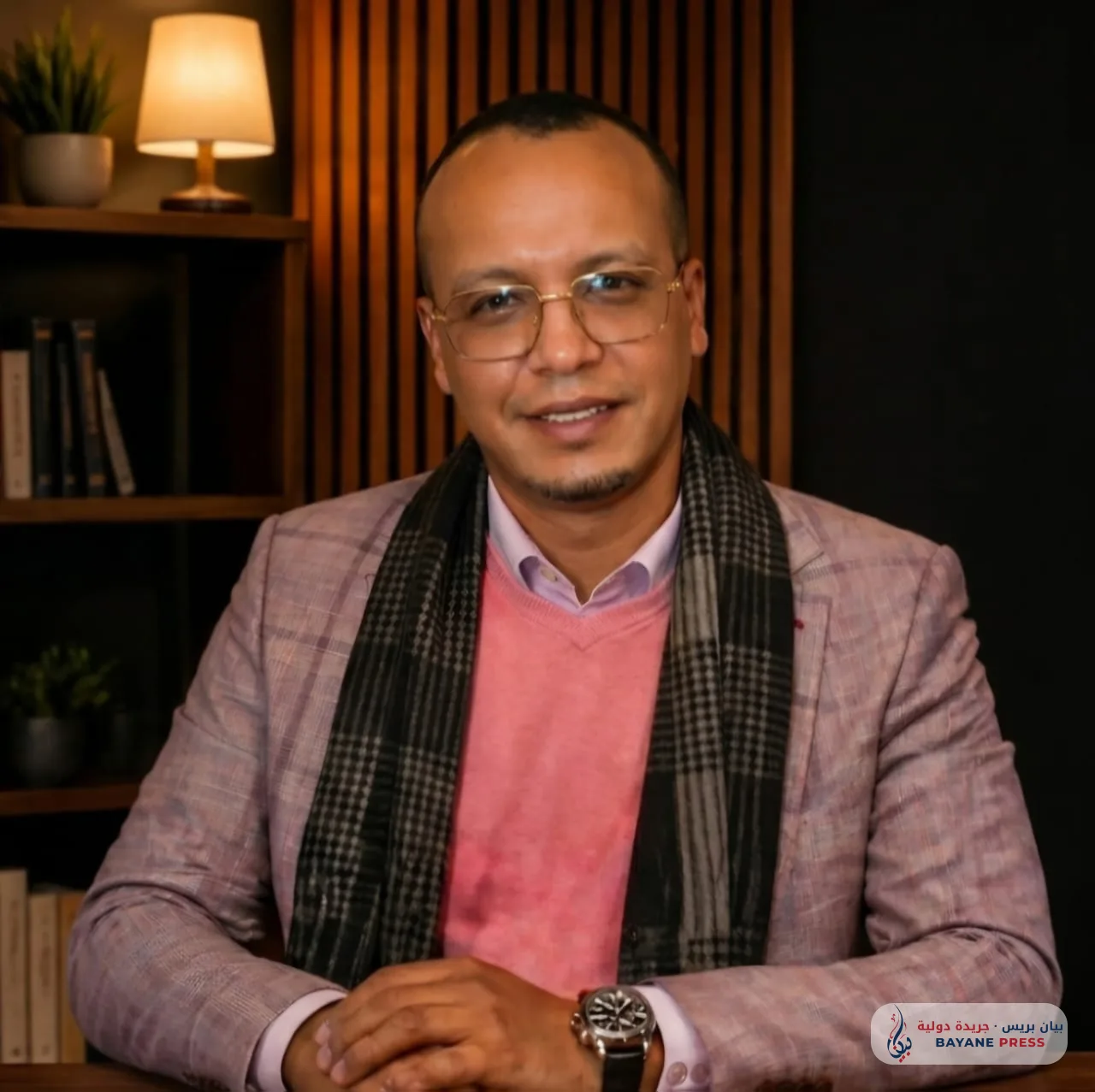
Following the announcement of Gadi Eisenkot's selection to form the Israeli government, a question arises from the perspective of Moroccan interests that transcends the man's origins: Does Rabat benefit more from the continuation of Benjamin Netanyahu, whose name has been associated with significant diplomatic gains, or from the rise of a former military commander who hails from a Moroccan family, who might give the relationship a different face? The answer requires distinguishing between the appeal of identity and the effectiveness of policy, and between choosing a candidate to form a government and that candidate's success in securing a majority to lead them to power. According to a Reuters report on Saturday evening, November 7, 2026, Eisenkot is scheduled to receive the mandate on Sunday, November 8, which opens a phase of negotiation rather than a guaranteed transition of power.
To understand this comparison, one must return to the period before the 2020 understandings. The Moroccan-Israeli relationship did not begin with Netanyahu; the exchange of liaison offices was announced in 1994, during the era of Yitzhak Rabin's government, within the climate created by the peace process. The offices were then closed in 2000 with the outbreak of the Second Palestinian Intifada.
This precedent reveals that the relationship is older than today's competitors, and that historical and human ties did not prevent the decline of official representation when the Palestinian-Israeli conflict intensified.
As for the current phase, it began in December 2020, as part of an understanding sponsored by Washington that combined the resumption of Moroccan-Israeli relations with American recognition of Morocco's sovereignty over the Sahara. Netanyahu was a key party in this milestone, but reducing it to a personal initiative of his obscures the role of Moroccan diplomacy in negotiating and defining the expected gains. Rabat entered the path with calculations related to its national cause and strategic interests, and restored a relationship that had existed at a limited level two decades earlier.
In this context, Axios reported in January 2023, citing Israeli officials, that Rabat linked the upgrading of diplomatic representation to Israel's recognition of its sovereignty over the Sahara. Although this is a narrative attributed to Israeli sources, it sheds light on an important aspect of the comparison: Moroccan gains are also the result of negotiation, not privileges granted by an Israeli prime minister on his own initiative. Thus, the results depend on what Rabat can negotiate, as much as they depend on the identity of its partner.
Experience confirms that institutional building continued outside the Netanyahu era. In November 2021, Benny Gantz and Abdellatif Loudiyi signed a defense cooperation memorandum that included the exchange of expertise, training, technology transfer, and industrial cooperation. In March 2022, the Moroccan Ministry of Industry announced a cooperation memorandum with Israel Aerospace Industries, which included opportunities for manufacturing, research, development, and the growth of a local supplier network. These steps were taken during the Bennett-Lapid government, reinforcing the conclusion that cooperation is based on institutional interests that transcend the tenure of any specific leader.
After returning to power, Netanyahu's name was associated with a significant diplomatic gain for Rabat: Israeli recognition of Morocco's sovereignty over the Sahara in July 2023. The recognition was not presented as a personal stance; rather, it was announced that it would be reflected in the Israeli government's actions and relevant documents. This gives the expectation of its continuation after a change of government an institutional basis, without justifying the certainty that it cannot be reviewed. Thus, the question posed to Eisenkot, if he reaches power, is: what will he add to the existing recognition and how will he translate it into practice?
However, the war on Gaza subsequently imposed a heavy political and popular cost on the rapprochement. The Arab Barometer documented a decline in support for normalization in Morocco from 31 percent in 2022 to 13 percent in a poll conducted between December 2023 and January 2024. These figures do not represent a measurement of public opinion in November 2026, but they reveal the scale of the decline recorded after the outbreak of the war, and clarify that the development of official relations does not necessarily mean their widespread acceptance within society.
Despite this pressure, the path of upgrading relations continued. In the tripartite declaration issued on September 16, 2026, Morocco, Israel, and the United States confirmed the intention to upgrade the missions to embassies and exchange ambassadors, take measures to resume direct flights, and complete the investment protection and double taxation avoidance agreements before the end of the year. These commitments provide a political framework for the next phase, with the need to distinguish between their announcement and their full implementation.
Here, the Netanyahu paradox becomes clear: his name was associated with diplomatic milestones that Rabat benefited from, while his alliance with the far-right and his government's policies toward the Palestinians made the rapprochement more difficult to defend popularly. As for Eisenkot, his Moroccan origins give him a different symbolic capital; he was born in Tiberias to parents who immigrated from Morocco, which could add an emotional and cultural dimension to communication with the Kingdom if he reaches the premiership.
This does not mean that Moroccan origins were not present before him in Israeli decision-making centers and in cooperation with the Kingdom. Amir Peretz, born in Bejaad, served as Minister of Defense, and then participated as Chairman of the Board of Israel Aerospace Industries in signing the industrial cooperation memorandum with Morocco in 2022.
Therefore, what is potentially new with Eisenkot relates to the position of Prime Minister, while human, political, and industrial bridges have existed for years. Their practical value is measured by the understanding and projects they facilitate, in addition to their cultural significance.
Eisenkot's positions do not allow him to be presented as a guarantee for a shift toward resolving the Palestinian issue. Coverage of his electoral positions showed his rejection of the establishment of a Palestinian state, while differing from Netanyahu on some West Bank policies and coalition partners. For this reason, the possibility of forming a government that is less embarrassing for Rabat remains conditional on its actual behavior and its ability to curb settler violence and avoid escalation; excluding far-right figures, if achieved, is not enough on its own to prove a change in policy.
His ability to implement any direction remains contingent first on securing a majority. The recommendations he received do not equate to a ready-made coalition, in light of disagreements over cooperation with Arab parties and the divergent interests of forces opposed to Netanyahu. These constraints may push a potential government to focus on its survival, or limit its ability to launch broad foreign initiatives. For this reason, continuing existing files seems a more conservative expectation than assuming an exceptional breakthrough in the relationship with Morocco.
On the Moroccan side, the stance on Palestine goes beyond calculations of internal protests. King Mohammed VI chairs the Al-Quds Committee, and the declared Moroccan position emphasizes protecting the legal and historical status of the city and supporting the establishment of a Palestinian state. Thus, respecting the holy sites and limiting measures that undermine a settlement constitute an independent criterion for evaluating any Israeli government.
Any decision related to Jerusalem or settlements may affect the relationship between the two countries more than a family visit or a speech invoking Moroccan origins.
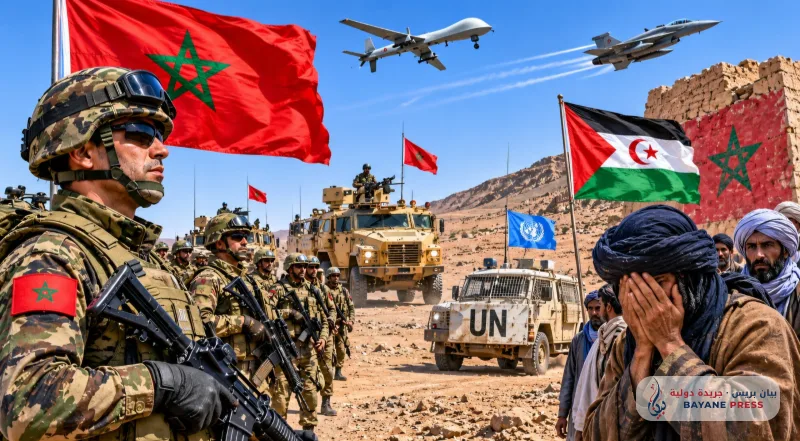
Regarding the Sahara file, a distinction should be made between Israeli support and the UN process. Resolution 2797, issued in 2025, made the Moroccan autonomy proposal a basis for negotiation, while maintaining the goal of reaching a final solution acceptable to the parties. As for the non-renewal of the MINURSO mandate at the end of October 2026, after the stalling of renewal projects, it does not in itself mean the issuance of a UN decision to close the dispute. In this context, the next Israeli government can be evaluated by the extent of its implementation of its commitments and taking practical steps in consular representation or economic cooperation in the southern provinces, without presenting those steps as predetermined.
Economically, trade exchanges recorded about $105.5 million in the first half of 2026, according to data published by the Heritage Foundation. But the value of trade alone is not enough to measure Moroccan benefit; evaluation criteria include the amount of manufacturing, training, job opportunities, and knowledge transfer created within the Kingdom. The 2022 industrial cooperation memorandum already proposed these areas, making the implementation of projects and the expansion of local participation a more significant test than merely counting agreements or announcing deals.
Netanyahu has a record of decisions that Rabat has benefited from, and Eisenkot may offer a different style in managing the relationship, but judging either of them should be based on results. The most beneficial for Morocco is the one who turns commitments into actionable gains, respects the Kingdom's interests, and helps reduce the tension that puts cooperation under constant pressure. Moroccan origins may give the meeting extra warmth, but its outcome is determined by decisions and the Moroccan ability to negotiate them, while maintaining its commitments toward Palestine.
Comments (0)
No comments yet. Be the first to react!