


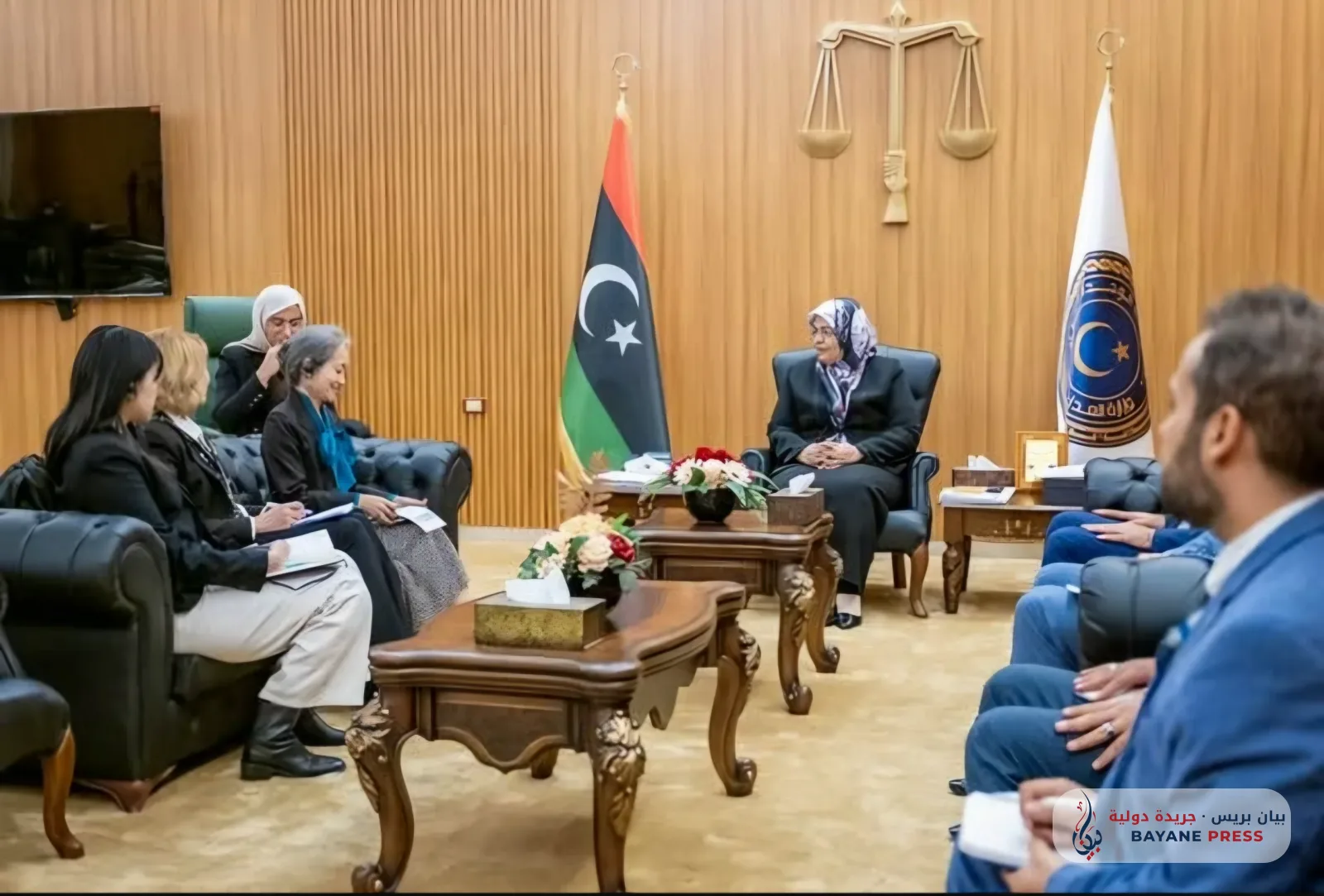
Libyan authorities are seeking to expand areas of cooperation with UN institutions to modernize the justice sector and develop its services, as part of efforts aimed at improving the performance of judicial and administrative institutions and facilitating citizens' access to legal services, especially for groups facing difficulties in obtaining them.
In this context, the Minister of Justice of the Government of National Unity, Counselor Halima Ibrahim, held talks in Tripoli with Shoko Noda, Assistant Secretary-General of the United Nations, Assistant Administrator of the UNDP, and Director of the Crisis Bureau, in the presence of Sophie Kemkhadze, the Resident Representative of the program in Libya.
The meeting, which took place on Sunday, November 8, 2026, focused on opportunities to strengthen cooperation in the areas of the rule of law and human rights, the development of digital justice services, as well as institutional capacity building and support for rehabilitation programs.
These moves are part of efforts to modernize the methods of providing legal and administrative services, allowing for the use of digital technologies to simplify procedures, improve the efficiency of the concerned institutions, and reduce the difficulties that citizens may face when dealing with the justice system.
The discussions also addressed the importance of expanding access to justice services to include various social groups, with special attention given to women, children, and families of missing persons, given the legal, administrative, and social challenges these groups may face.
The United Nations Development Programme (UNDP) affirmed that cooperation with Libyan institutions aims to support national efforts to improve access to justice and enhance the ability of competent authorities to provide more comprehensive services that respond to the needs of citizens.
For her part, the Minister of Justice expressed her appreciation for the technical support provided by the United Nations, and for the institutional capacity-building programs and assistance in developing the justice sector, considering international cooperation as part of the efforts aimed at supporting stability and strengthening the rule of law in Libya.
These talks come in light of the need for Libyan institutions to develop their administrative and technical infrastructure, which helps improve the services provided to citizens and enhances trust in the institutions responsible for law enforcement.
However, the announced information did not include a timeline for the implementation of new projects, or details about the funding allocated to them, nor was the launch of a complete digital judicial system announced. Therefore, the talks remain a preliminary step for developing cooperation, the practical results of which depend on the programs that will be adopted and the mechanisms for their implementation during the coming period.

Comments (0)
No comments yet. Be the first to react!