


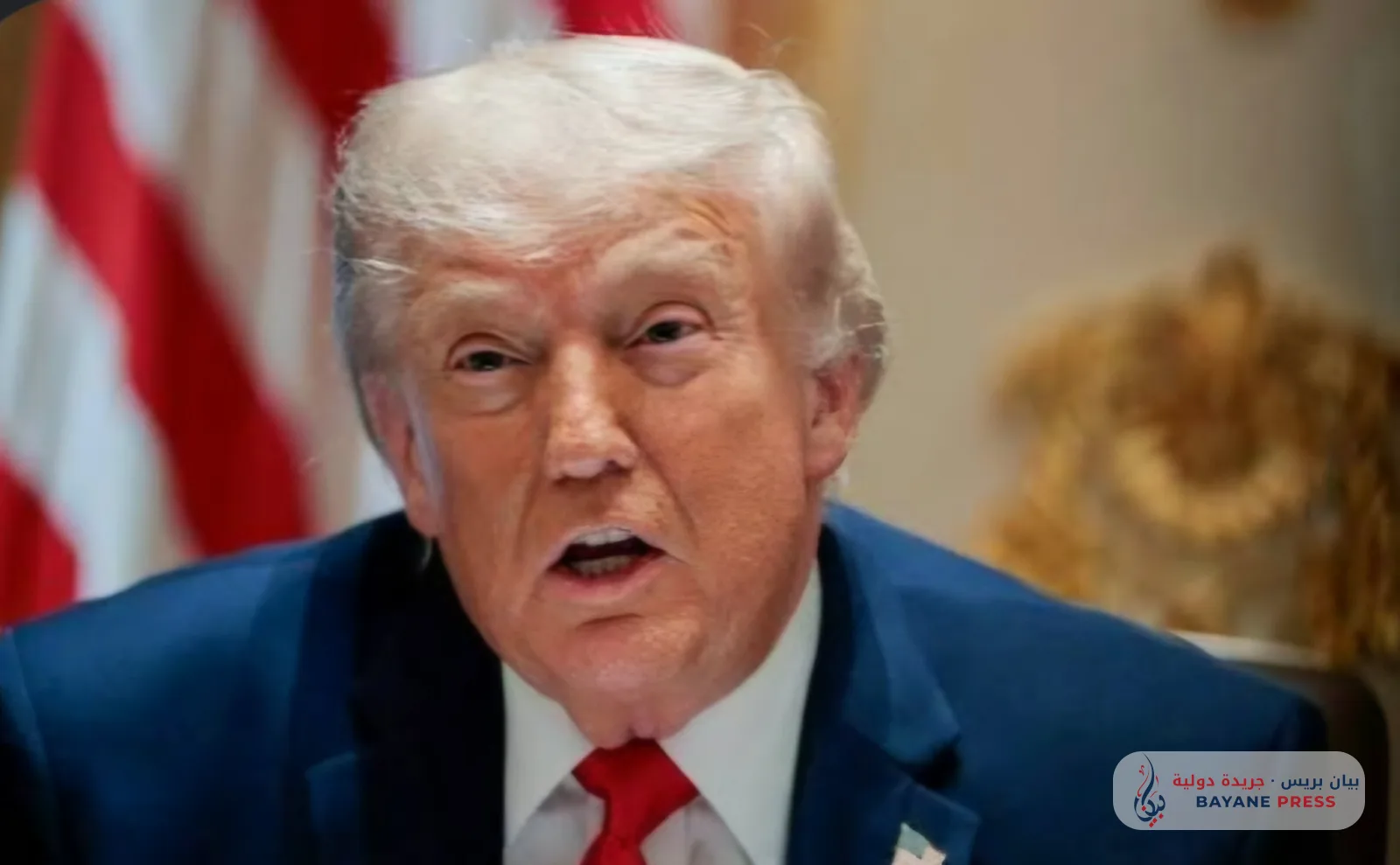
The interview conducted by US President Donald Trump with the "60 Minutes" program, broadcast by CBS on the evening of Sunday, November 8, was not merely an attempt to explain his party's defeat in the midterm elections. Rather, it revealed a striking political paradox: a president who admits that some of his decisions burdened Americans and weakened Republican prospects, yet clings to the essence of those decisions, as if the problem lies in the timing of their implementation and the way they were presented to the public, rather than in the policies themselves.
Between acknowledging the damage and refusing to backtrack on its causes, Trump appeared more prepared to adjust his rhetoric than to change his approach.
The interview, conducted by journalist Ross Douthat at the White House on Friday, followed an electoral setback in which Republicans lost more than forty seats in the House of Representatives and at least seven seats in the Senate, giving Democrats the expected control over both chambers of Congress as the new legislative term begins in January 2027. The loss was not just a shift in the majority; it extended to traditional Republican strongholds, signaling a widening circle of opposition to the US administration's performance.
However, Trump's reading of the defeat was marked by a clear contradiction. He acknowledged that the war on Iran and rising fuel prices had stirred voter discontent, before attributing the main reason for the loss to his personal absence from the ballot, suggesting that his popularity did not transfer sufficiently to his party's candidates. Yet this explanation clashes with his responsibility for supporting a number of candidates who failed, including Ken Paxton in Texas. When confronted with the results of his choices, he argued that Senator John Cornyn would have lost as well had he run. More tellingly, exit polls conducted by CBS showed that about 63 percent of voters were dissatisfied with his performance, and 44 percent considered his opposition a motivation for their vote.
On the economy, Trump defended his administration's record, citing stock market performance and the rising value of retirement accounts, but acknowledged a flaw in communicating the economic message, hinting at his personal responsibility for that. He promised that Americans would see improvement in the coming months with the return of industrial activity. However, exit polls reflected a different reality; nearly three-quarters of voters described the state of the economy as bad or not good, while about two-thirds felt his tariff policies had harmed the US economy. Here, the crisis goes beyond weak political rhetoric to a gap between indicators the White House boasts about and the living burdens felt by citizens in the prices of food, energy, housing, and services.
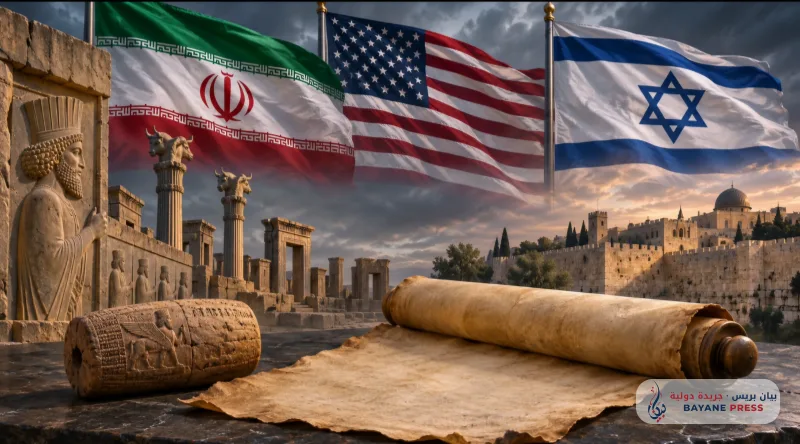
As for the war on Iran, it formed the clearest test of the limits of the review Trump was willing to undertake. His Vice President, JD Vance, considered the military confrontation the primary reason for the electoral defeat—an assessment the President did not oppose in principle, but he emphasized that if he returned to the moment of deciding to attack Iran, he would choose the same path without hesitation. He went on to say that history would vindicate his decision, even if its political cost is high at the present time. Thus, he acknowledged the repercussions of the war on the American home front without admitting that waging it was a mistake.
Despite holding his ground, Trump denied seeking a new military escalation against Tehran, asserting that he sees no reason for it. He also expressed confidence in the possibility of reaching an agreement, even though he noted that the results of the US elections gave the Iranian side "some hope." A political dilemma arises here that transcends the boundaries of the interview; the defeat that weakened the President's position domestically may also affect Washington's ability to manage negotiations externally, especially when adversaries realize that the administration faces increasing pressure to end the confrontation and reduce its economic and military costs.
On the issue of immigration, which formed one of the pillars of Trump's political rise, the admission was more direct. He praised the border closures and tightened controls, but acknowledged that deportation campaigns were harsher than necessary in some cases, especially when they affected immigrants who held good jobs and whose only violation was entering the country illegally. He expressed his willingness to reach an understanding with the Democrats on this file. This is a striking shift in the tone of a president who made mass deportation a central theme of his campaign, though it does not yet represent an announcement of an actual change in policy.
The interview reached its peak of tension when Douthat moved to the President's wealth. The billions added to Trump's fortune during his term, including revenue from the family's cryptocurrency projects, reinforced the impression among many Americans that his private interests take precedence over the country's interest. Trump merely said that everyone profited, to which his interviewer replied that no one profited nearly three billion like him. He then asserted that he barely pays attention to his wealth, that his investments are in general indices, and that his children manage the company, not failing to mention Obama's deal with Netflix. A defense that did not close the file, but made the question about the dividing line between the White House and the family business more urgent.
Inside the administration, he spoke of "some changes" to come while confirming his satisfaction with his team. Yet, within an hour, the departure of Susie Wiles as White House Chief of Staff was announced, with Stephen Miller replacing her—an appointment that is hard to read as a step toward moderation, because Miller is one of the primary architects of the immigration policy that the President just admitted was harsh. Trump defended Secretary of Defense Pete Hegseth, deeming the Democrats' demands for his removal unfair, based on the fact that Washington won the two wars. When asked about the possibility of his own impeachment for the third time, he replied with a question: "What did I do?"
Regarding the post-2028 phase, Trump kept the door ajar: he might support a successor and he might not; his party is full of names, led by Vance and Rubio, and his endorsement, if it comes, will be decisive. On the issue of pardons, he pledged to issue a very large number of decisions before leaving, joking that those close to the Oval Office might get their share. He did not rule out pardoning himself, recalling his pardons for those accused in the January 6 events. With a Democratic Congress preparing to launch investigations, a pardon becomes a protective shield rather than just a constitutional power.
In conclusion, the questions moved away from politics, but got closer to the man. Regarding UFOs, he said he does not believe in them much, but military pilots he trusts told him "very strange" things. Regarding the afterlife, he said he is religious and that he will go to heaven "theoretically." When asked if he was capable of forgiving his opponents to reach it, he answered without hesitation that he could not, because he hates some of his enemies and will continue to hate them.
In this answer, the interview summarizes itself. Trump is prepared to admit a mistake here and a shortcoming there, and to open the door to negotiation on one file, but he does not accept any compromise to the image he has painted for himself: a leader who only loses if he is absent, and whose decisions will be vindicated by history, no matter how much the present condemns them. Between partial admission and deep-seated stubbornness, the last two years of his presidency will be shaped, and a question that haunts Republicans will be settled: will they remain behind their leader, or will they start thinking about the phase after him?


Comments (0)
No comments yet. Be the first to react!