

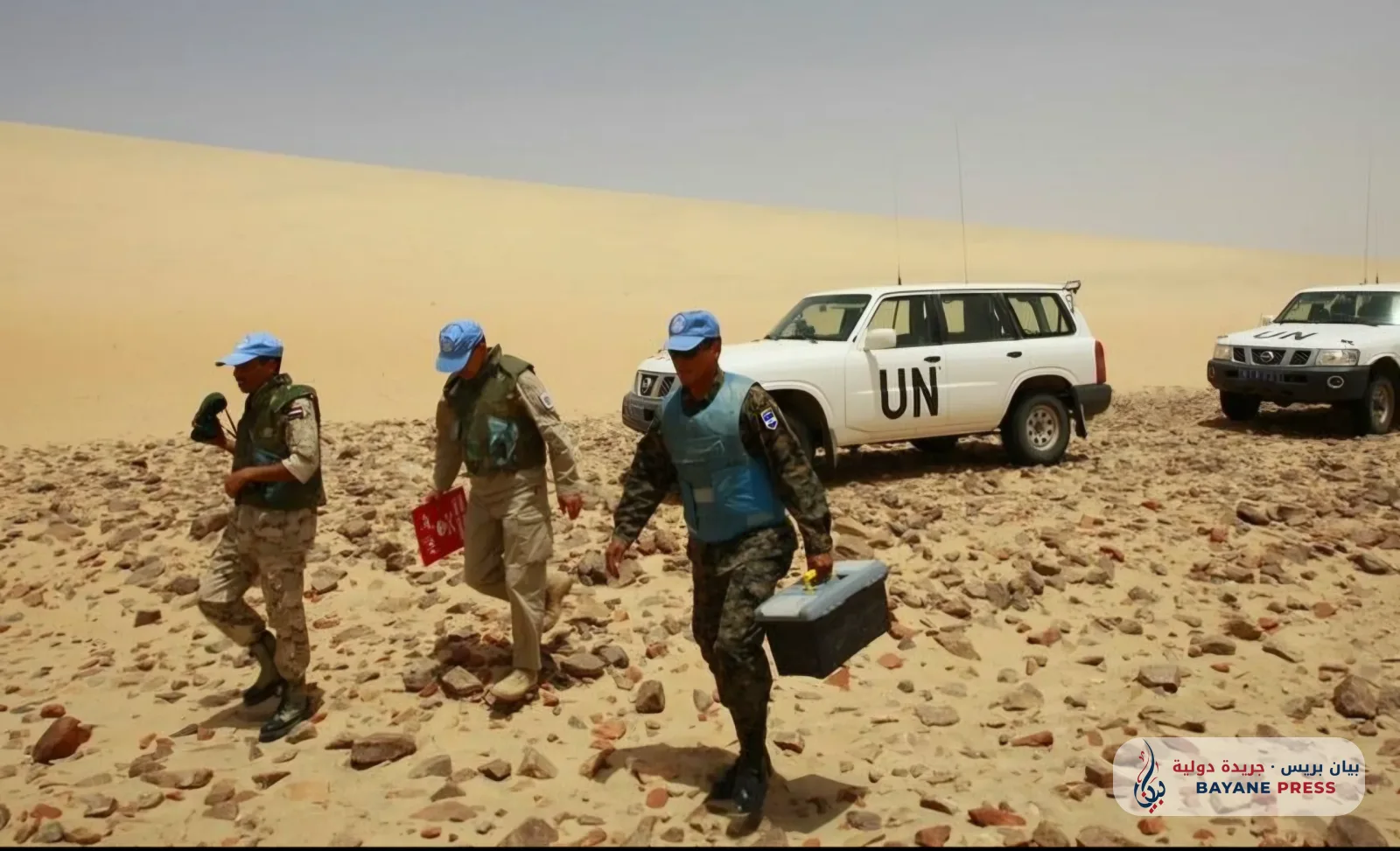
The Polisario Front faces a complex political and diplomatic phase following the end of the UN mission in the Sahara, 'MINURSO', on October 31, 2026, after thirty-five years of presence. This development necessitates a reconsideration of conflict management tools and places the Front and its ally, Algeria, before new challenges in dealing with the international shifts surrounding the Sahara file.
Following the Security Council's failure to adopt the American draft resolution to extend the mission, due to Russia's use of the veto, and the failure of the alternative Russian draft, the United Nations has begun procedures to wind down the mission, which was established in 1991 to monitor the ceasefire and prepare for a self-determination referendum that was never held.
This development carries significant political implications for the Polisario, which has long relied on the UN framework as one of the primary tools to defend the option of a referendum. With the end of the mission's field operations, the Front is now required to re-evaluate its diplomatic options, especially in light of the support the Moroccan Autonomy Initiative receives from influential international powers, led by the United States and France.
Algeria appears to be a key party in this equation, given its political, diplomatic, and military support for the Front and its hosting of the Tindouf camps. This support grants the Polisario a margin to continue defending its positions, but it also makes the future of its actions dependent on Algerian foreign policy choices and its relations with major powers.
From a geopolitical perspective, the impasse in renewing the MINURSO mandate reveals the widening gap between the United States and Russia regarding the appropriate approach to resolving the conflict. While Washington pushes for making the Moroccan autonomy plan the basis for negotiations, Moscow adheres to an approach that does not prejudge the final status of the territory—a disagreement that directly impacts the chances of reaching a consensus within the Security Council.
However, the end of the mission does not mean the abandonment of the right to self-determination according to the UN position, nor does it in itself constitute a new international recognition of Moroccan sovereignty. Secretary-General António Guterres has confirmed the continuation of political efforts through his Personal Envoy, Staffan de Mistura, while warning of the potential for escalating military tension in the absence of previous monitoring mechanisms.
Conversely, Morocco views the end of MINURSO as a shift that serves its efforts to end the management of the conflict in its old format and move toward a political settlement based on the autonomy initiative under Moroccan sovereignty.
A strategic dilemma for the Polisario emerges here: should it continue to adhere to the approach that has governed its actions over the past decades, or should it seek to adjust its rhetoric and negotiating tools to align with the new diplomatic reality?
The continuation of military tension would further complicate the landscape, especially since the ceasefire concluded in 1991 collapsed in 2020, while the absence of UN observers has become an additional factor raising concerns about regional stability.
In political analysis, it is most likely that the future of the Front will not be determined solely by the withdrawal of MINURSO, but by its ability to mobilize international support, Algeria's position in regional balances, and the extent to which the parties are prepared to engage in serious negotiations.
Thus, recent developments do not end the conflict, but they move the Polisario into a more complex phase, at a time when Morocco is seeking to leverage diplomatic shifts to solidify its political approach, while the final settlement remains contingent upon an international and regional consensus that has yet to be achieved.
Comments (0)
No comments yet. Be the first to react!