


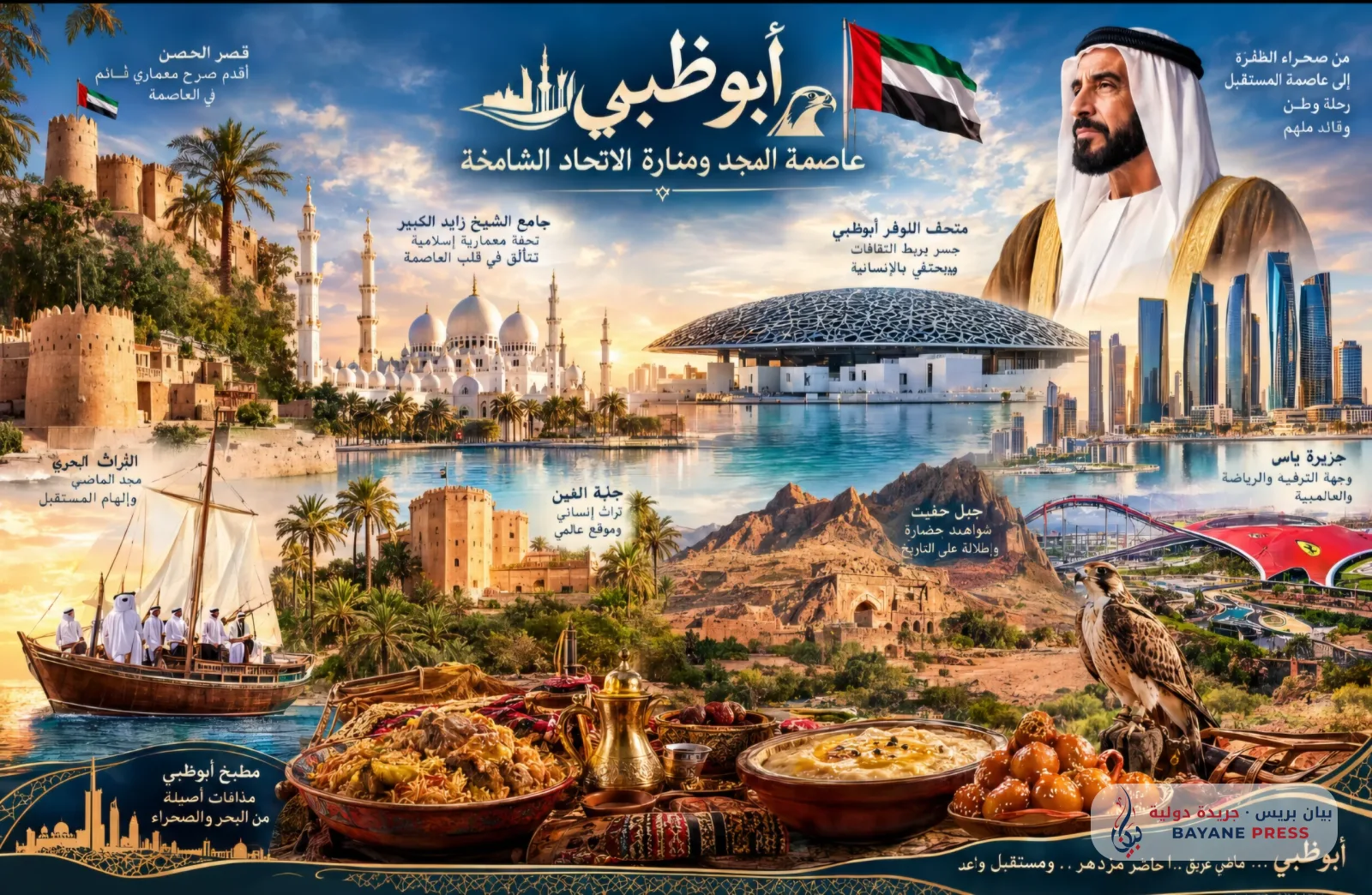
The roots of Abu Dhabi sink deep into the depths of history, extending back to the Bronze Age, when the neighboring island of "Umm al-Nar" hosted a thriving maritime and commercial civilization from the third millennium BCE, linked to copper mining and trade with the civilizations of Mesopotamia and the Indus Valley. However, the foundational core of the contemporary metropolis began to take shape around the year 1761 CE, when a hunting expedition of the "Bani Yas" tribes, under the leadership of Sheikh Dhiyab bin Isa Al Nahyan from the Liwa oases and the settlements of Al Dhafra deep within the Empty Quarter, headed toward the coast after tracking a gazelle that guided the hunters to a freshwater spring on the island, giving rise to its name, "Abu Dhabi". His son, Sheikh Shakhbut bin Dhiyab Al Nahyan, swiftly moved the seat of government and the emirate to the island in 1793 CE, constructing a defensive coral stone tower that would later evolve into the historic "Qasr Al Hosn". The island transformed into a leading hub for pearl diving and navigation in the Persian Gulf basin, wisely confronting the fluctuations of regional politics and the course of maritime treaties with the British Crown until the dawn of oil discovery in the "Umm Shaif" field in 1958 CE propelled a massive development boom. This historical journey culminated on December 2, 1971 CE, when the founder of the State and architect of its renaissance, the late Sheikh Zayed bin Sultan Al Nahyan, guided with his astuteness and unionist vision the declaration of the union of the United Arab Emirates, turning Abu Dhabi into the political capital and the home of global wisdom and diplomatic balance.
Abu Dhabi's architectural testimonies blend harmoniously between traditional antiquity and the finest expressions of global modernity. At its heart stands "Qasr Al Hosn" as the oldest surviving stone building in the capital, standing out with its cylindrical tower and immaculate whitewashed walls that narrate to generations the epics of resistance and the dawn of foundation. On the city's skyline rise the minarets of the "Sheikh Zayed Grand Mosque", considered a masterpiece of contemporary Islamic architecture and one of the largest mosques in the world; it houses eighty-two domes clad in pure white Macedonian marble, over a thousand columns embedded with agate, lapis lazuli, and mother-of-pearl, and majestic minarets rising one hundred and seven meters where Fatimid, Mamluk, and Ottoman arts intertwine, in addition to containing the world's largest hand-woven carpet crafted by the most skilled artisans, and glowing gold-plated Swarovski chandeliers. On Saadiyat Island, the "Louvre Abu Dhabi" museum stands as an architectural and cultural monument designed by French architect Jean Nouvel, with its imposing steel dome inspired by the intertwining of palm fronds in the Al Ain oases, creating the phenomenon of geometric "light rain" over the museum's floating walkways above the sea waters. Cultural landmarks extend toward "Qasr Al Watan" within the presidential complex with its Andalusian geometric inscriptions and decorations, and Yas Island with its leisure cities and international racing circuit, ascending to the historic Al Ain oasis —inscribed on the UNESCO World Heritage list— with its ancient falaj system and fortresses surrounded by tall date palms, and the imposing Jebel Hafeet mountain with its ancient archaeological tombs.
Abu Dhabi has attracted the attention of Western explorers and travelers for centuries; the British historian and diplomatic traveler John Gordon Lorimer documented precise geographical details in his historical encyclopedia "Gazetteer of the Persian Gulf" regarding the sheikhdom of Abu Dhabi, describing the bravery of its sailors and their possession of the largest pearl-diving fleet among the Trucial Coast emirates, with more than 400 sailing ships plying the fishing grounds. Likewise, the English traveler and explorer Wilfred Thesiger, known in the Arab world as "Mubarak bin London", immortalized his enduring memories in his book "Arabian Sands" during his crossing of the Empty Quarter desert in the 1940s; there he met Sheikh Zayed bin Sultan Al Nahyan at the Al Muwaiji fort in the city of Al Ain, and wrote about him with great admiration, describing him as a noble Bedouin ruler endowed with an imposing presence, innate wisdom, and immense popularity among the tribes, affirming that his perspicacity and the purity of his intention foreshadowed an exceptional future for the entire region. Reports from Dutch and British naval campaigns since the 18th century also recorded the strength of the island's fortifications and the absolute sovereignty of the Bani Yas alliance over the waters and pastures of Al Dhafra.
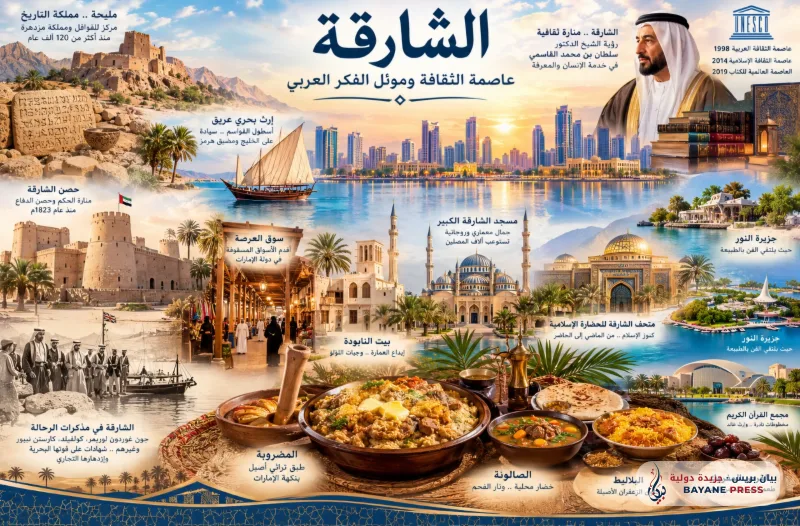
Abu Dhabi crowns its original identity with an Emirati gastronomy deeply rooted in desert tradition and the bounty of the salty sea. "Harees" occupies the throne of its festive banquets as the undisputed king of traditional dishes; it is prepared by cooking carefully selected whole wheat grains with pieces of tender lamb or beef in a deep clay or copper pot for long hours over a slow wood fire, until the meat completely disintegrates and fuses with the wheat fibers, to then be beaten with a wide wooden paddle called "Mudrab" through continuous physical effort until the mixture acquires a smooth, velvety, and homogeneous texture. It is then served in ceramic dishes and poured over its surface with a rich layer of "Dihn Khanin" (ghee flavored with fenugreek seeds, nigella powder, and a pinch of cardamom) to be presented hot, brimming with nutrition and warmth. The capital's tables also stand out for "Emirati Machboos", cooked with lamb or fresh grouper fish and seasoned with traditional Arab spices, saffron threads, and dried desert lemons, alongside "Khabeesah", made with toasted wheat flour kneaded with cardamom, mountain orange blossom water, and ghee, and the golden, crispy balls of "Luqaimat", submerged in date molasses from the Liwa oases and adorned with a generous layer of white sesame seeds.
Comments (0)
No comments yet. Be the first to react!