


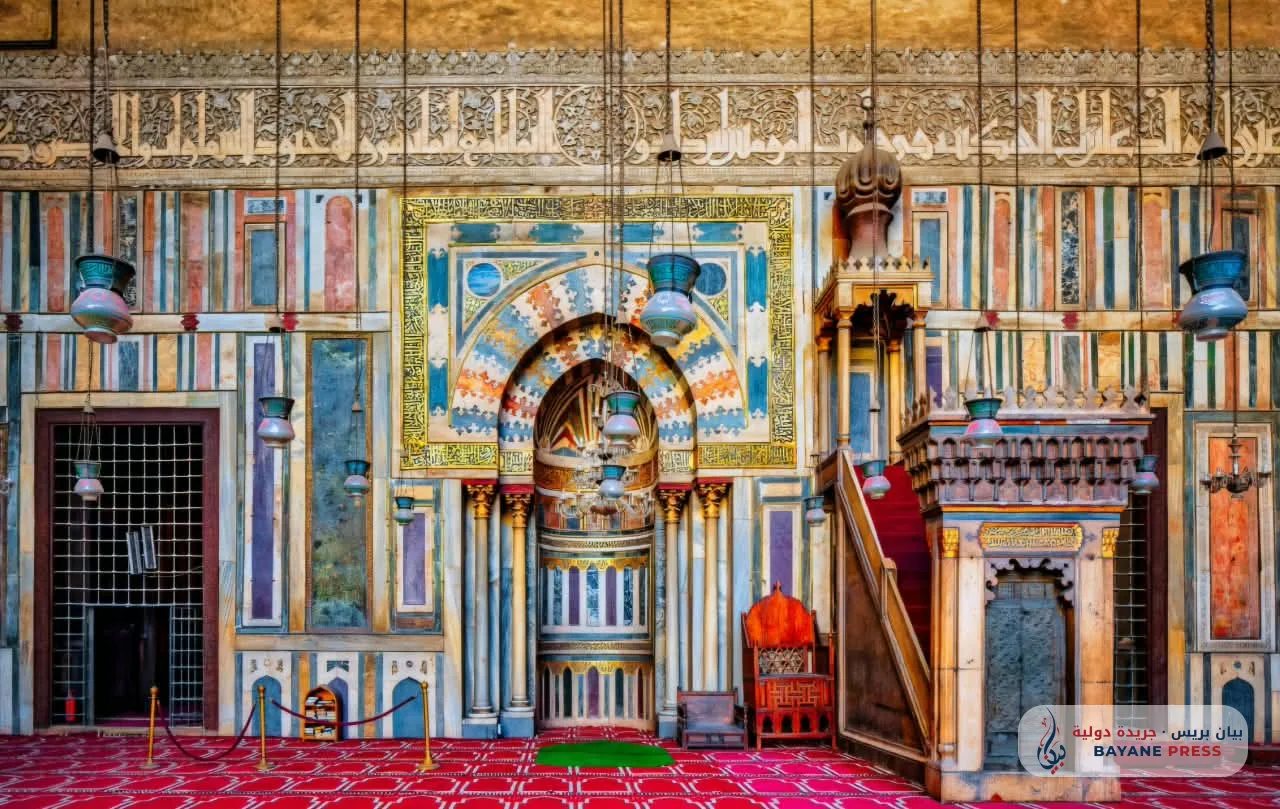
Imam Ali bin Abi Talib, may God ennoble his face and be pleased with him, constitutes the most singular and profound phenomenon in Islamic history from the moment of the prophetic mission to the present day. The hearts of Muslims from various currents and sects never united so much in love for a man after the Messenger of God, peace and blessings be upon him, as they did in love for Abu al-Hasan; nor did their minds and theological and political schools differ so much over a personality as they did over him. Confronting the biography of the Prophet's cousin and son-in-law, the first of the youths to embrace Islam, and knight of Badr, Uhud, al-Handaq, and Khaybar, places the researcher before a great historical and doctrinal paradox: How did the man whose virtues and precedence were unanimously agreed upon by the nation, and whose authentic Sunnis and Musnads hadiths, along with Shiite compendia and works, coincided that his love is faith and his hatred is hypocrisy, transform into the fulcrum where the great Islamic vision bifurcated into two divergent doctrinal and political paths? Answering this question requires plunging into the layers of history, exegesis, and theology (kalam), and interrogating all Islamic sources: from «Sahih al-Bukhari», «Sahih Muslim», «Musnad Ahmad», «Minhaj al-Sunna», and «Fath al-Bari» on one hand, to «Nahj al-Balagha», «Al-Kafi» by al-Kulayni, «Al-Irshad» by al-Mufid, and «Bihar al-Anwar» by al-Majlisi on the other, to deconstruct the deep structure of this emotional consensus and doctrinal division.
The space of absolute agreement between the pious predecessors (Ahl al-Sunnah wa al-Jama'ah) and the Shiites of various sects begins from the brilliant historical and prophetic truth that no Muslim disputes: Ali bin Abi Talib is the scion of the prophetic household who grew up in the lap of the Chosen One, peace and blessings be upon him, before Islam, and thus never prostrated before an idol. Hence, Islamic custom in many Sunni cities has consecrated assigning him the expression «may God ennoble his face», to purify his face from having prostrated to anyone other than God, in addition to asking for satisfaction and peace for him. He is the first fedayeen who slept in the Prophet's bed on the night of the Hijra covered with his Hadhrami mantle, an event that exegetes of both sides relate —as in «Tafsir al-Tabari», «Al-Mustadrak» by al-Hakim, and «Majma' al-Bayan» by al-Tabarsi— with the revelation of the word of the Almighty: ﴿And among mankind is he who sells his soul seeking the pleasure of God﴾. He is the husband of Fatima al-Zahra, mistress of the women of the inhabitants of Paradise, father of the two grandsons Al-Hasan and Al-Husayn, the two sweet basil plants of the Messenger of God, and bearer of the banner on the day of Khaybar according to the text of the agreed-upon hadith in the two Sahihs: «Tomorrow I will give the banner to a man who loves God and His Messenger, and whom God and His Messenger love; God will grant victory through his hands».
Both sides also agree on the authentic hadith narrated by Muslim in his Sahih, and by Al-Tirmidhi and Al-Nasa'i in «Jasa'is Amir al-Mu'minin», on the authority of Ali, who said: «By Him who split the grain and created the breath, the unlettered Prophet made me this promise: "None shall love me save a believer, and none shall hate me save a hypocrite"». Thus, love for Ali bin Abi Talib became an ingrained belief and an integral part of the faith of both the Sunni and Shiite Muslim alike.
However, this foundational agreement in love and veneration takes among the ancestors and Ahl al-Sunnah wa al-Jama'ah a course governed by the norms of «companionship» (suhba), «justice», and «striving human condition». Ali, in Sunni doctrine, is the fourth of the rightly guided caliphs (al-Rashidun), one of the ten promised Paradise, and the companion most erudite in knowledge and understanding. Nonetheless, his elevated position is framed within the system of hierarchy among the honorable companions without crossing the human limit into infallibility (isma), which Ahl al-Sunnah restricts to prophets and messengers. The predecessors base the order of preference of the four caliphs according to their order in the caliphate (Abu Bakr, then Umar, then Uthman, and finally Ali) on explicit texts from «Sahih al-Bukhari», among them the hadith of Abdullah bin Umar, may God be pleased with them both: «We used to choose among people in the era of the Prophet, peace and blessings be upon him, and we chose Abu Bakr, then Umar bin al-Khattab, and then Uthman bin Affan»; and in the highly significant narration also transmitted by Bukhari from Muhammad bin al-Hanafiyya (who is the son of Imam Ali himself), who said: «I asked my father: "Who are the best people after the Messenger of God, peace and blessings be upon him?". He said: "Abu Bakr". I said: "Then who?". He said: "Then Umar". I feared he would say Uthman, so I said: "Then you?". He said: "I am nothing more than a man among the Muslims"».
Despite this Sunni consensus on prioritizing the two elders Abu Bakr and Umar, early Sunni heritage was characterized by broad flexibility on the question of preference between Uthman and Ali. A group of predecessors from Kufa and some imams of hadith such as Sufyan al-Thawri, and in one narration from Imam Ahmad bin Hanbal, leaned towards preferring Ali over Uthman or else abstaining from pronouncing, without this detracting from the legitimacy of the caliphate of Uthman or Ali. Furthermore, Imam Ahmad pronounced his famous sentence with which he laid one of the pillars of the doctrine of the predecessors: «Whoever does not recognize Ali as the fourth in the caliphate is more strayed than his family's donkey», because the caliphate and the imamate, according to Ahl al-Sunnah, are considered branches of jurisprudence, legitimate politics, and the interests of the community, and not a fundamental principle of doctrine by which the dissenter is declared an infidel.
In contrast, the personality of Imam Ali in Imami (Twelver) Shiite doctrine moves from the framework of the noble companion and rightly guided caliph chosen by consultation (shura) to a completely different existential and doctrinal category. In the Ja'fari school, the «imamate» is considered one of the five foundations of religion (monotheism, justice, prophecy, imamate, and resurrection), without which faith is not complete, as determined by Shaykh al-Mufid in «Awail al-Maqalat», al-Kulayni in «Al-Kafi», and Muhammad Rida al-Muzaffar in «Aqaid al-Imamiyyah». This view is based on the theological rule of «divine grace» (lutf ilahi), whose meaning is that God's wisdom and justice demand that He not leave the earth after the seal of the prophets without an infallible imam, designated by explicit text, who protects the sharia from distortion and false interpretation, and who is God's proof before His servants.
From this perspective, Imami Shiites maintain that Ali is the «legatee» (wasi) and the «uninterrupted caliph» designated by a manifest divine and prophetic text, and that he possesses «absolute infallibility» against minor and major sins, as well as against error, oversight, and forgetfulness, from his birth until his martyrdom. Likewise, they affirm that he possesses a legislative and spiritual authority that is an extension of the authority of the Prophet, peace and blessings be upon him, with the exception of the prophetic category and legislative revelation. Here it is necessary to make a precise distinction within the Shiite space itself: the Zaydi school (historically widespread in Yemen) shares with the Imami the affirmation of Ali's superiority and his right to the imamate, but approaches Ahl al-Sunnah by rejecting the claim of absolute infallibility in the Imami sense. It adopts the theory of «the imamate of the inferior despite the existence of the superior», thus validating the caliphate of Abu Bakr and Umar, may God be pleased with them, and asking divine mercy for them, considering that their precedence was due to a superior interest estimated by the companions to quell sedition. On the other hand, extremist extinct or marginal groups (such as the Saba'is and Khattabis) went so far as to deify Ali or affirm the incarnation of divinity in him, an extremism that Imam Ali himself fought fiercely during his life and which Imami Shiite scholars, Zaydis, and Ahl al-Sunnah unanimously disowned.
The root of the discrepancy and division between the Sunni and Shiite schools does not lie solely in the authenticity of the prophetic texts transmitted regarding the virtues of Ali, but in the «hermeneutic method» (Islamic hermeneutics) with which each side reads the same texts. This hermeneutic divergence manifests itself most eloquently when examining three shared cardinal texts: the first is the «hadith of Ghadir Khumm», pronounced by the Prophet, peace and blessings be upon him, on the eighteenth of Dhu al-Hijjah in the tenth year of the Hijra during his return from the Farewell Pilgrimage: «Whomever I am his mawla, Ali is his mawla. O God! Be a friend to whoever is loyal to him and an enemy to whoever is hostile to him» (the first part is firmly established in Sahih Muslim with the formula of urging adherence to the two weighty things and the People of the House, and with the word of loyalty in Musnad Ahmad, Sunan al-Tirmidhi, and al-Nasa'i, being validated by prominent traditionalists like al-Albani and Shu'ayb al-Arna'ut, while the Shiites expand the narration of its additions in «Al-Ghadir» by al-Amini and «Al-Kafi»).
The Shiites read the word «mawla» here in the sense of «the most worthy to dispose, lead, and govern», and link the event with the revelation of the verse of transmission in Surah Al-Ma'idah: ﴿O Messenger! Convey what has been revealed to you from your Lord﴾, considering Ghadir as an official constitutional and doctrinal document of investiture of Ali as caliph of the Muslims. For their part, scholars of the predecessors and Ahl al-Sunnah, such as Ibn Kathir, al-Bayhaqi, Ibn Taymiyya in «Minhaj al-Sunna», and Ibn Hajar in «Fath al-Bari», read the hadith in its historical and linguistic context. They explain that the reason for the issuance of the hadith was the complaint of some members of the army returning with Ali from the expedition to Yemen due to his strict justice in the distribution of the fifth (al-khums) and his prohibition of riding the camels of the charitable tax (sadaqah). The Prophet, peace and blessings be upon him, wanted to dispel misunderstandings and declare the obligation of loving Ali and supporting him, pointing out that the word «mawla» in the Arabic language is a homonymous term used with the meaning of helper, lover, ally, and protector, and does not necessarily mean «political imam». This is demonstrated by the fact that the Quran used it in the verse: ﴿And if you support one another against him, know that God is his protector (mawla), and Gabriel and the righteous among the believers﴾. If the purpose had been to designate a caliph for the nation after his passing, his announcement on the Day of Arafat before tens of thousands of pilgrims from all regions would have had a higher priority than announcing it at Ghadir Khumm after the dispersion of the pilgrims from Mecca, Taif, and Yemen, and it would have been stated with an explicit and categorical expression that admitted no interpretation, such as «Ali is my caliph after me, so listen to him and obey him».
This hermeneutic intertwining is repeated in the second text, which is the «hadith of rank» (manzila), whose authenticity is agreed upon in Bukhari and Muslim: «Does it not please you to be to me in the same position as Aaron to Moses, except that there is no prophet after me?». Shiite theologians deduce from it the firmness of all of Aaron's positions for Ali, save prophecy, spearheaded by the vizierate, direct caliphate, supreme wisdom, and infallibility. In contrast, scholars of Ahl al-Sunnah argue based on the historical context of the hadith's issuance: the Prophet said it to Ali when he left him behind in Medina to take care of his family and the vulnerable during his departure for the expedition of Tabuk, and the hypocrites began spreading rumors saying: «He has not left him behind except considering him a burden and to lighten his load». Ali came out with his weapons until he reached the Prophet and informed him of this, so the Prophet reassured his heart with this hadith. Therefore, the predecessors consider that the comparison is limited to «temporary substitution during absence», just as Moses left Aaron when he went to the tryst appointed by his Lord, and does not indicate caliphate after death, since Aaron, peace be upon him, passed away during the lifetime of Moses by agreement of historians.
The same applies to the third text, represented by the «verse of purification» in Surah Al-Ahzab: ﴿God only wishes to remove impurity from you, O People of the House, and to purify you completely﴾ and the «hadith of the cloak» (kisa) firmly established in Sahih Muslim, when the Prophet wrapped Ali, Fatima, Al-Hasan, and Al-Husayn under a cloak and invoked for them with this supplication. While the Shiites consider that the «will» here is an ontological, predestined, and inexorable will that establishes absolute infallibility for the owners of the cloak and excludes the Prophet's wives from the specific concept of the «People of the House», Ahl al-Sunnah maintain that the context of the verses in Surah Al-Ahzab, both before and after, explicitly addresses the Prophet's wives. They maintain that the hadith of the cloak introduces Ali, Fatima, and the two grandsons into the concept of the People of the House in a primordial and honorary manner, and that the will here is a legislative will and a prophetic supplication for spiritual and moral purification, without this implying an infallibility that strips from them the human condition, from which correct or erroneous judgments may emanate.
This discrepancy did not remain confined to texts and mental interpretations, but interacted with the great historical and political cataclysm that began at the moment of the passing of the Messenger of God, peace and blessings be upon him, and the gathering of the Ansar and Muhajirun in the «roof (saqifa) of Banu Sa'ida». In the Sunni reading of history, as recorded in the books of «Tarikh al-Tabari», «Al-Bidaya wa al-Nihaya», and «Al-Awasim min al-Qawasim» by Ibn al-Arabi, the Saqifa was a legitimate emergency response with which the nation averted the danger of tribal fragmentation and sudden political collapse. The oath of allegiance to Abu Bakr al-Siddiq was the fruit of a gradual consensus based on clear prophetic indications, such as his appointment to lead the Muslims in prayer during the Prophet's illness: «Order Abu Bakr to lead the people in prayer», which led the companions to say: «The Messenger of God approved him for our religion, shall we not approve him for our worldly life?».
As for Imam Ali's delay in pledging allegiance to the Siddiq during the first six months —which is attested in Sahih al-Bukhari—, Ahl al-Sunnah interpret it as a personal reproach by Ali for not having been consulted in the Saqifa, as he was busy with Banu Hashim preparing the noble prophetic body, in addition to considering the feelings of Fatima, may God be pleased with her, in the matter of the inheritance of «Fadak». Nonetheless, Ali soon pledged allegiance to the Siddiq of his own free will in the Prophet's mosque, integrating fully and effectively as a judge, counselor, and pillar of the first three caliphs for twenty-five years, to the point that Umar bin al-Khattab pronounced his famous sentence: «If it were not for Ali, Umar would have perished». Furthermore, Ali married his daughter Umm Kulthum (daughter of Fatima al-Zahra) to Caliph Umar bin al-Khattab —a fact verified in Bukhari, «Al-Kafi» by al-Kulayni, and «Tahdhib al-Ahkam» by al-Tusi— and named three of his sons with the names of the first three caliphs: Abu Bakr bin Ali, Umar bin al-Khattab bin Ali, and Uthman bin Ali (some of whom fell martyrs alongside their brother Al-Husayn in Karbala), which is considered by Ahl al-Sunnah as glowing proof of the purity of hearts and sincere affection between Ali and his brothers the caliphs.
For their part, the Shiite reading of history, as manifested in the «Book of Sulaym bin Qays», «Al-Ihtijaj» by al-Tabarsi, «Al-Irshad» by al-Mufid, and the commentaries of «Nahj al-Balagha», sees in the gathering of the Saqifa a political coup d'etat that marginalized the legitimate legatee. It interprets Imam Ali's silence and his cooperation with the first three caliphs as a strategic stance dictated by the supreme interest of protecting the root of Islam against apostasy and external collapse, being the application of the principle of patience in the mission and dissimulation (taqiyyah). This reading relies on what is narrated in the «Sermon of al-Shiqshiqiyyah» in the book «Nahj al-Balagha», attributed to Imam Ali (a sermon whose chain of transmission is doubted by Sunni traditionalists like Ibn Taymiyya and al-Dhahabi due to interruption, while Shiite scholars authenticate it), where he says: «By God! So-and-so dressed himself in it like a shirt while knowing full well that my position in it was like that of the axis in the handmill... So I had to be patient, with a thorn in the eye and a torn bone in the throat, watching my inheritance being plundered». They also rely on his words in Nahj al-Balagha justifying his cooperation and participation in the consultation: «I will maintain peace as long as the affairs of the Muslims are safe and there is no injustice in it other than what affects me personally, seeking the reward and virtue of it, and detaching myself from what you dispute over of its tinsel and vanity». As for the marriage of Umm Kulthum and the choice of names for his sons, Shiite historians attribute it either to dissimulation (taqiyyah) and political coercion, or to the spread of such names among the Arabs without any intention of seeking doctrinal rapprochement.
The moment of the greatest historical explosion arrived when the caliphate fell to Imam Ali bin Abi Talib in the year thirty-five of the Hijra, following the assassination of the third caliph Uthman bin Affan, may God be pleased with him. Ali assumed the reins of a vast state seething with sedition and tribal and social agitation, so his rigorous approach of justice based on principles, equality of people in distribution, and dismissal of governors clashed with the approach of political realism and the immediate demand for vengeance for Uthman's blood before security was restored. This bloody clash led to the battles of «The Camel» (facing Talha, Al-Zubayr, and the Mother of the Believers Aisha, may God be pleased with them) and «Siffin» (facing Muawiya bin Abi Sufyan and the people of Sham), and subsequently to the incident of «Arbitration», in the wake of which the «Kharijites» broke away, fought Ali at «Nahrawan», and declared him an infidel until Abd al-Rahman bin Muljam al-Muradi assassinated him in the mihrab of the mosque of Kufa in the month of Ramadan in the year forty of the Hijra.
This blood spilled during the five years of Ali's caliphate was what transformed the political and hermeneutic disagreement into entrenched doctrinal trenches. While the Shiites formulated the doctrines of «loyalty (tawalli) and disavowal (tabarri)», which judged as perversion or apostasy anyone who had preceded Ali, disputed him, or fought him in the Camel and Siffin considering them rebels against the infallible imam of the era, Ahl al-Sunnah wa al-Jama'ah formulated the doctrine of «abstaining from judging what happened among the companions», maintaining the absolute certainty that the truth in those wars was on the side of Ali bin Abi Talib, that Ali is the legitimate imam, and that those who fought him at Siffin were «the rebellious faction» according to the text of the mutawatir prophetic hadith in the two Sahihs: «Woe to Ammar! The rebellious faction will kill him; he calls them to Paradise and they call him to the Fire» (and Ammar bin Yasir was killed in Ali's army at the hands of Muawiya's army). However, Ahl al-Sunnah considered that rebellion (baghi) here does not expel its author from the faith nor invalidate the principle of justice of the companions who labored with intellectual effort and erred, repeating the phrase of the rightly guided caliph Umar bin Abd al-Aziz: «That is blood from which God purified our swords, so we shall not stain our tongues with it».
Thus, it becomes evident to whoever contemplates the mirrors of Islamic history that the division surrounding Ali bin Abi Talib was never a division between someone who loved him and someone who hated him within the great circle of Ahl al-Sunnah and the Shiites —since no one hated him nor declared him an infidel except the Kharijites and the Nawasib, whom the nation disowned—, but rather it was a division regarding the «essence of love and the limits of the position», between a Sunni and Salafi school that loved him within the framework of the guided human condition, just companionship, and political consultation, and a Shiite school that loved him within the framework of divine election, sacred infallibility, and binding text. Perhaps the most eloquent thing summarizing this historical tragedy which turned the symbol of unity and piety into the axis of discord across the centuries is that early prophecy pronounced by Imam Ali bin Abi Talib himself, which the sources of both sides coincided in narrating in «Musnad Ahmad» and «Kitab al-Sunna» by Ibn Abi Asim on the one hand, and in «Nahj al-Balagha» and «Bihar al-Anwar» on the other, when he looked toward the distant horizon and said with his eloquent and immortal words:
«Two types of men will perish because of me: an extremist lover and a rancorous hater»
Imam Ali bin Abi Talib
so that Ali, with his firmness in the mihrab, his eloquence in expression, his asceticism in this world, and his severe justice from which he never compromised, remains a living witness to the greatness of the Islamic experience at the pinnacle of its spiritual illumination and at the summit of its human and political turmoil.



Comments (0)
No comments yet. Be the first to react!