


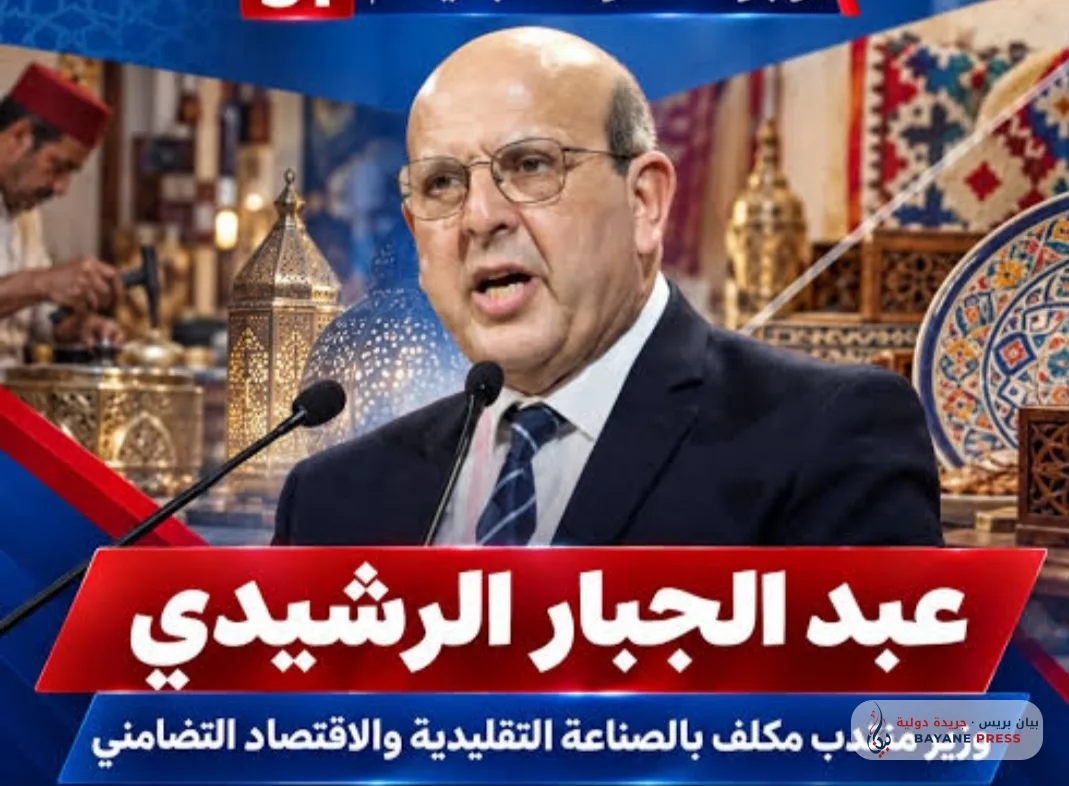
By: Saleh Rzouq
A sector comprising millions of artisans and representing a national wealth carrying Morocco's identity, yet the reality for thousands of traditional craftsmen remains governed by exclusion, vulnerability, and a lack of fairness.
The suffering of artisans and traditional craftsmen in Morocco is no longer a matter of fleeting complaints; rather, it raises genuine questions about the future of a sector that forms a fundamental part of the Kingdom's economic, cultural, and social identity. How can we speak of promoting traditional crafts and marketing Moroccan products internationally while a large number of artisans still suffer from weak guidance, a lack of social protection, limited access to financing, and an absence of professional support?
What is most concerning is that Morocco has Law No. 50.17 regulating traditional handicraft activities, but the mere existence of legal texts is not enough if they do not translate into concrete measures that protect the artisan, preserve their dignity, and guarantee their rights.
Where does the flaw lie?
The problem is not merely tied to weak resources; it extends to the management of the sector and the extent to which certain officials, elected representatives, and stakeholders understand the provisions of the governing law. How can regional bodies defend artisans, guide them, and contribute to the development of the sector without continuous legal and professional training?
And where is the role of these bodies in listening to the problems of traditional craftsmen, following up on their files, defending their demands, and monitoring the dysfunctions hindering their professional paths?
It has become imperative to move beyond the logic of meetings, photo-ops, and protocols, shifting instead toward a logic of fieldwork, results, and accountability. The artisan does not need seasonal promises and speeches; they need an institution that truly represents them and opens doors to training, financing, social coverage, and marketing.
Restructuring the sector is no longer a luxury; it is a necessity.
Reforming traditional handicrafts requires revising management methods, rehabilitating chambers and regional and local bodies, clarifying jurisdictions, training officials and board members in Law 50.17, linking responsibility to results, and ensuring genuine representation for artisans across various specialties, far removed from petty calculations and organizational conflicts.
Furthermore, hairdressers, beauty professionals, carpenters, tailors, blacksmiths, painters, and all other artisans are not merely statistics; they are citizens contributing to the national economy who deserve protection, recognition, and fairness.
We place these questions before the Ministry of Tourism, Handicrafts, and Social and Solidarity Economy, the Chambers of Traditional Handicrafts, and regional and local bodies:
- Who holds accountable the bodies that fail in their duty to defend artisans?
- Why are regular training sessions on Law 50.17 not being organized?
- Where does the process of integrating traditional craftsmen into the national registry stand?
- What is the fate of artisans working in fragile conditions without adequate social protection?
- When will the sector be restructured to ensure governance, transparency, and efficiency?
- And when will the artisan become a partner in decision-making rather than merely a beneficiary awaiting handouts?
Enough treating traditional crafts as a seasonal sector that only appears during exhibitions and events!
The value of traditional craftsmanship is not measured solely by the revenues it generates or the products displayed in international exhibitions, but first and foremost by the degree of respect shown to the human being who crafts those products with their own hands and preserves the memory of Moroccan artisanship.
Law 50.17 must be a tool for fairness and development, not merely a text gathering dust on shelves. True reform begins with holding dysfunctions accountable, rehabilitating institutions, and restoring dignity to the artisan.
The question that imposes itself today is: if the artisan is the foundation of traditional craftsmanship, who protects them when the institutions tasked with representing them fail to do their job?



Comments (0)
No comments yet. Be the first to react!