


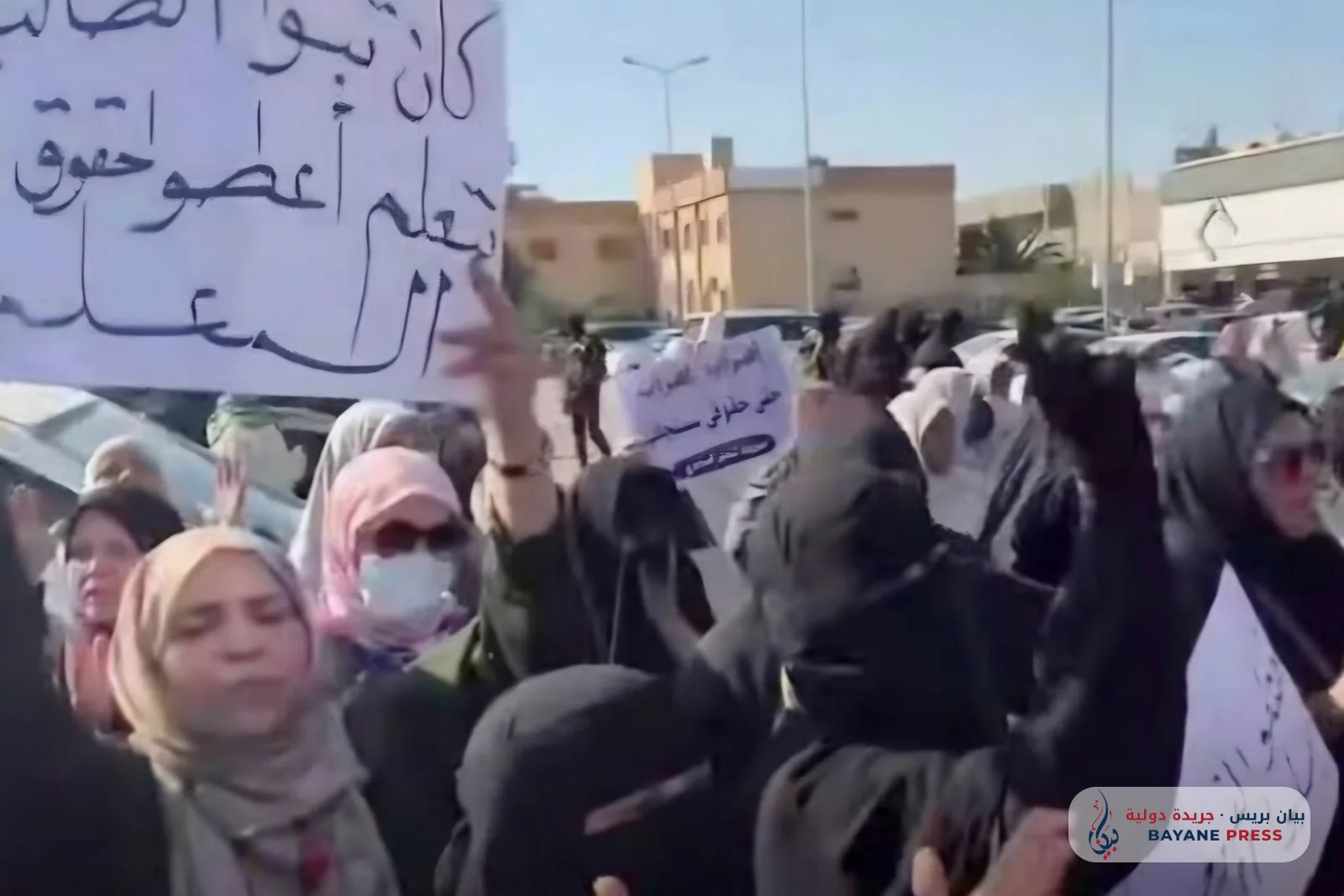
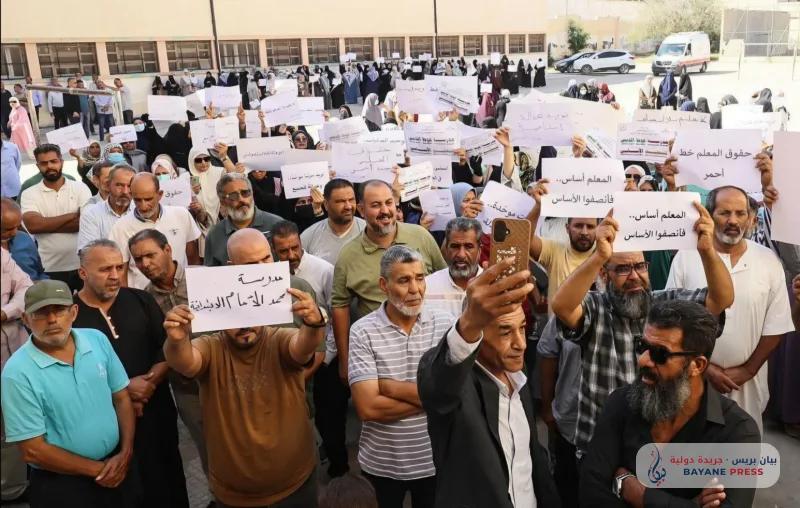
Protests by teachers in Libya have moved beyond professional demands, sparking a new debate regarding trade union freedom and the limits of security force intervention in peaceful protests, after a sit-in organized by teachers in the Abu Salim municipality of Tripoli on Monday, November 9, 2026, triggered a wave of condemnation and solidarity within educational circles, amid conflicting accounts of what transpired during the gathering.
The wave of objections began following accusations leveled by the General Teachers' Union against the Security Directorates Support Apparatus, regarding what it described as unacceptable behavior toward several participants in the protest in front of the Abu Salim Education Office. The union, led by Ramadan Hammoum, asserted that demanding professional rights does not justify restricting protesters or treating them in ways that infringe upon their dignity.
The union expressed its condemnation of what it called the targeting of male and female teachers in the area, with a particular focus on the treatment of women participating in the protest. It announced its intention to take necessary measures against any violations it believes have infringed upon the rights and freedoms associated with trade union activities.
Reactions were not limited to Tripoli; education sector workers in the city of Misrata announced their solidarity with their colleagues in Abu Salim in a statement published today, Tuesday, November 10, stating that any affront to the dignity of teachers in any region affects the entire educational family in Libya.
The authors of the statement emphasized the necessity of addressing professional demands through dialogue and administrative and legal mechanisms, rather than resorting to security measures, asserting that the return to classes should not be conditional on workers abandoning their demands.
The wave of solidarity extended to the city of Tobruk, where teachers organized a protest today, Tuesday, during which they declared their commitment to continuing the sit-in until their demands are met, primarily the improvement of salaries, the provision of health insurance, and the disbursement of owed allowances.
In contrast, the Security Directorates Support Apparatus rejected the accusations directed at it, denying that any assault on protesters occurred in Abu Salim. In an official statement, it explained that police elements were present to secure the protest and ensure its orderliness, and that participants were able to read their statement before leaving the site.
The apparatus also provided a different account regarding a video circulating on social media, confirming that it related to the apprehension of an individual accused of assaulting security personnel while performing their duties, rather than targeting teachers for their participation in the protest. It stressed that the right to demonstrate is guaranteed, provided there is respect for the right of students and teachers who wish to resume classes.
These conflicting accounts leave the issue in need of an independent investigation into the circumstances, especially since neither the union's accusations nor the security apparatus's denial is sufficient on its own to establish the truth of what occurred.
The crisis comes at a time when the Libyan education sector is facing challenges related to wages, professional benefits, and the continuity of schooling, making any breakdown in dialogue between government entities and unions a potential source of increased tension within educational institutions.
Between the unions' insistence on improving working conditions and the authorities' commitment to ensuring the regularity of classes, there is an urgent need for a settlement that protects professional rights and the freedom of peaceful protest, without harming the students' right to education, while opening the door for a transparent investigation into any allegations of security abuses.
Comments (0)
No comments yet. Be the first to react!