

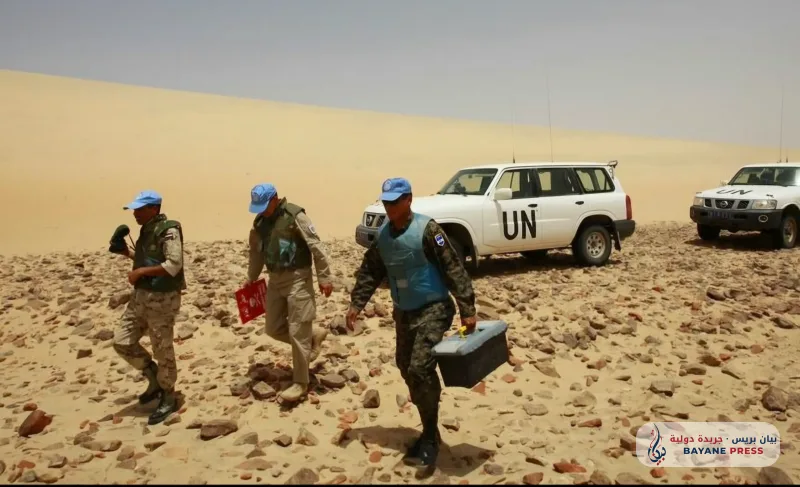
The Polisario Front is seeking to reorganize its internal priorities in parallel with intensifying its diplomatic movements outside the Maghreb region, at a time when the Sahara file is witnessing significant UN developments, especially after the UN Security Council failed to renew the mandate of the "MINURSO" mission due to the disagreement between the United States and Russia regarding the nature of the political solution and the future of the UN presence in the region.
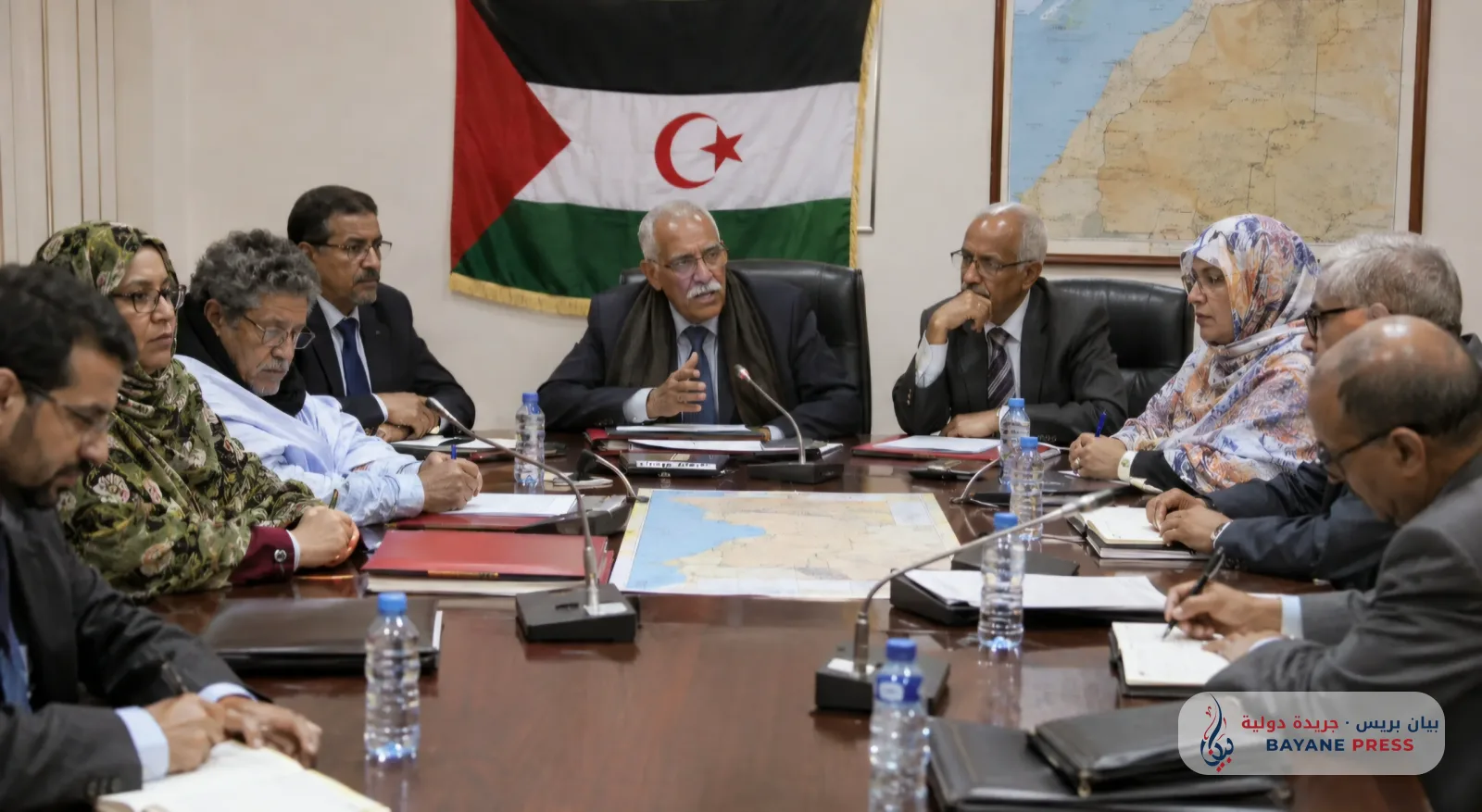
In this context, the National Preparatory Committee for the Front's 17th Congress held a meeting on Monday, November 9, 2026, at the National Council headquarters, chaired by Bachraya Hammoudi Beyoun, member of the National Secretariat and head of the committee. The meeting was dedicated to reviewing organizational and political documents related to evaluating the past phase and defining the directions to be presented to the upcoming congress.
According to the Polisario-affiliated news agency, the meeting addressed the work record of the past four years through a document evaluating the current situation, in addition to discussing messages, recommendations, and the draft final statement, in preparation for drafting other documents including the national work program and a review of the organizational experience, the basic law, and the constitution adopted by the Front.
The nature of the files presented reveals that the preparations for the congress are not limited to organizational arrangements, but include a review of the policies and programs adopted by the Front during the previous phase, in light of the ongoing conflict with Morocco and the changing positions of several international powers regarding the paths to resolving the Sahara issue.
In parallel with these preparations, the same agency reported details of meetings held by Mohamed Zarrouk, the Polisario representative to Latin America and the Caribbean, with representatives of political parties, social movements, and parliamentarians in Guatemala, with the aim of expanding the network of support for the Polisario's positions on self-determination.
The contacts included representatives of political forces, including the Guatemalan National Revolutionary Unity, the "Maíz" party, and other social movements, as part of efforts aimed at maintaining the presence of the issue within partisan and human rights circles in Latin America.
These meetings coincided with the announcement of the establishment of a new Guatemalan civil movement for solidarity with the Moroccan Sahara, bearing the acronym "MOGUSSO," which includes human rights activists and representatives of social organizations. The movement says it seeks to mobilize support for the Polisario's demands and push the Guatemalan government to adopt positions closer to the Front's theses within international institutions.
Among the demands announced by the movement is a call to close the Guatemalan consulate in the city of Dakhla, which was opened in December 2022, arguing that its continued existence contradicts, according to the movement's founders, their perception of the legal status of the territory.
However, this call remains a position issued by a civil movement and does not represent an official decision by the Guatemalan government or a confirmed indicator of a change in its foreign policy. Furthermore, the opening of the consulate came in the context of diplomatic relations between Guatemala and Morocco, which considers the Sahara part of its territory and proposes autonomy under its sovereignty as the basis for a political settlement.
These organizational and diplomatic moves coincide with a scheduled session of the UN General Assembly, set for Tuesday, November 10, to discuss Russia's use of its veto against the American draft resolution regarding the Sahara, after the project received the support of eleven members of the Security Council without obtaining final approval.
The American project was pushing towards making autonomy under Moroccan sovereignty the basis for the negotiation process, while proposing to amend the nature of the UN mission, whereas Moscow rejected the proposed formula, considering that it does not achieve the required balance between the positions of the parties to the conflict. The alternative Russian project also failed to obtain the necessary votes for adoption.
In light of these developments, the Polisario is trying to maintain its organizational and diplomatic presence through two parallel paths; the first is re-evaluating its internal directions by preparing for its 17th congress, and the second is expanding its network of relations with political forces and associations supporting its positions abroad.
However, organizational meetings and solidarity initiatives do not necessarily mean achieving a shift in the official positions of states, just as the continuation of diplomatic movements does not determine the nature of the expected settlement. The future of the file remains linked to the positions of the concerned parties and the ability of the United Nations and international powers to rebuild a political consensus after the Security Council's failure to adopt a new resolution.
Comments (0)
No comments yet. Be the first to react!