


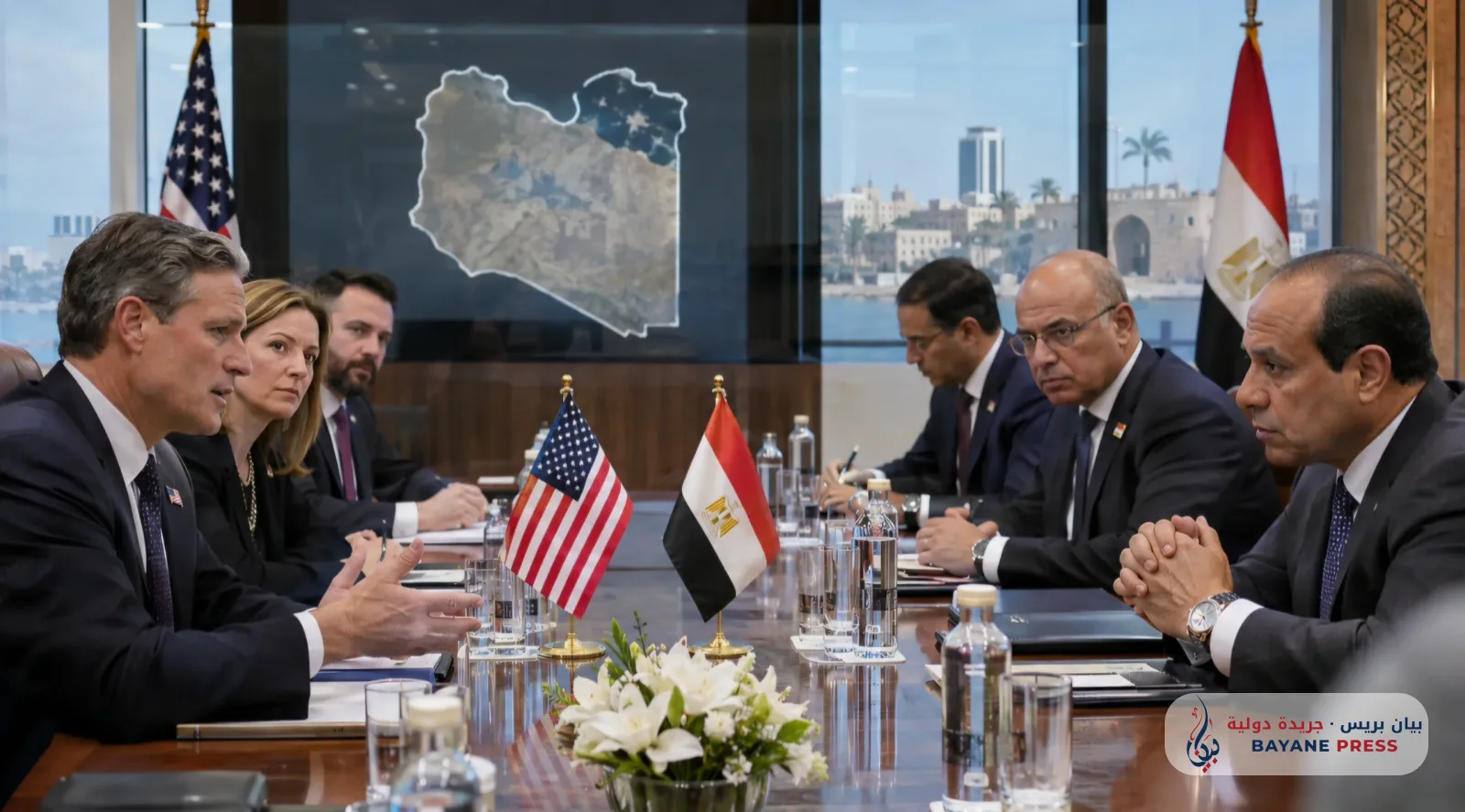
The Libyan file is moving again on the table of US-Egyptian communications, in an attempt to break the political deadlock that has kept the country divided between competing authorities and institutions, and has delayed the electoral milestones that Libyans have been awaiting for years. In the latest of these moves, Massad Boulos, Senior Advisor to the US President for Arab and African Affairs, discussed with Egyptian Foreign Minister Badr Abdelatty ways to reunify Libyan institutions and create the appropriate conditions for holding national elections.
Boulos revealed, in statements published via the "X" platform and reported by Libyan media today, Tuesday, November 10, 2026, that the communication with the Egyptian official addressed leveraging recent political and diplomatic developments to push efforts to unify institutions, allowing for the reactivation of the electoral path under Libyan leadership, with the support of regional and international partners.
These contacts gained additional importance following the reopening of the Egyptian embassy in the capital, Tripoli, after a closure that lasted twelve years, a move welcomed by the US official, who considered that developing the Egyptian diplomatic presence provides an opportunity to support stability efforts and rebuild communication channels with Libyan institutions.
The US moves do not appear separate from the efforts witnessed in recent weeks to bridge the positions of Libyan parties, especially regarding the unification of the executive authority and addressing disputes related to the legal framework for elections. Washington had announced its support for the consensus path being worked on by the "4+4" committee, as one of the mechanisms proposed to overcome political obstruction and create a climate for holding elections that enjoy broad acceptance.
However, the road to the ballot box remains fraught with political and institutional obstacles, primarily the continued division between existing authorities, the lack of complete consensus on the rules governing upcoming milestones, as well as disputes related to forming a unified executive authority to manage the transitional phase.
In the context of pressuring the concerned parties, Boulos had warned, during previous contacts with Libyan officials, against obstructing settlement efforts, hinting at the possibility of imposing sanctions on parties that hinder the political transition. This rhetoric reflects Washington's desire to move from the stage of diplomatic encouragement to exerting greater pressure to push parties toward implementing the proposed understandings.
Cairo, for its part, seeks to maintain its role in the Libyan file, given the geographical, security, and economic ties between the two countries, and the importance of Libya's stability for the security of Egyptian borders, trade movement, and regional cooperation.
These efforts intersect with the role of the United Nations, which continues to push for a political settlement that leads to unified institutions and national elections. However, the multiplicity of initiatives and sponsoring parties makes coordination between them a decisive factor in avoiding the emergence of parallel paths that further complicate the scene.
Despite the return of talk about elections to the forefront of international communications, the available data does not indicate the setting of a new election date or reaching a final agreement on managing the next phase. Therefore, the US-Egyptian moves remain an attempt to reopen the political path, rather than an announcement of the near end of the Libyan crisis.

Comments (0)
No comments yet. Be the first to react!