


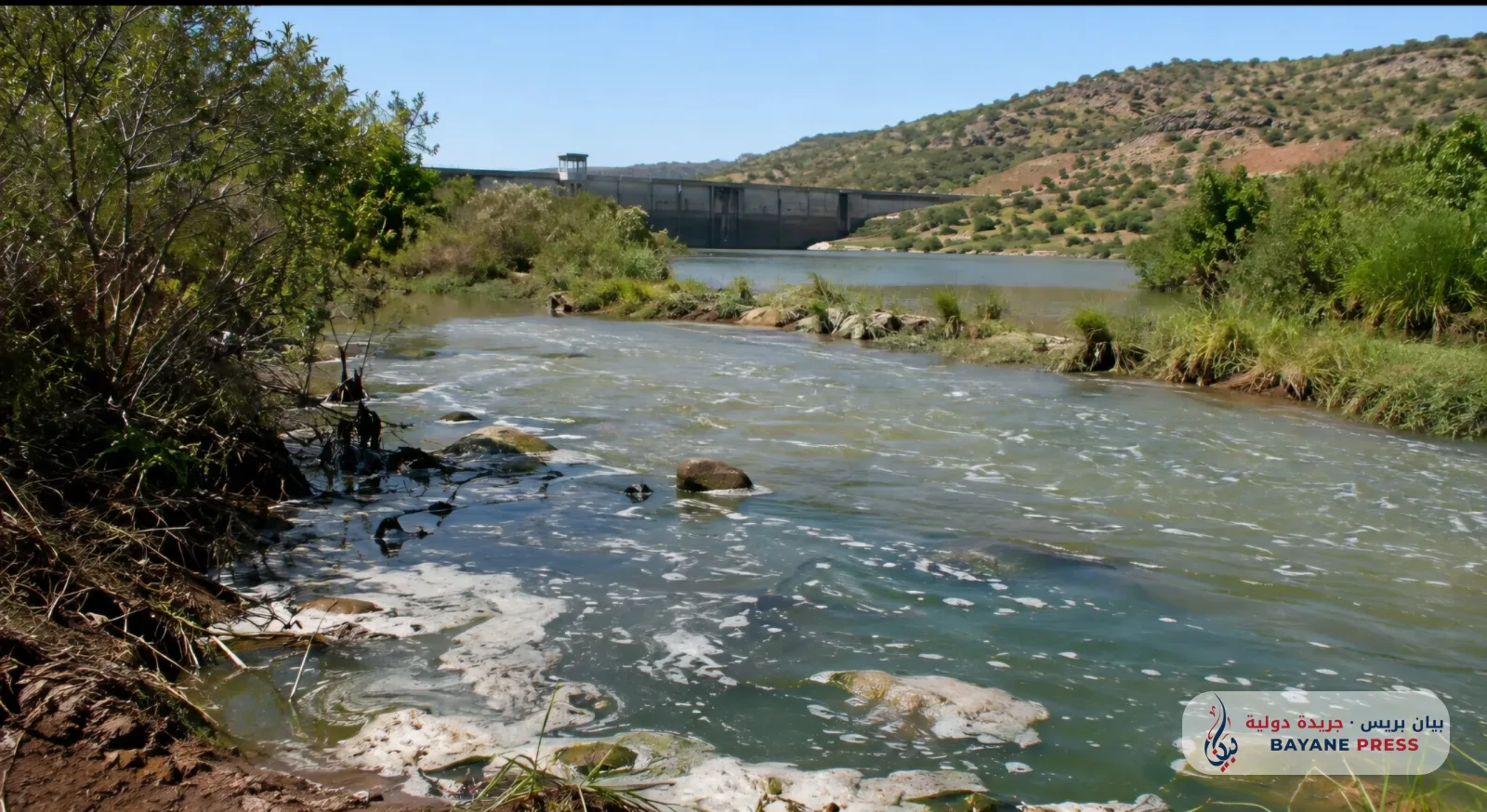
The issue of water pollution in the border areas between Algeria and Morocco has resurfaced, as Algerian authorities shifted from raising the issue through scientific reports and media statements to high-level government action. This materialized in the dispatch of five ministers to Tlemcen province on Tuesday, November 10, 2026, under the direct instructions of President Abdelmadjid Tebboune, to inspect the environmental situation of Oued Mwilah and examine measures to address pollution that Algeria claims threatens one of its vital water resources.
This move comes about two weeks after Algerian reports held industrial activities located within Moroccan territory responsible for the transfer of pollutants across shared watercourses, reaching the Hammam Boughrara Dam. These accusations had been circulating since late last October, before returning to the forefront today through the new ministerial mobilization, without the announcement of an independent investigation to determine the source of the pollution or prove the responsibility attributed to the Moroccan side.
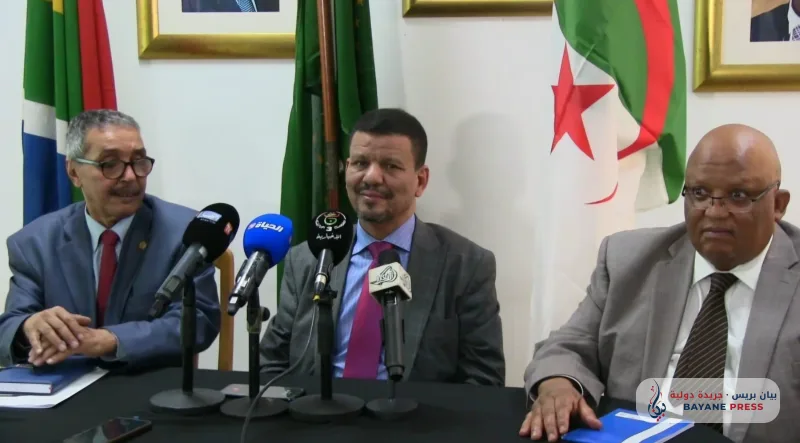
The delegation was headed by Minister of State and Minister of Interior, Local Authorities, and Town Planning Ibrahim Murad, with the participation of Minister of Environment and Quality of Life Kawtar Krikou, Minister of Water Resources Lounes Zegzaouti, Minister of Health Mohamed Seddik Ait Messoudane, and Minister of Communication Mohamed Bouslimani. This step reflects the broadening scope of government concern over the issue, moving from technical handling to coordination across multiple government sectors.
The Algerian Minister of the Interior emphasized during the visit that the situation in the region is causing concern among local authorities and residents, explaining that a committee of experts from various sectors had preceded the ministerial delegation to the area to inspect the effects of pollution. Oued Mwilah holds special importance as one of the main streams feeding the Hammam Boughrara Dam, making any disruption to its water quality an issue tied to the protection of water resources and related activities.
The immediate background of the issue dates back to October 27, when the Algeria Press Service reported statements from experts at the University of Tlemcen discussing the recording of high levels of pollutants in the valley, linking their source to the discharge of industrial waste into watercourses coming from Morocco. They pointed to the results of analyses conducted by specialized teams and laboratories, warning of their potential repercussions on the ecosystem and water resources in the region.
However, the circulated data, despite its environmental significance, is not sufficient on its own to prove the responsibility of a specific state for the pollution, especially since determining the actual source of pollutants in transboundary water basins requires documented analyses, regular measurements, and studies capable of tracking the pathways of pollutant transfer. Furthermore, accusing the Moroccan authorities of deliberately causing pollution, as stated in some Algerian press coverage, remains an allegation that has not been independently proven.
Algeria's new move raises questions about the steps Algeria might take in the upcoming phase, and whether it will settle for technical measures within its territory to protect water facilities, or seek to raise the file in a broader framework concerning the management of shared water resources. The official announcement of the ministerial visit did not include, up to the time of publishing the available data, a decision to file an international complaint or open a new negotiation track with Morocco.
The issue gains additional sensitivity given the continuation of the diplomatic severance between Rabat and Algiers since August 2021, a situation that increases the difficulty of addressing files that require direct border cooperation, foremost among them environmental protection and shared watercourses.
Comments (0)
No comments yet. Be the first to react!