

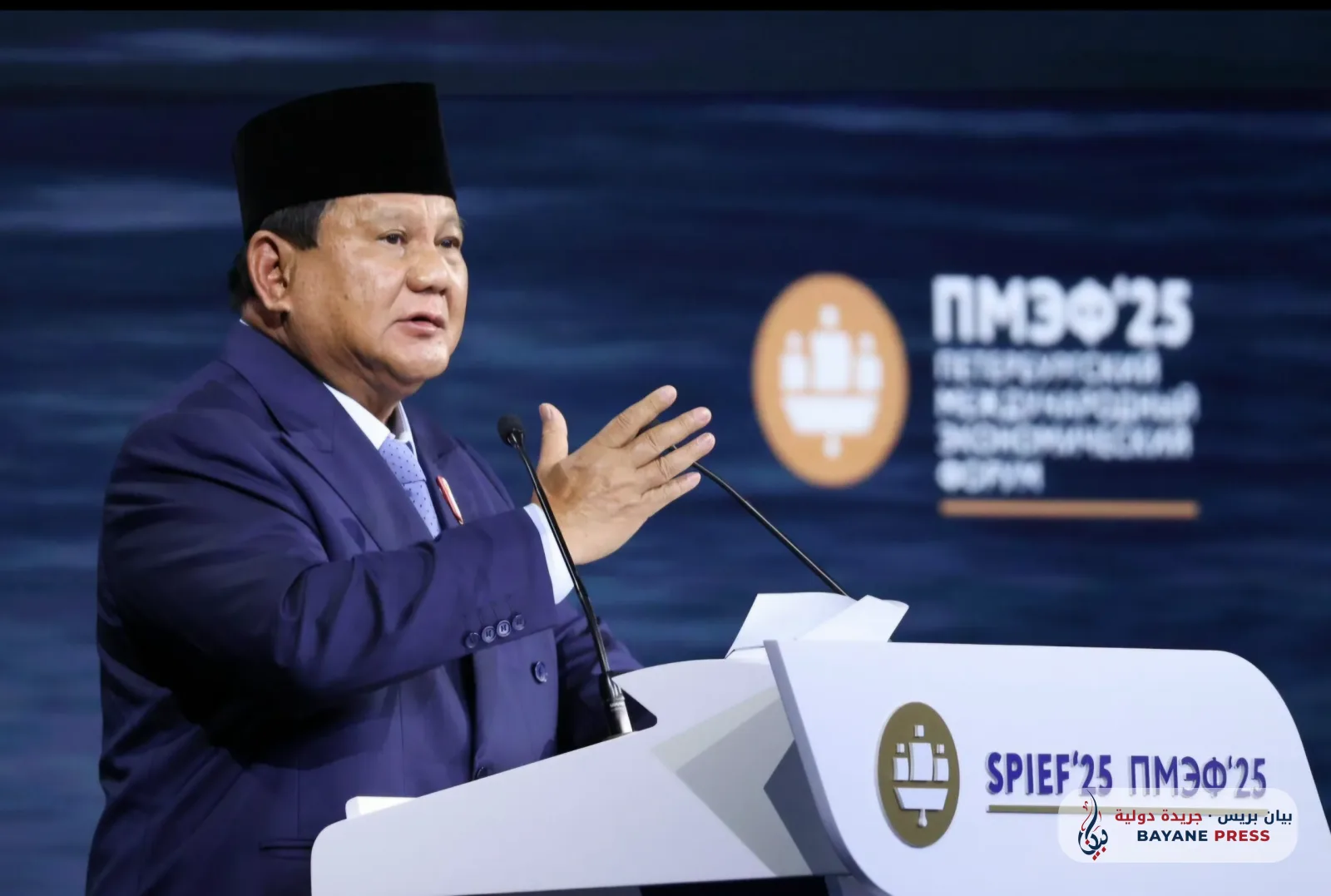
Indonesia has entered a new phase of political and security tension after the National Police revealed, on Thursday, November 12, 2026, the scale of an illegal wiretapping scandal targeting President Prabowo Subianto and a number of senior officials and political and security figures. The case involves high-ranking officers and has raised questions regarding the integrity of the institutions tasked with protecting official communications.
During a hearing before the Third Commission of the House of Representatives in Jakarta, National Police Chief, General Suyudi Ario Seto, announced that ongoing investigations have uncovered interception operations that included, in addition to the President, figures from within the Presidential Palace, the government, parliament, and political parties, as well as local officials and security leaders.
The list of targets announced extended to sensitive entities, including elements within the National Police, the Corruption Eradication Commission, and the Attorney General's Office, as well as activists and journalists, indicating that the scope of the alleged surveillance extended beyond traditional political circles.
According to information reported by Reuters and the Associated Press, the investigations included four senior security officials, among them the former National Police Chief Listyo Sigit Prabowo, who had moved to the position of Chief of the Presidential Staff before being implicated in the case, along with three other officers.
Authorities are examining the extent of the suspects' involvement in illegal communication interception and the handling of electronic data collected without legal basis, while investigations have revealed allegations regarding the deletion of recordings of the President's communications, at the request of one official and with the approval of another.
The police announced that they possess preliminary data that allows for the expansion of investigations and the consideration of more serious charges, including treason, according to Reuters. However, the mention of this charge does not imply a judicial conviction or a final legal classification of the facts.
The competent authorities have begun hearing from dozens of witnesses, including workers in the telecommunications sector and individuals linked to the relevant technical entities, in an attempt to determine how the wiretapping operations were carried out and which parties issued the instructions or benefited from the information collected.
The case has sparked sharp debate within the Indonesian Parliament, where lawmakers have demanded the identification of the true mastermind behind the surveillance orders, rather than merely pursuing those who executed them, especially in light of suspicions regarding the potential use of classified information to serve political interests.
These developments come in a sensitive context regarding the relationship between President Prabowo Subianto and his predecessor, Joko Widodo, after the connections of some individuals involved in the investigation to the former president sparked speculation about the background of the case, without those links in themselves constituting proof of any political party's involvement.
The scandal places Indonesian security and judicial institutions before a test of their ability to conduct an independent and transparent investigation that reveals individual and institutional responsibilities while simultaneously upholding the presumption of innocence and the guarantees of a fair trial.


Comments (0)
No comments yet. Be the first to react!