


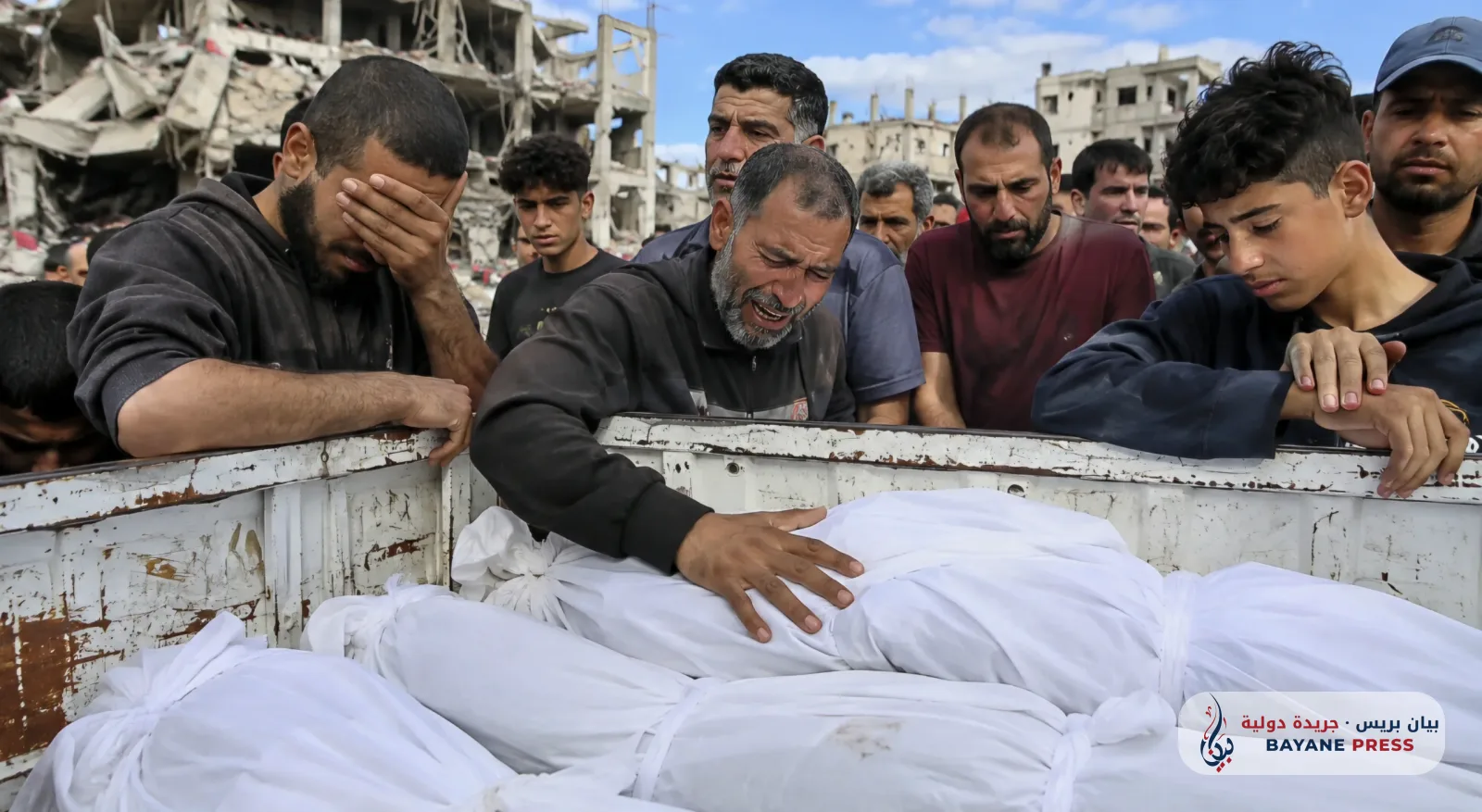
The Gaza Strip witnessed, on Wednesday, November 11, 2026, a new wave of Israeli strikes that resulted in the death of at least three Palestinians, including two brothers who died inside a tent housing displaced people in the Sheikh Radwan neighborhood, north of Gaza City. This marks a new field escalation that reflects the fragility of the ceasefire and the continued loss of life despite international efforts aimed at stabilizing the truce and creating conditions for the reconstruction of the Strip.
Palestinian medical sources reported that an Israeli warplane targeted a tent for displaced persons in the Sheikh Radwan neighborhood, leading to the death of brothers Mahmoud and Jamil Al-Absi and injuring others, while a third Palestinian was killed in a strike targeting the roof of a residential building in Gaza City, amid ongoing fears of renewed attacks on populated areas.
Commenting on the two strikes, the Israeli army announced that it had targeted militants it described as terrorists in both areas, without providing further details regarding the identities of those targeted or the evidence it relied upon to carry out the operations, while Palestinian medical sources confirm that one of the strikes hit a tent used to shelter displaced persons.
The Palestinian news agency "Wafa," citing medical sources, revealed that hospitals in the Strip received the bodies of eight dead and 29 injured over the past twenty-four hours, while the cumulative toll announced by health authorities since the ceasefire came into effect has risen to 1,622 dead and 5,878 injured, in addition to the recovery of 850 bodies from under the rubble.
These developments come after a bloody day in Gaza City on Tuesday, where an Israeli strike targeted a metal foundry in the Al-Sabra neighborhood, leading to the death of three people and causing extensive damage to the facility and nearby tents housing displaced families, after the fire spread to their property and basic necessities.
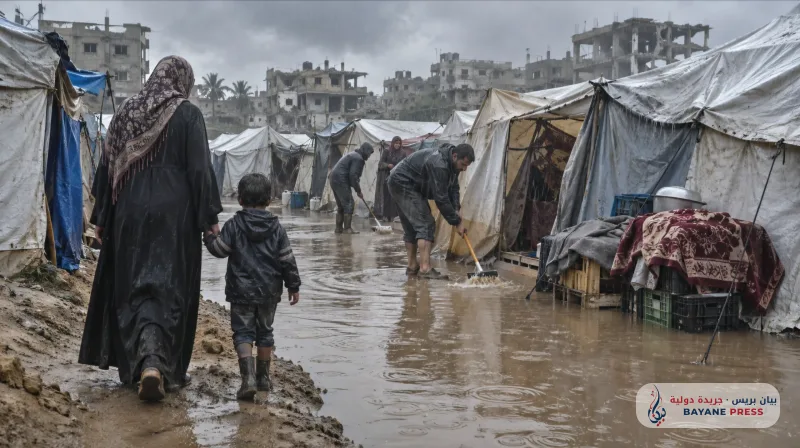
Testimonies from residents who returned to inspect the site of the bombing reveal the scale of the humanitarian suffering faced by displaced families, as families lost their clothes, blankets, and personal belongings in the fire, finding themselves in even harsher living conditions at a time when fears are growing regarding the approaching winter and the lack of protection and shelter.
Politically, negotiations regarding the implementation of the ceasefire agreement continue to face fundamental obstacles, most notably the dispute over the disarmament of Hamas and the mechanisms for Israeli withdrawal from the Strip, as available data indicates that the Israeli army continues to control about two-thirds of Gaza's territory, imposing broad restrictions on the movement of residents and the possibility of their return to their areas.
Israel accuses Hamas of attempting to reorganize its ranks and restore its military capabilities, while the movement affirms its commitment to the truce agreement and accuses the Israeli side of continuing military operations and undermining efforts aimed at stabilizing the ceasefire.
These developments coincide with the worsening humanitarian situation inside the Strip, where thousands of displaced families face a severe shortage of shelter and basic services, amid warnings of the repercussions of rain and cold on temporary camps, especially in areas lacking sewage networks and the equipment necessary to face weather fluctuations.
According to Palestinian health authorities, the total death toll since the outbreak of the Israeli war on the Gaza Strip in October 2023 has exceeded the 74 thousand mark, a toll that reflects the massive scale of human losses left by military operations, alongside the widespread destruction that has affected residential neighborhoods, infrastructure, and health facilities.
The latest strikes have raised questions regarding the ability of international mediators to ensure respect for the ceasefire, in light of the continuation of military operations and the stalling of agreements on security and political arrangements for the next phase. As negotiations continue regarding the future of the Strip, Palestinian civilians remain facing a highly difficult security and humanitarian reality, in which the declared truce does not provide sufficient guarantees to protect lives or restore a minimum level of stability.

Comments (0)
No comments yet. Be the first to react!