



Global oil prices returned to an upward trend during Wednesday's trading, November 11, 2026, driven by renewed concerns over shipping security in the Strait of Hormuz and the potential failure of de-escalation efforts between the United States and Iran, at a time when energy markets are oscillating between diplomatic hopes and the risks of continued military unrest in one of the world's most vital maritime oil transit corridors.
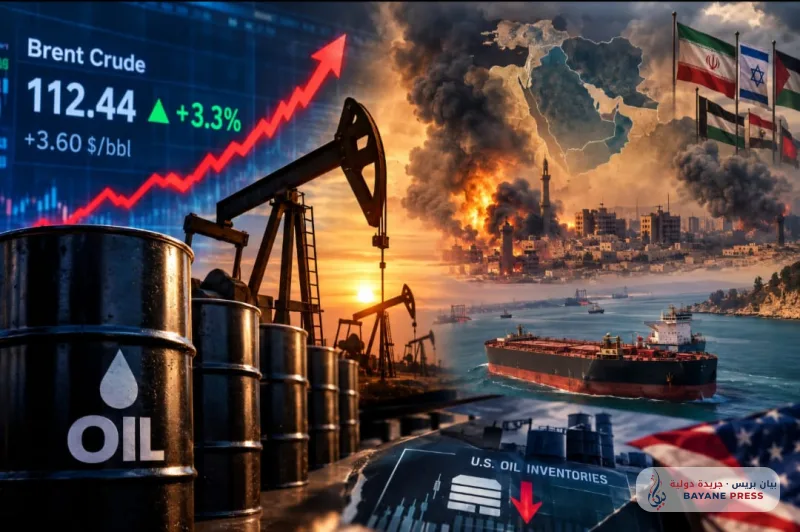
According to market data reported by Reuters, Brent crude futures rose by $2.15, or 2.35 percent, reaching $93.64 per barrel at 5:04 PM GMT, while U.S. West Texas Intermediate (WTI) crude climbed by $1.69, or 1.96 percent, to reach $87.73 per barrel.
This recovery followed declines that had pushed crude prices to their lowest levels in nearly two months, before Iranian statements regarding the refusal to remove enriched nuclear materials from the country reignited fears over the difficulty of reaching a near-term understanding with Washington, especially as the nuclear file represents one of the main axes in any potential negotiations to end the confrontation.
Market sensitivity is increasing due to the persistent risks facing oil tankers in the Strait of Hormuz and adjacent maritime corridors. Data cited by Reuters from the Washington Institute for Near East Policy indicates that 37 ships were subjected to attacks during last October, the highest monthly number since the beginning of the war, reflecting the ongoing unrest affecting maritime trade traffic, insurance costs, and shipping.
Despite the price increase in Wednesday's trading, Brent crude has lost about 21 percent of its value since the beginning of November, compared to a decline of nearly 17 percent for U.S. crude, under the influence of expectations that a political settlement could be reached to ease the risks surrounding regional supplies.
Conversely, data from Kpler, a company specializing in tracking energy flows, shows that disruptions to crude oil and condensate production in the Middle East have fallen to about 3.8 million barrels per day, with production in Saudi Arabia and Iraq recovering to levels close to those recorded before the war.
The market is also facing pressure from U.S. inventories, after preliminary industry estimates indicated a rise in U.S. crude oil stocks by about nine million barrels during the week, which could limit price gains if confirmed by official government data.
The repercussions of the crisis are not limited to producing countries but extend to energy-importing economies, which face the risks of rising transport, production, and consumer costs. Oil volatility can also influence central bank decisions, especially when rising fuel prices lead to renewed inflationary pressures.
These developments reveal that oil prices are no longer moving solely according to the traditional supply and demand equation, but have become more linked to the trajectory of the political and military confrontation in the Gulf and the level of risk borne by shipping and insurance companies.
The future of prices in the coming period remains contingent on the success of diplomatic efforts to ease tensions and restore confidence in the security of navigation through the Strait of Hormuz, alongside developments in global production and inventories, in a market that remains prone to sharp fluctuations whenever political and security signals shift.



Comments (0)
No comments yet. Be the first to react!