

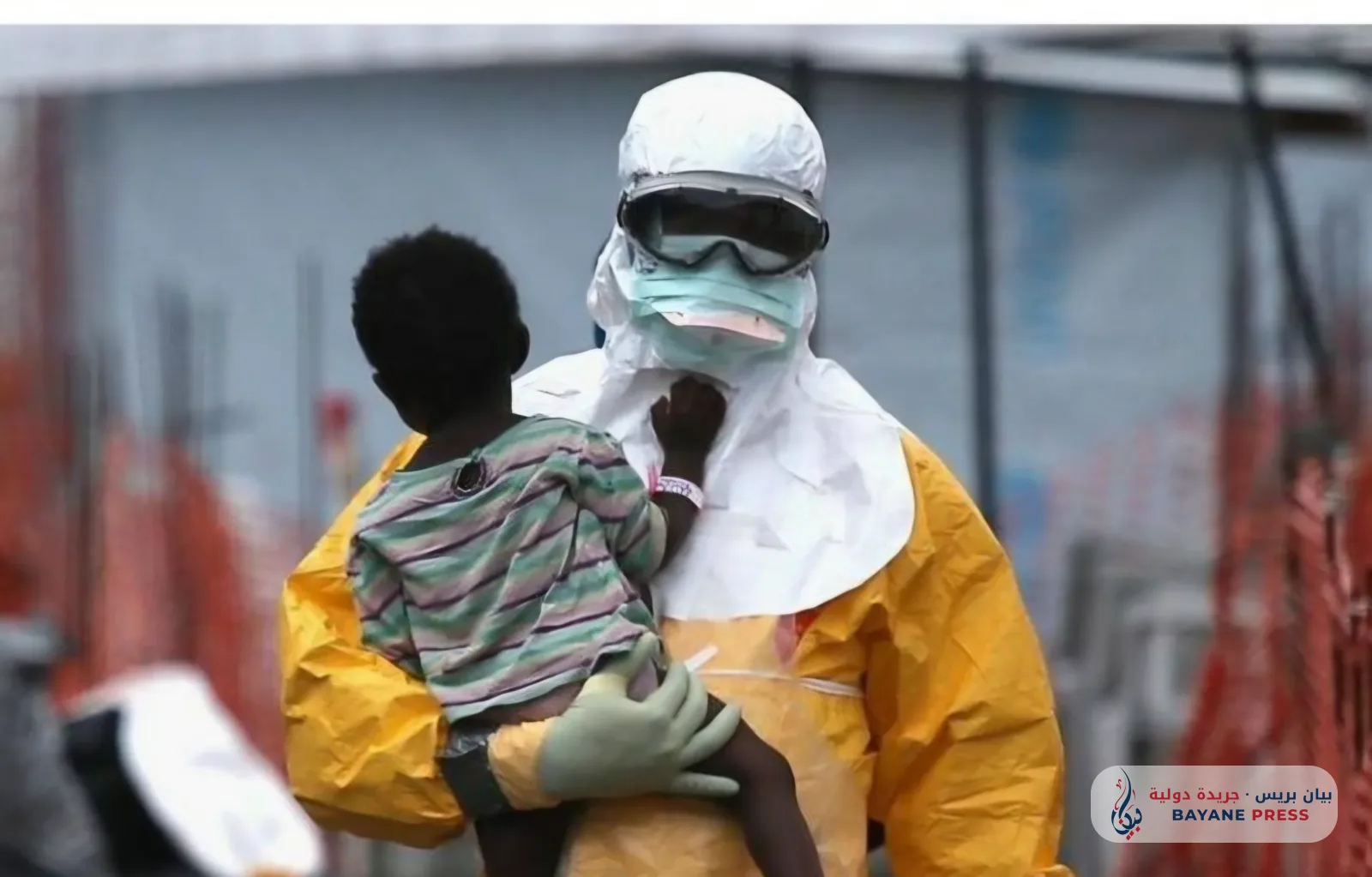
The Democratic Republic of Congo is facing a worsening health crisis as the Ebola virus continues to spread, six months after the outbreak was declared last May, amid warnings issued by Doctors Without Borders (MSF) today, Thursday, November 12, 2026, that efforts to contain the epidemic remain insufficient and that a large number of cases may not be included in official statistics.
The latest epidemiological data, published by the European Centre for Disease Prevention and Control, revealed 11,042 confirmed cases, including 5,387 deaths linked to the disease, according to data available as of November 9. This makes the current outbreak the second-largest Ebola epidemic ever recorded globally and the deadliest in the history of the Democratic Republic of Congo.
This wave was caused by the rare Bundibugyo strain of the virus, for which there are currently no approved vaccines or specific treatments, making it difficult to contain the infection, especially in rural and remote areas suffering from weak health infrastructure and limited access for medical teams.
Doctors Without Borders stated that transmission is still occurring within some healthcare facilities due to a lack of protective and sterilization equipment, and the failure to provide health workers with adequate training or financial compensation, in addition to the breakdown of ambulances due to fuel shortages and limited resources allocated for contact tracing.
Scientific estimates cited by Reuters suggest that only about half of the actual cases are being detected, meaning the scale of the virus's spread may be much larger than the announced figures. These estimates also suggest there are between two and three thousand people currently infected, amid fears that the infection will continue to spread for a long time if control measures are not strengthened.
The provinces of Ituri and North Kivu remain the most affected areas, where the epidemiological crisis overlaps with insecurity and armed conflict, hindering the delivery of aid and making it difficult to track those who have been in contact with infected individuals.
Attacks targeting areas in North Kivu have further complicated the situation. According to the World Health Organization, one such attack resulted in the death of 66 civilians, including three health workers, and led to the suspension of monitoring for more than one thousand people who were under epidemiological surveillance, in addition to losing contact with three patients confirmed to have the virus.
The World Health Organization acknowledged delays in paying some workers' dues, confirming it is working with Congolese authorities, the Africa Centres for Disease Control and Prevention, and other partners to strengthen the response. However, it warned that deteriorating security conditions and attacks on health facilities remain a major obstacle to controlling the epidemic.
Ebola is primarily transmitted through direct contact with the blood or body fluids of an infected person, or with contaminated tools and surfaces. It does not typically spread through casual contact in public places, making early detection, safe isolation, and contact tracing the most important tools available to limit the infection.




Comments (0)
No comments yet. Be the first to react!