


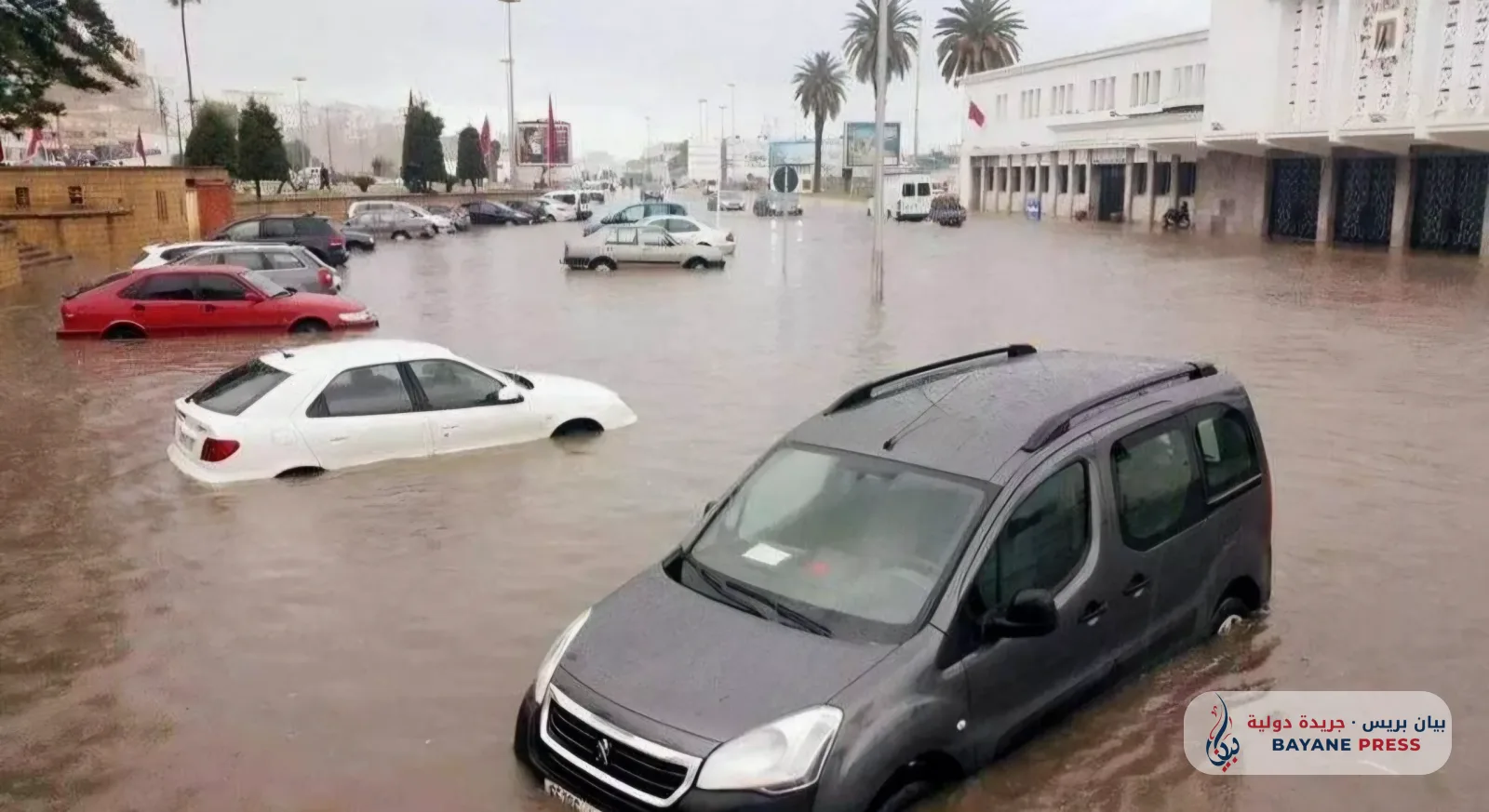
Large regions of Morocco have experienced severe weather disturbances since Wednesday, November 11, 2026, due to the Atlantic storm "Charles." The storm continues to impact the country this Thursday, bringing heavy rainfall and gale-force winds that have disrupted various facilities and services, prompting authorities to take precautionary measures, including suspending classes and increasing vigilance to address the risks of flash floods.
According to alert bulletin number 237/2026 issued by the General Directorate of Meteorology, rainfall is expected to reach between 80 and 110 millimeters in several regions, including Chefchaouen, Al Hoceima, Tetouan, Essaouira, Agadir Ida-Outanane, Inzegane-Ait Melloul, and Chtouka Ait Baha, with strong wind gusts that may reach 100 kilometers per hour locally, amid the continued orange alert level in several provinces of the Kingdom.
The storm's repercussions extended to the education sector, where decisions to suspend classes affected 12 provinces and prefectures, according to media reports, including seven in the Tangier-Tetouan-Al Hoceima region: Tetouan, Al Hoceima, Chefchaouen, Larache, Ouezzane, Fahs-Anjra, and M'diq-Fnideq. The relevant provincial directorates announced the extension of the suspension of classes throughout Thursday, November 12, in public and private educational institutions to ensure the safety of students, teaching staff, and administrative personnel, while similar measures were taken in other provinces, including Sidi Bennour, Taroudant, and Chtouka Ait Baha.
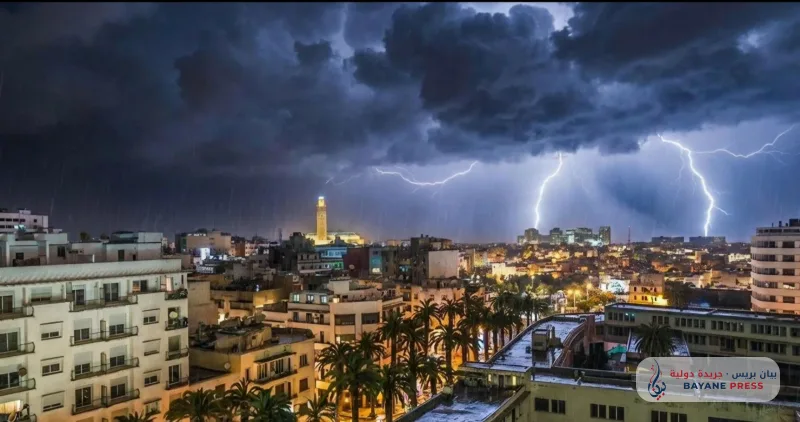
The disruptions were not limited to educational institutions; on Wednesday evening, winds and thunderstorms caused damage to high-voltage lines belonging to the national electricity transmission network, leading to power outages in neighborhoods of Casablanca, including the city center, Maarif, Fida, Ain Chock, Ben M'Sick, Sbata, Sidi Othmane, and Hay Hassani, in addition to areas in the Nouaceur province. The Casablanca-Settat Regional Multi-Service Company confirmed that its technical teams were mobilized to repair the damage, before power was restored to a number of affected areas.
Regarding maritime transport, Spanish port authorities were forced to suspend scheduled trips on Wednesday afternoon between Tarifa and Tangier City due to high waves and strong winds in the Strait of Gibraltar, a precautionary measure to protect passengers and ensure the safety of maritime navigation.
In light of these developments, the competent authorities have called on citizens to exercise caution, especially when traveling on roads prone to landslides and flooding, and to stay away from riverbeds and low-lying areas that may experience sudden rises in water levels, while emphasizing the need to follow alert bulletins and official guidelines.
These weather disturbances highlight the importance of proactive readiness for infrastructure and rainwater drainage networks, as well as the need for coordination between the various services involved to ensure rapid intervention and minimize potential damage, as monitoring of the weather situation continues in the various regions affected by the storm.


Comments (0)
No comments yet. Be the first to react!