

The historical memory of medieval Morocco harbors one of its most enigmatic and controversial tales: the story of a man whose name is linked to the rise of an independent Amazigh state on the Atlantic coast. This state not only resisted the political authorities that succeeded one another in Morocco, but historical sources attribute to its founder the claim of prophethood, the creation of a religious book in the Amazigh tongue, and the establishment of a system of rituals and rulings that contradicted the teachings of Islam in fundamental aspects. That man is Salih ibn Tarif, whose biography evolved into a complex mix of historical facts, religious accounts, and political myths, while Barghwata—the state associated with his name and family—managed to endure for centuries against successive adversaries, from the Idrisids, Umayyad-aligned forces, and Fatimids, to the Almoravids and Almohads. Between the mysterious disappearance of its founder, his lost book, and its kings who surrounded themselves with a religious aura, questions remain to which historians have not provided definitive answers, especially since most of what reached us about this state was recorded by authors belonging to a religious and political milieu hostile to it, while its direct testimony about itself is absent except for fragments transmitted by others.
Barghwata was not merely a small tribe that rebelled against authority, but rather a confederation of diverse Amazigh groups that settled in the Tamsna region, extending across the Atlantic plains of Morocco between the Bou Regreg valley to the north and the Tensift valley to the south, with the boundaries of actual influence varying from one phase to another. Its historical domain included areas located today within the perimeters of Rabat, Salé, Benslimane, Casablanca, Chaouia, Azemmour, and parts of Doukkala—lands whose pastures, agricultural plains, and rivers provided an important economic base for establishing strong local rule. Historians link the emergence of this entity to the major transformations witnessed by Morocco during the second Islamic century, when direct Umayyad influence receded due to tribal and religious revolts, and local powers emerged seeking political independence and the realignment of their relations with ruling centers in the East.
The difficulty of researching the history of Salih ibn Tarif begins with the problem of the sources themselves. To our knowledge, no complete official book issued by Barghwata has reached us, nor any continuous original text of the religious book attributed by narratives to its founder, nor administrative records directly revealing its institutions, economy, and laws. Abu Ubayd al-Bakri, who died in 487 AH, stands at the forefront of historians who preserved the details of its history in his book *Al-Masalik wa al-Mamalik*, alongside Ibn Hawqal, Ibn Hazm, Ibn Khaldun, Ibn Abi Zar' al-Fassi, and others. However, al-Bakri's significance goes beyond merely recounting news, for he preserved testimony attributed to a Barghwata man from within the power structure itself: Abu Salih Zammour ibn Musa ibn Hisham ibn Wardizin, who arrived in Cordoba in Shawwal in the year 352 AH, roughly corresponding to the year 963 CE, as an ambassador from the ruler Abu Mansur Isa to the Umayyad caliph Al-Hakam al-Mustansir Billah. Zammour was the prayer leader of his people and was accompanied by an interpreter named Abu Musa Isa ibn Dawud al-Satasi, who translated his statements into Arabic. This embassy thus became one of the most important windows through which Muslim historians came to know the reality of the Barghwata doctrine as presented by one of its representatives.
Sources differ regarding the origins of Salih ibn Tarif and his family, an issue where tribal lineages intertwine with political propaganda and religious interpretations. Al-Bakri reported from Zammour that Tarif, Salih's father and the origin of the ruling family, descends from Simeon, the son of Jacob, the son of Isaac—a narrative that grants him an Israelite origin. Other accounts suggest that Salih or some of his ancestors came from al-Andalus, specifically from the region of Barbate or Wadi Barbit associated with Sidonia, and that the name Barghwata was derived from that attribution after moving to the Amazigh tongue. However, Ibn Khaldun rejected reducing the origin of Barghwata to this explanation, favoring their descent from the Masmuda given their homeland, proximity, and the tribal extension of their groups. Another historical reading suggests that Barghwata did not have a single lineage to begin with, but rather was a gathering of various tribes and clans that united under shared leadership. As for linking its name to the Bakawati tribes known in Morocco during the Roman era, this was proposed by some researchers based on the similarity of names and geographical domain, but subsequent linguistic and historical studies contested it, to the point where this linkage has become an unsupported hypothesis in a number of specialized references.
It cannot be asserted that all narratives attributing Jewish origins to Salih were fabricated for propaganda reasons, just as they cannot be adopted as definitive historical truth. Lineage in medieval chronicles was a tool to explain origins and confer or strip away legitimacy, and many movements opposed to religious and political authorities were subjected to accusations regarding the origins and beliefs of their leaders. Therefore, critical reading requires separating the existence of a historical narrative about an Israelite origin from the possession of independent evidence confirming the truth of that origin. The same reservation applies to reports describing Salih as having been Jewish and then converting to Islam, or as having adopted his religious identity as a means to establish new authority; these are details lacking decisive contemporary evidence.
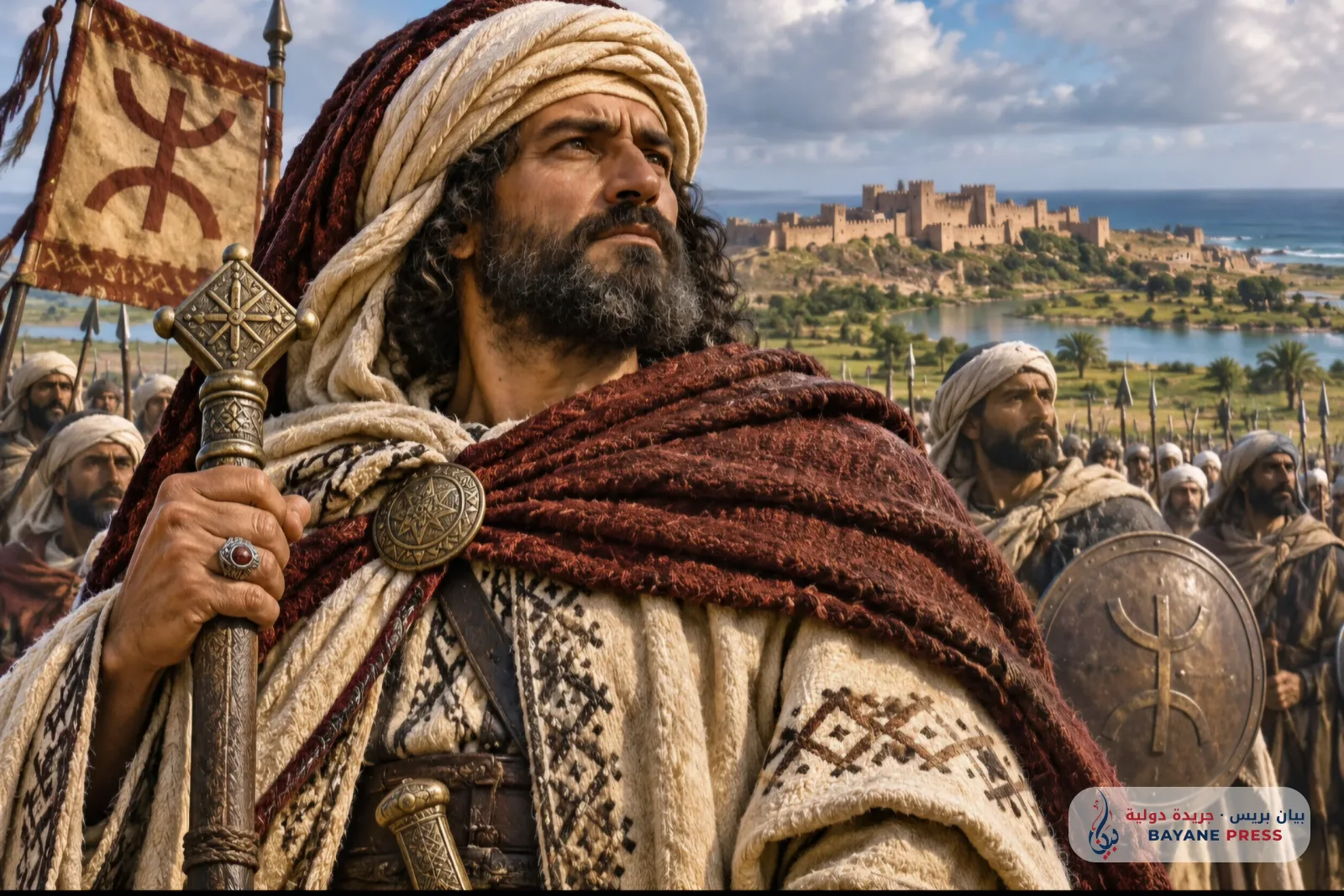
The clearest political roots for the emergence of Barghwata date back to the Great Amazigh Revolt that erupted in 122 AH, corresponding to the year 740 CE, in opposition to Umayyad rule in Morocco. The revolt was the result of accumulated tensions concerning taxation, unequal treatment, and the policies of certain governors, alongside the spread of Kharijite ideas, particularly Sufriism, which provided a religious framework for objecting to Umayyad authority. Maysara al-Matghari emerged as the leader of the movement in its initial phase, before his assassination by some of his followers and the transfer of leadership to Khalid ibn Hamid al-Zenati. The revolt witnessed major battles, including the Battle of the Nobles, and led to the weakening of Umayyad control over vast parts of Morocco. Al-Bakri mentions that Tarif was one of Maysara's companions, and that his son Salih witnessed some of the wars with him at a young age. After Maysara's death and the dispersion of his companions, Tarif settled in the land of Tamsna, where Zenata and Zuwagha tribes resided. The local communities elevated him to leadership, and according to Zammour's testimony, he remained upon Islam until his death.
Narratives report that Tarif left behind four sons, among whom Salih was chosen to assume leadership, though the exact chronology of this phase raises issues. Some sources place the emergence of the prophetic call attributed to Salih in 125 AH, while other accounts mention the death of his father in 127 AH, which may reflect a discrepancy in determining the beginning of his religious activity and independent rule, or confusion in transmitting events. Furthermore, Zammour's testimony mentions that Salih was born one hundred years after the death of the Prophet Muhammad, peace be upon him—a dating that cannot be accepted without discussing its consistency with the ages of the figures and subsequent events. Nevertheless, the accounts agree in essence that the transfer of leadership to Salih was linked to a major transformation in the nature of the tribal confederation, as it was no longer based solely on military and political leadership, but became tied to a specific doctrine that attributed properties of prophethood and legislation to the ruler.
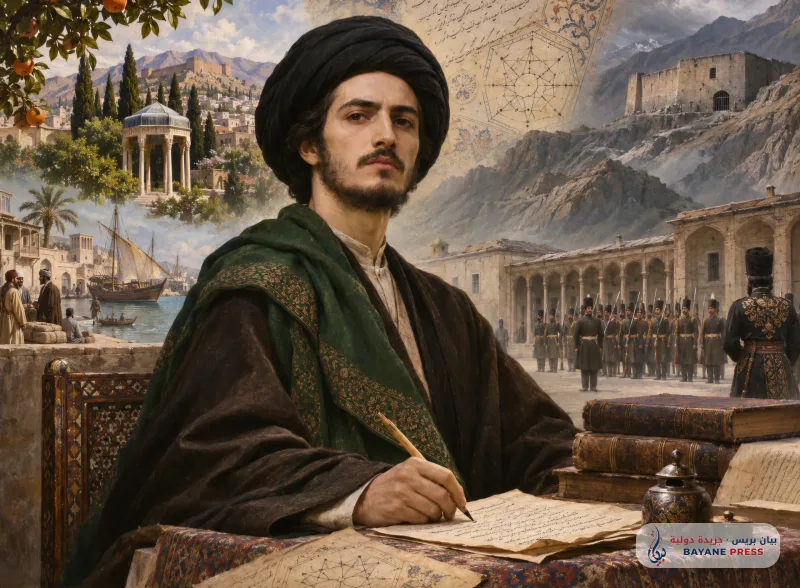
Some sources describe Salih as having been initially a man of knowledge and asceticism, possessing the ability to orate, persuade, and influence his tribal environment. Later accounts add that he traveled to the East, studied under men of *kalam* (scholastic theology), became acquainted with various religious currents, and even engaged in what books of that era called magic, sorcery (*naranjyat*), and tricks. Some narratives state that he studied under a Mu'tazilite man, but these accounts do not agree on the master's name, the place of study, or its date. Moreover, an important aspect of the stories regarding the Eastern journey and the pursuit of astrology and divination is linked in al-Bakri's text to his grandson Yunus ibn Ilyas, not to Salih himself, which suggests confusion between generations of the ruling family in some later writings. Therefore, it is not correct to state definitively that Salih studied jurisprudence, hadith, astronomy, and alchemy in Iraq and the Hijaz, or that he mastered Hebrew and Syriac, or belonged to Kaysanite and Batini circles, given that these details lack sufficient independent evidence.
From an intellectual standpoint, the Maghreb during that phase witnessed an interaction between early Islamic schools of thought, dissident currents, and local traditions, and the disagreement over the imamate, justice, and religious authority was part of political conflicts. This environment may have facilitated the emergence of the Barghwata movement, yet proving Salih's influence by a specific school of thought requires more than the similarity of certain ideas. The existence of a concept of the Expected Mahdi or occultation and return, for instance, is not enough on its own to assert that Salih received these doctrines directly from a specific Shia group, just as his divergence from Islamic jurisprudence does not necessarily mean that all his rituals were borrowed from Judaism, Christianity, or earlier Amazigh religions. Methodologically, it is more plausible that the doctrine described by sources was the product of local religious and social interactions that are difficult today to fully reconstruct.
Narratives attribute to Salih ibn Tarif that he declared his prophethood among his followers, claimed that God singled him out with a message to his people, and asserted that he was the one meant by the phrase "the righteous among the believers" in the fourth verse of Surah at-Tahrim. His call was also tied to presenting the Amazigh language as the language for the book attributed to him and for the rituals he legislated, which gave it a religious presence extending beyond daily usage. Some interpretations circulated arguments using the Quranic verse that speaks of sending messengers in the tongues of their peoples to justify his claim of prophethood, but the available sources do not allow for verifying the literal text with which he addressed his followers or the arrangement of the arguments he used. The core issue remains that Islamic chronicles attribute to him the claim of prophethood after the Prophet Muhammad, peace be upon him, which explains a major part of the stance taken by Muslim jurists and historians against his movement.
Not content with his well-known name, Salih reportedly adopted multiple titles attributed to different languages. He was called Salih in Arabic, Malik in Syriac, 'Alim in Persian (*Ajamiyya*), Rurbiya in Hebrew, and Wuryawuri in Amazigh—which sources interpreted as meaning "the one after whom there is nothing." The spelling of these names varied in transmission, and thus their linguistic connotations cannot be relied upon definitively without independent study of their origins. However, the multiplicity of titles reveals an aspect of the image that the Barghwata narrative, as transmitted by Zammour, sought to project regarding the founder of the movement: as a figure possessing a status transcending the limits of tribe and language, tied to a cosmic conception of mission and authority.
The concept of the Expected Mahdi also stands out prominently in this doctrine, as sources mention that Salih claimed to be the Greater Mahdi who will return at the end of time, fight the Antichrist, fill the earth with justice just as it was filled with oppression, and that Jesus son of Mary, peace be upon him, will be among his companions and pray behind him. He was also reported to have used sayings attributed to Moses, peace be upon him, Satih the soothsayer, and Ibn Abbas to lend legitimacy to his claim. These details do not necessarily reveal a single specific origin for the doctrine, but they illustrate the way narratives linked Salih's persona to eschatological concepts well-known in various religious milieus. The idea of the awaited return later transformed into a core element in explaining his disappearance, framing the continuity of rule within his family as an anticipation of fulfilling their founder's promise.
What most sparked historians' interest, however, is the book attributed by sources to Salih ibn Tarif, described as a special Quran for his followers consisting of eighty chapters (*suras*) in the Amazigh tongue. Al-Bakri mentions that the first of these chapters was Surah Ayyub (Job) and the last was Surah Yunus (Jonah), and that among them were chapters bearing the names of Pharaoh, Qarun (Korah), Haman, Gog and Magog, the Antichrist, the Calf, Harut and Marut, Talut (Saul), and Nimrod, alongside chapters named after the Rooster, the Partridge, the Locust, the Camel, and *al-hanash* (meaning the snake or serpent), as well as a Surah of the Marvels of the World, to which his followers attributed great knowledge. Some transmissions state that the aforementioned snake in the book was described as walking on eight legs—a bizarre imagery reflecting the nature of the reports that reached us, without allowing us to know whether it meant a mythological creature or a metaphorical expression that lost its meaning during translation.
The researcher is struck by the names of the religious and Quranic figures mentioned in this book, as they indicate the presence of well-known stories in the Islamic and Abrahamic heritage, yet they appear alongside the names of animals and natural elements whose doctrinal significance cannot be easily determined. Some writers have tried to explain the presence of chapters for the rooster, partridge, and snake as tied to ancient Amazigh beliefs that sanctified certain animals, but this reading remains a hypothesis requiring independent evidence. Merely naming a chapter after an animal does not prove its worship or its status as a tototemic symbol, just as every dietary rule or unfamiliar ritual cannot be interpreted as a direct continuation of a pre-Islamic religion.
The importance of the lost book is magnified because al-Bakri preserved a portion of the opening of Surah Ayyub in an Arabic translation attributed to Zammour's testimony. The text begins by mentioning the name of God, His sending of the Book to the people, and the exposition of His tidings, then moves on to speak of God's knowledge, Iblis (Satan), the steadfastness of truth, and the status of the Messenger in the lives of his followers. The transmitted text includes a phrase stating that truth cannot stand without the Messenger of God, and presents a conception of the corruption of people after the death of the Prophet Muhammad. Al-Bakri recorded limited Amazigh words, including a formula related to the mention of Muhammad, but he did not preserve the complete Amazigh text that would allow the reconstruction of its linguistic structure. Here a fundamental academic problem emerges: the researcher possesses only a partial Arabic translation of a lost religious text, transmitted through more than one intermediary, making judgments on its linguistic authenticity, style, and precise meanings extremely difficult.
There is insufficient evidence to prove that this book circulated in a unified version free from discrepancies throughout Barghwata's history, nor can it be determined whether all of its eighty chapters were authored by Salih himself or underwent additions and interpretations during the reigns of his successors. Sources attributed to his followers the belief that the speech formulated by the movement's founder was revealed scripture, and that they acknowledged his prophethood and the prophethood of some of his successors from his family. Hence, describing this text as a "Barghwata Quran" must be understood within its historical context—meaning as a book whose adherents claimed it to be divine revelation, not as part of the Holy Quran or a recognized text in Islamic creed.
The legislations attributed to Salih ibn Tarif included a specific system of prayer. Al-Bakri reported that the Barghwata performed ten prayers in a day and night—five by day and five by night. The manner of prayer was not identical at all times: some were performed by nodding without prostration, while others generally resembled Muslim prayer, with differences in movements and invocations. The narrative mentions that they performed three consecutive prostrations, raised their foreheads and hands off the ground by about half a span, placed one hand over the other at the opening of the prayer, and then repeated expressions in Amazigh expressing the glorification and oneness of God. Some details of the prayer varied according to different texts and narrators, and thus describing all their prayers as merely nodding without bowing or prostration does not align with what appeared in the original narrative.
Among the most prominent expressions recorded by al-Bakri is the phrase *"Absaman Yaksh"*, which he interpreted to mean "In the name of God"; *"Maqqar Yaksh"*, meaning "God is the greatest"; *"Ihin Yaksh"*, meaning "God is one"; and *"Wardam Yaksh"*, meaning "There is none like God." These phrases were repeated in invocations after prayer, and sources mention that some formulas of praise were uttered twenty-five times. Worshippers also recited parts of their book in various postures during prayer, concluding with a salutation in Amazigh containing the meaning that God is above His servants and nothing on earth or in heaven is hidden from Him. These details reveal a clear presence of the Amazigh language in worship, even though it is difficult to ascertain the phonetic spelling of all transmitted expressions given that they were written in Arabic script and the phonetic differences between the two languages.
Among the strangest things reported by al-Bakri is that the Barghwata did not have a call to prayer (*adhan*) or an *iqama* in the form known to Muslims, and that they determined some prayer times by the crowing of roosters, which was linked in the narrative to the prohibition of slaughtering them. Other sources mention that the expiation for killing a rooster was freeing a slave. Here, religious ritual intertwines with a legal ruling regarding an animal, yet explaining this as the existence of an independent worship of the rooster or the belief that it is a sacred creature cannot be proven from these reports alone. The narrative offers a practical reason related to alerting people to prayer, while the broader symbolic meanings remain mere research hypotheses.
As for ritual ablution (*wudu*), it took on a sequence different from the well-known Islamic ablution according to al-Bakri. It began by washing the navel and flanks, followed by cleaning oneself (*istinja*), rinsing the mouth, washing the face, wiping the neck and nape of the neck, followed by washing the arms from the shoulders, wiping the head and ears three times, and finally washing the feet starting from the knees. This image varies in some particulars among transmissions, but it reveals that the Barghwata system was not limited to adding prayers or changing their wording, but rather rearranged the rulings of ritual purity itself, giving them a distinct form tied to the legislation attributed to the movement's founder.
Regarding fasting, sources mention that the Barghwata fasted the month of Rajab and omitted the fasting of Ramadan, and that weekly fasting was among their obligations, alongside gathering for worship in the mid-morning of Thursday. Al-Bakri's text mentions fasting one day out of every week, but determining the specific day across all practices is not without difficulty in reading the narrative. As for the Eid sacrifice (*adha*), al-Bakri placed it on the eleventh day of the month of Muharram, contrary to the date of Eid al-Adha among Muslims, and other dates appear in some later writings that require cross-referencing with their origins before being adopted. These differences confirm that the rituals attributed to Barghwata represented an independent religious system in key aspects, despite retaining vocabulary and concepts familiar in Islam.
The rulings extended to wealth and zakat, as al-Bakri mentions that they took a tithe (*ushr*) from grains, and that they took nothing from Muslims entering their domain. This piece of information carries significant political import, indicating that the relationship between Barghwata rulers and the Muslim tribes allied with them was not necessarily one of total religious subjugation, but perhaps was based on a distinction between obligations imposed on followers of the official doctrine and those imposed on allies. Nevertheless, data allowing for the complete reconstruction of their financial system, or the determination of the volume of revenues, taxes, public property, and the expenses of soldiers and administration, are lacking, nor can it be asserted that the tithe was imposed on all types of livestock, fruits, and crops without exception.
In personal status law, al-Bakri reported that a man could marry as many women as he wished, provided he had the ability to cohabit with and provide for them, without being restricted to four wives. He also mentioned restrictions regarding marrying paternal cousins, the limits of prohibited kinship, the prohibition of certain forms of marriage and concubinage, and the refusal to intermarry with Muslims outside their religious community. Other narratives add special rulings regarding divorce and reconciliation, making their repetition broader than what is prescribed in Islamic jurisprudence. These details require careful reading, because differing ancient terminology may lead to exaggeration in describing certain rulings, particularly regarding the degrees of kinship permitted or forbidden.
Perhaps what draws the most attention in the transmitted judicial legislation is the variance in punishments. Al-Bakri mentioned that a thief was put to death if theft was proven against them by confession or evidence, that an adulterer was punished by stoning, and that a liar was banished from the community and referred to in their terminology as *"al-mughayyar"* (the changed one). Blood money (*diyah*) among them reached one hundred cows. These rulings suggest the presence of a stern conception of deterrence and punishment, yet the sources do not provide sufficient details about courts, judges, methods of proof, appeals, and mechanisms for enforcing judgments. Therefore, it cannot be asserted that all these legislations were applied in the same manner across different tribes and historical phases, or that the state possessed a unified judicial apparatus in the institutional sense known in later states.
As for dietary prohibitions, the narrative included forbidding the consumption of the head of any animal, preventing the eating of eggs, not eating fish until after it was ritually slaughtered (*tadhkiya*), expressing aversion to eating chicken except in case of necessity, in addition to prohibiting roosters and their slaughter. These details represent one of the strangest aspects of Barghwata's image within Islamic sources, yet they alone do not allow for determining the intellectual foundation upon which they were based. It has been said that the egg symbolized the origin of life and soul in certain ancient beliefs, and that the head was considered the seat of power and intellect, but applying these interpretations directly to Barghwata requires independent evidence. It is incorrect to turn anthropological probabilities into historical facts simply because they provide the narrative with an exciting explanation.
Sources also report accounts of seeking blessings (*barakah*) from Salih ibn Tarif's saliva, as his followers, according to the narrative, would catch what he spat into their hands and lick it seeking blessing, and carry some of it to the sick believing in his ability to heal. This practice indicates, if the narrative is true, the exceptional religious status acquired by the movement's founder in the belief of his followers. However, the sources do not prove that this practice was generalized to all rulers, nor do they confirm circulated reports about barring the common people from looking at the faces of Barghwata kings or establishing fixed rituals to conceal the ruler from his subjects. Such details remain reports that must be handled with caution, especially when they involve ascribing supernatural traits to historical figures.
In describing Barghwata society, al-Bakri goes on to speak of the physical strength, beauty, and athletic skill of the men and women, narrating that a virgin girl could jump over three lined-up donkeys without her garment touching any of them—an image dominated by the bizarre characterization for which some medieval geographical writings were known. It is incorrect to treat this story as a scientific description of the capabilities of Barghwata women, but it reveals how reports of peoples far from centers of writing became mixed with exaggerations and wondrous descriptions. Moreover, the narratives concerning women going out during seasons and chanting songs glorifying Salih and his return require clearer evidence; they cannot be adopted as fixed proof of the existence of regular religious celebrations in that form.
On the political level, Barghwata succeeded in building a wide tribal confederation that combined groups that adopted the doctrine attributed to Salih and others that retained their Islam while accepting the political sovereignty of his rulers. Narratives mention that the confederation included twenty-nine tribes or groups, twelve of which adhered to the Barghwata doctrine and seventeen of which were allies and peaceful tributaries. Al-Bakri lists the names of tribes from the first group, among them Jarawa, Zuwagha, Baranis, Banu Abi Nasir, Manjasa, Banu Abi Nuh, Banu Waghmar, Matghara, Banu Burgh, Banu Damir, Matmata, and Banu Wazaksint. As for the Muslim groups that entered under their sovereignty, he mentioned Zenata al-Jabal, Banu Yalyt, Namalta, Banu Wawusint, Banu Ifren, Banu Naghit, Banu al-Nu'man, Banu Aflusa, Banu Kuna, Banu Yaskar, Asada, Rakana, Isemin, Manada, Masina, Rasana, and Tararta, with variations in the spelling of some names across copies and sources.
This diverse composition was one of the elements of the state's strength, as it allowed for the gathering of groups that did not all agree on a single doctrine, but converged on political loyalty, military interest, and mutual protection. The system of intermarriage, covenants, hospitality, and gifts may have contributed to consolidating relations between tribal elders and the ruling family, yet asserting the existence of a tight intelligence network involving the daughters of twenty-nine tribes, or that every marriage by the rulers was part of an organized security plan, lacks sufficient evidence. It is more likely that Barghwata relied, much like many tribal confederations in medieval Morocco, on a mix of military force, alliances, kinship, and economic interests.
Zammour's testimony acquires additional significance because it provides figures concerning the forces attributed to Barghwata in the fourth Islamic century. He stated that the men of the ruling family could muster three thousand two hundred horsemen, that the tribes who embraced their religion numbered more than ten thousand horsemen, while the strength of the Muslim tribes entering under their sovereignty reached about twelve thousand horsemen. If these estimates are combined, they indicate a potential capacity to mobilize more than twenty-five thousand mounted combatants. However, these figures cannot be relied upon as independent statistics, because they were uttered by an envoy representing the state before a foreign power and may be influenced by political exaggeration. Nevertheless, they reflect the image of Barghwata as a regional power possessing allies, resources, and military mobilization capacity.
Among the striking details is that Zammour mentioned their army did not use drums or banners (*bund*), meaning the military flags known at the time—something that distinguishes them in the narrative from the armies of neighboring states that used symbols, flags, and acoustic signals to organize ranks. This information is not sufficient to judge the degree of development or simplicity of their military organization, but it raises a question about leadership and communication methods among tribal units during combat. Zammour also counted more than a hundred rivers in their land, mentioning among them the Masnat River, describing its course between its source and mouth, and the Wansifyn River connected to the area of Chellah and the Bou Regreg. These geographical names are important because they help understand the historical domain where agricultural areas and watercourses fell under Barghwata influence, even though locating all those rivers in present-day geography requires independent research.
The state's natural domain granted it the capacity for endurance, as Tamsna's fertile plains, pastures, and watercourses provided resources for agriculture and livestock breeding, while its proximity to the Atlantic coast and exchange centers in Salé, Azemmour, and elsewhere offered opportunities for commercial communication with neighboring regions. There is nothing to prove that Barghwata possessed an absolute, self-contained closed economy, or that they established a secret naval apparatus to manage regular trade with al-Andalus despite religious hostility, but their location made them an influential party in the Moroccan Atlantic sphere and helped ensure their survival despite the military campaigns targeted against them.
The story of Salih ibn Tarif's disappearance remains one of the strangest chapters of his biography. After a reign that some narratives attribute as lasting forty-seven years, concluding around the year 174 AH, roughly corresponding to 790 CE, Salih left his country toward the East—according to the report preserved by al-Bakri—after entrusting his son Ilyas with his religious teachings and enjoining him to conceal them until the state's power grew strong and it was safe from the danger of its adversaries. He also commanded him to befriend the ruler of al-Andalus, and promised his followers that he would return during the reign of the seventh king of his progeny, at which point the promise tied to his appearance at the end of times would be fulfilled. No reliable report reached us to settle his fate after that journey, nor is there a fixed grave that can be attributed to him. This occultation became part of the religious conception maintained by the ruling family, rather than merely a political journey or a temporary break from rule.
This behavior raises questions that go beyond the apparent narrative, as the testament attributed to Salih can be read as an awareness of the importance of temporarily separating internal doctrine from external political stance, so that the community could maintain its cohesion in a hostile environment. However, describing the matter as a precise intelligence plan based on deceiving the Idrisids, Umayyads, and Fatimids does not fully align with the historical timeline, because the Fatimid state had not yet been established at the time of Salih's alleged departure, nor had some of the powers that later clashed with Barghwata yet emerged. Therefore, what remains established in the narrative is the command to conceal the movement and appease the emir of al-Andalus, while other details remain interpretations added during the analysis of subsequent events.
Following Salih's disappearance, his son Ilyas assumed leadership. Sources mention that he outwardly displayed Islam while concealing the teachings left behind by his father, maintaining chastity and asceticism in his life until he died after reigning for about fifty years, roughly around the year 224 AH, corresponding to 839 CE. This phase constituted a period of continuity for dynastic rule and the consolidation of the tribal confederation, yet the scarcity of available information prevents us from knowing the details of administration, foreign relations, and religious life during Ilyas's reign. It cannot be asserted that he established a wide secret institution to spread the doctrine; rather, narratives generally mention that he adhered to his father's testament and postponed the declaration of the movement to a later phase.
The most violent transformation came with Yunus ibn Ilyas, who assumed rule after his father, openly declared the Barghwata doctrine, and worked to impose it on the groups subject to his influence. Al-Bakri attributed to him the killing of large numbers of dissenters and the clearing of three hundred [words cut off]

Comments (0)
No comments yet. Be the first to react!