



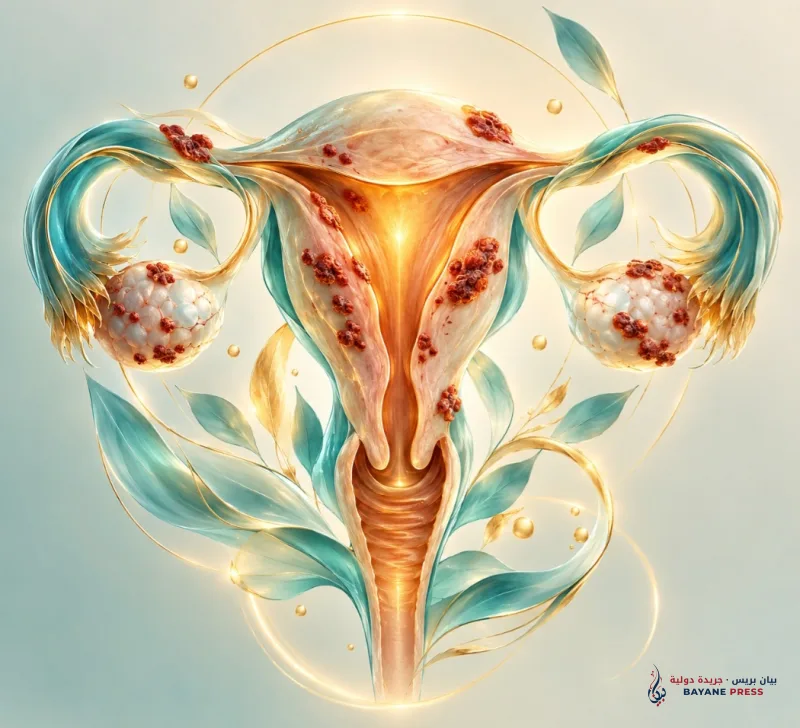
A young woman may reach the age of fifteen without her menstrual period beginning, despite normal bodily development and the appearance of usual feminine signs, with medical examinations sometimes revealing a rare congenital condition known as the "Mayer-Rokitansky-Küster-Hauser" (MRKH) syndrome. This disorder affects the formation of the female reproductive system from embryonic life and may remain undetected until adolescence.
Data from the U.S. National Library of Medicine indicate that this syndrome affects approximately one in every 4,500 female newborns. It is characterized by the absence or underdevelopment of the uterus, along with the absence or incomplete development of the upper part of the vagina, while the ovaries are generally healthy and perform their usual hormonal functions.
The peculiarity of the condition lies in the fact that the affected young woman often has a normal feminine appearance, with normal breast development and pubic hair growth, and does not necessarily experience any obvious symptoms. However, delayed menstruation is the primary sign prompting medical evaluation. Discovering the condition can turn into a psychological shock, especially when the patient learns that her ability to conceive is affected due to the absence or underdevelopment of the uterus.
The syndrome is not always limited to the reproductive system; physicians distinguish between a type one, where congenital changes are localized in the reproductive organs, and a type two, which may be accompanied by abnormalities in the formation of the kidneys or spine, and sometimes hearing or heart problems, making accurate diagnosis essential to detect any associated malformations.
The detection of the disease relies on clinical evaluation and ultrasound imaging, and may require magnetic resonance imaging (MRI) to determine the nature of the reproductive organs, alongside additional tests to rule out other causes of primary amenorrhea.
Despite medical advancements, the exact cause of this syndrome remains undetermined, although research suggests the potential contribution of genetic factors and others related to embryonic development stages. There is no scientific evidence proving that a specific action taken by the mother during pregnancy is responsible for its occurrence.
Treatment varies depending on the nature of the condition and the patient's needs, potentially including non-surgical methods or specialized interventions to address a shortened vagina when necessary, while placing special importance on psychological support and clear medical information. Reproductive potential remains linked to ovarian health and available medical and legal options, as some affected individuals can have genetically related children using assisted reproductive technology and gestational surrogacy in countries where this is permitted.
Specialists emphasize that the diagnosis of this syndrome does not detract from a woman's femininity or value, and managing it requires medical care that respects the patient's privacy and decisions. Furthermore, the absence of a menstrual period up to the age of fifteen warrants medical evaluation, but it does not necessarily mean the presence of this rare disease, as there are other, more common causes for delayed menstruation.
Raising awareness about this syndrome remains an important step to encourage early diagnosis, alleviate the psychological impact that may accompany its discovery, and help affected individuals understand their condition and make informed health decisions.


Comments (0)
No comments yet. Be the first to react!