


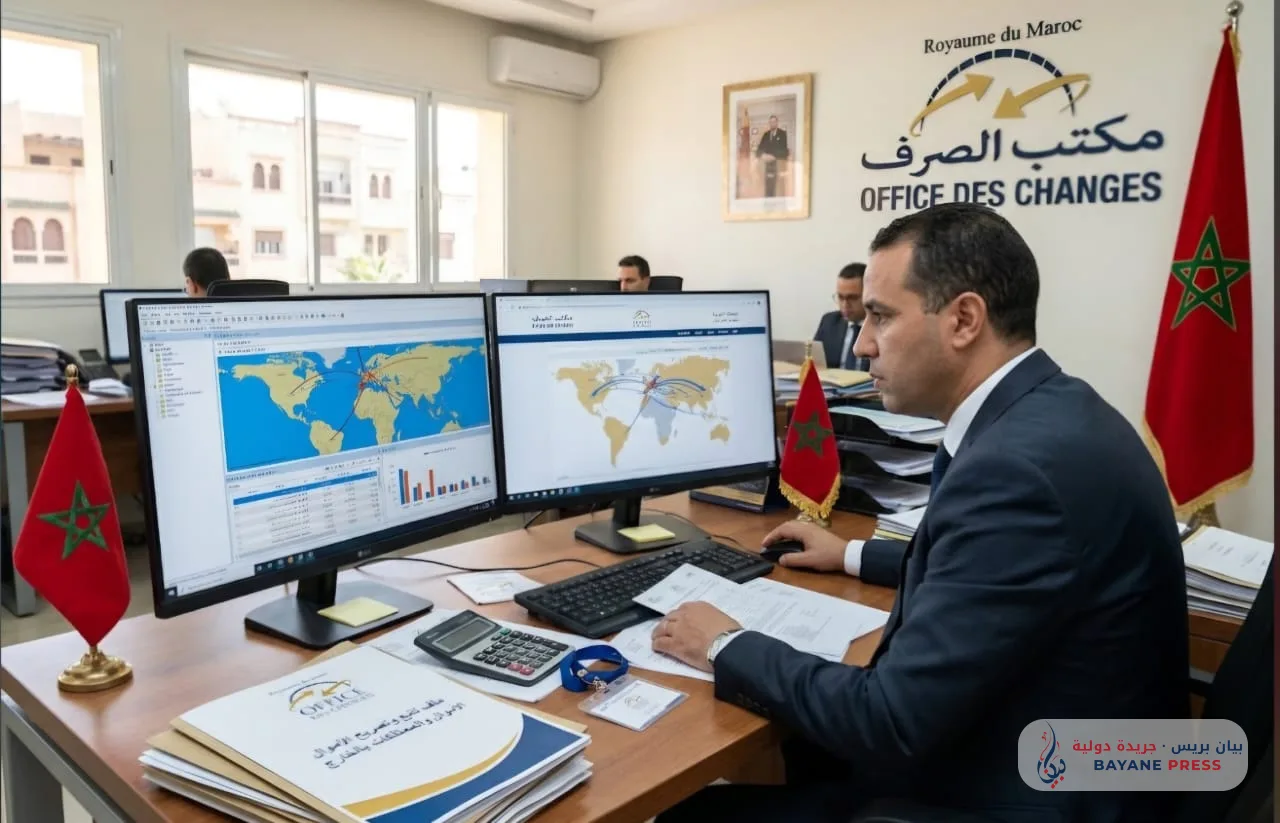
Moroccan financial authorities have shifted into high gear in the pursuit and encirclement of undeclared assets outside the Kingdom's borders, announcing the end of the phase of friendly facilities and exceptional opportunities provided by the tax amnesty. The eyes of the Foreign Exchange Office, in strategic coordination with the Directorate General of Taxes, are directed towards activating a rigorous control arsenal that is not limited solely to examining previous declarations, but extends to cross-referencing them with field databases through precise technical crossovers to detect any discrepancy or concealment in the volume of the real financial wealth of resident individuals and companies.
This drastic move is based on an integrated network of automatic financial information exchange agreements under the auspices of the Organisation for Economic Co-operation and Development (OECD), channels that have opened the door for control services to access bank account balances, investment portfolios, real estate assets, and shareholdings in companies registered in various international capitals. This transparent flow of information among peer agencies has practically shattered the wall of banking secrecy that some have always relied on to hide their fortunes or evade legal obligations.
In the midst of this inspection process, the efforts of financial investigators are focused on tracking the outflow routes of funds that left the country outside official channels and without prior authorizations, in addition to classifying the declarants' files to isolate those who complied with the conditions of tax release from those who deliberately submitted incomplete data that did not reflect the real weight of their properties. The investigations do not stop at the limits of verifying existing ownership, but delve into the mechanisms of its financing and how it was acquired, in order to guarantee the legality of the original transactions and cut off suspicious financial flows.
This campaign places those who have not regularized their situation before a direct confrontation with the punitive texts of the foreign exchange law and the general tax code, which impose severe sanctions and fines that can reach multiples of the value of undeclared goods, in addition to judicial liability in cases associated with capital flight or money laundering. This dynamic embodies Morocco's determination to protect its economic resources, enshrine tax justice, and consolidate its responsible participation within the international financial system committed to governance standards and the fight against tax havens.



Comments (0)
No comments yet. Be the first to react!