


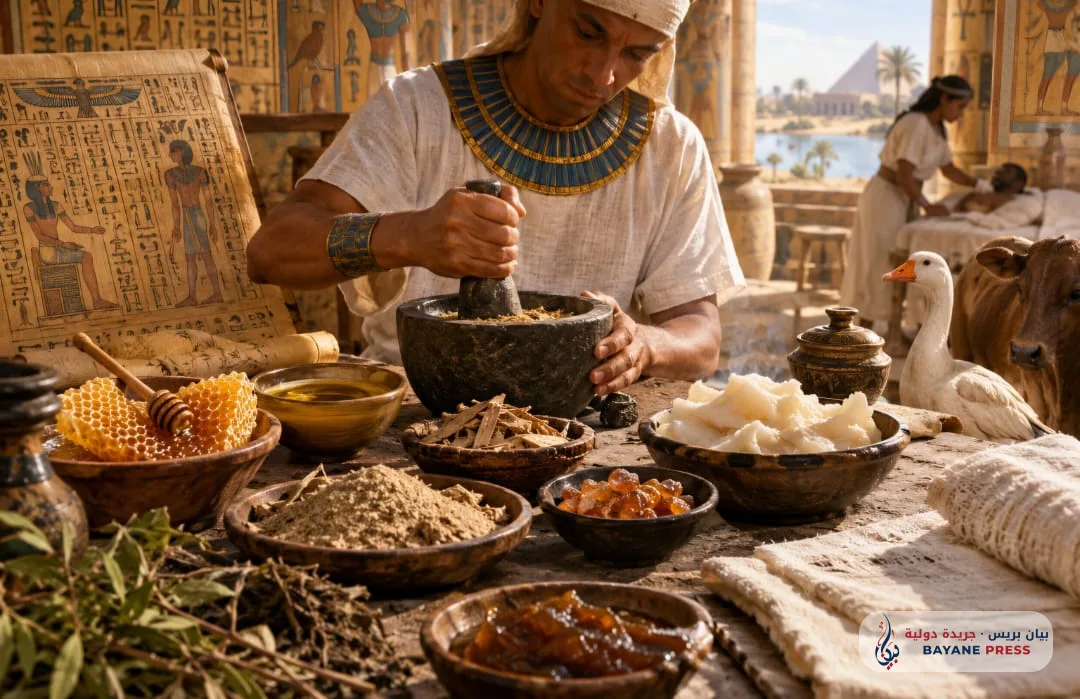
The Ebers medical papyrus, preserved in the library of Leipzig University and written in hieratic script around 1550 BCE during the reign of King Amenhotep I, is one of the largest and oldest pharmaceutical documents documented in the history of human medicine. This pharaonic manuscript contains detailed records of treatments actually practiced in the temple clinics and healing centers belonging to the House of Life, the most prominent being the historic triple recipe dedicated to disinfecting and treating deep wounds, open burns, combat injuries, and reptile bites, a medicinal formula that relied on a precise balance between the chemistry of natural materials and the physical properties of organic compounds.
This confirmed medical recipe is based on three integrated pharmaceutical pillars: pure, thermally unprocessed wild bee honey, carefully crushed willow bark, and purified goose or cattle fat, with the addition of an antiseptic resinous substance such as myrrh or desert frankincense gum. On the scale of pharaonic medicine, surgeon physicians known as "Sinu" understood through rigorous laboratory experience that goose fat acts as an insulating fatty base that prevents living tissues from drying out and bandages from adhering to them, while bee honey provides a superior osmotic concentration that extracts moisture from bacteria and prevents their multiplication, naturally releasing minute amounts of hydrogen peroxide that disinfects the course of the wound without burning regenerating cells. As for willow bark, which represents the first natural source of the salicylic acid compound, its role was to soothe severe topical pain and inhibit the heat of inflammation in the surrounding tissues.
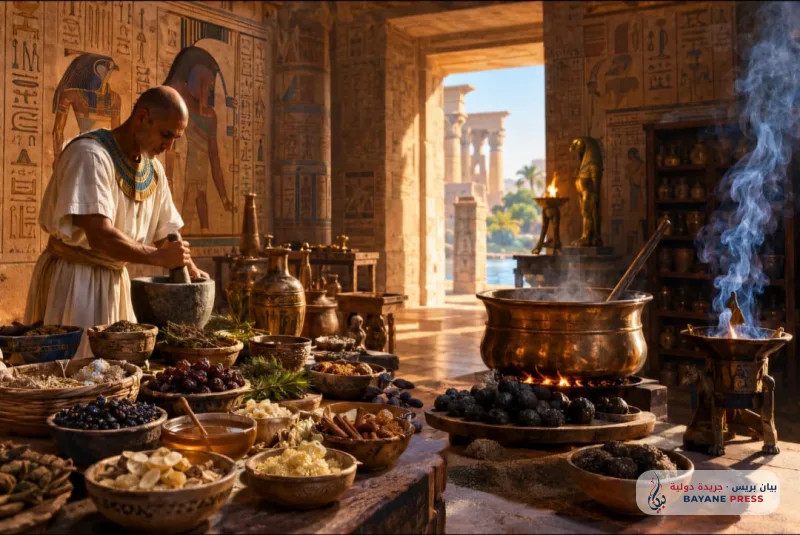
The method of preparing this ointment began by crushing the dry fibers of the willow bark inside a stone mortar made of diorite or basalt until it turned into a fine powder, and then pouring the crushed myrrh resin over it to ensure the destruction of fungi and germs. After that, pure goose fat was melted over low heat resulting from burning dry acacia wood to ensure a homogeneous heat free of soot, and the warm fat was poured gradually over the powder mixture with continuous stirring using a smooth bronze tool until it was completely mixed. When the mixture cooled to a temperature that touched the skin of the hand, the wild bee honey was slowly added so that the heat of the fat would not spoil the properties of the enzymatic activity, and the compound was stirred until it homogenized and transformed into a cohesive, dark amber-colored ointment with a penetrating aromatic aroma.
This recipe was applied after cleaning the site of the injury with a lotion made of sour beer or a diluted solution of natron salt with running, sterilized Nile water, and then the ointment was spread generously over a piece of Egyptian linen cloth washed and dried in sunlight, placing the patch directly over the open wound. The bandage was secured with linen threads without excessive tightening to allow the drainage of excess fluids, and this bandage was carefully replaced every three days accompanied by the observation of the growth of new flesh granules, a method that contemporary studies on mummies and skeletal remains of pyramid construction workers proved has supreme success in healing compound fractures and deep cut wounds, saving the injured from the specter of gangrene and fatal tetanus.
Comments (0)
No comments yet. Be the first to react!