


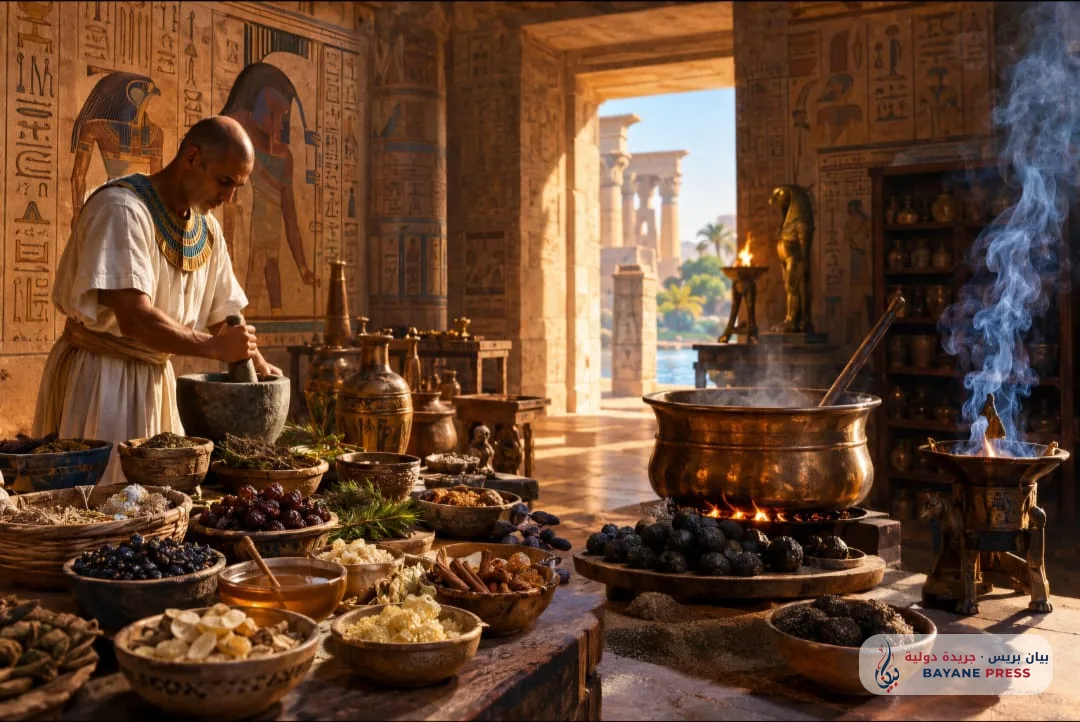
The "Kyphi" incense, known in ancient Egyptian texts as "Kapit", represents the pinnacle of the sciences of perfumery and syncretic pharmacology in the civilization of the pharaohs. The walls of the "laboratory room" in the temple of the god Horus in the city of Edfu, alongside the inscriptions of the Philae temple and the Ebers papyrus, reveal the complete secret recipe for the formulation of this unique medicinal and ritual product. Kyphi was not merely an aromatic substance burned to scent spaces, but a compound therapeutic drug combining sixteen botanical and mineral elements, used as an ingested and drunk medication to purify the respiratory system, soothe stomach disorders, and as a sacred incense released in the sanctuaries at sunset to calm the nerves, relieve anxiety, ward off nightmares, and induce peaceful sleep, as later documented by Greek historians such as Plutarch and Dioscorides.
The list of the sixteen components documented on the walls of the Edfu temple includes an extremely precise and complex mixture of gummy resins, wild herbs, oils, and dried fruits; including dried black raisins, aged sweet wine from the oases, pure wild bee honey, balsam, pure myrrh gum, male frankincense, juniper wood, juniper berries, cinnamon, aromatic calamus, wild sedge, aromatic lemongrass, pine, henna powder, wild cardamom grains, and mastic. This herbal combination fuses aromatic fixation properties, antimicrobial antiseptic agents, and volatile hydrocarbons that gradually evaporate upon exposure to the heat of glowing coals without burning suddenly or producing suffocating smoke.
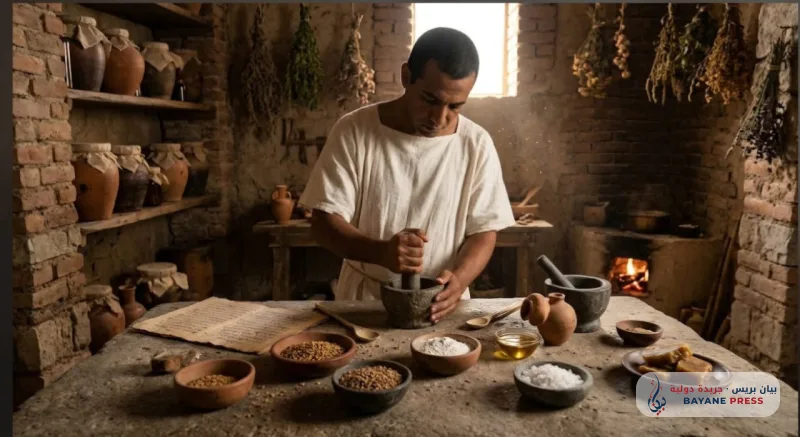
The method of crafting Kyphi requires long patience extending over weeks according to a strict sacerdotal calendar recorded on the temple walls; the process begins by soaking seedless black raisins in aged sweet wine inside hermetically sealed stone containers for several days, until the raisins absorb the liquid, their sugars ferment, and their fibers soften completely to transform into a homogeneous paste through mashing. In a separate container, the hard dry ingredients such as sedge roots, aromatic calamus, juniper berries, cinnamon, and cardamom husks are crushed using a stone mortar until reduced to a fine powder, and sifted through fine silk or linen fabrics to exclude coarse fibers that could cause uneven combustion of the incense.
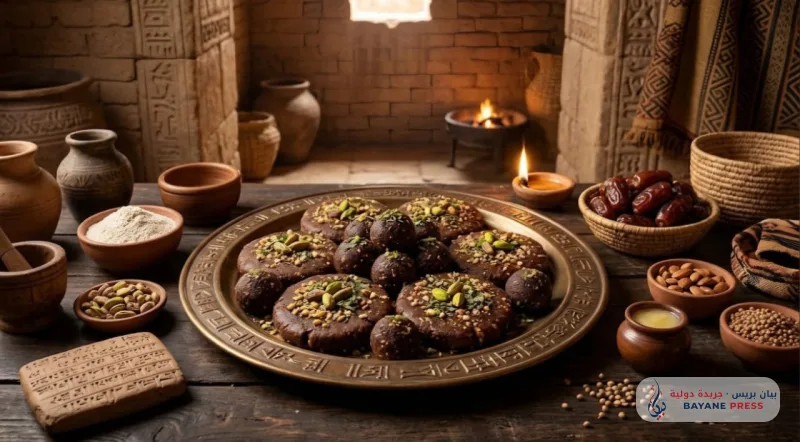
In the final phase, wild bee honey is heated very gently in a bronze pot with pine resin and balsam until the resin dissolves completely in the honey and the surface foam disappears, then the fermented mixture of wine and raisins is poured over it, stirring over a low, grayish flame. The mixture is removed from the heat and the dry vegetable powders and ground resins of myrrh and frankincense are poured into it while continuously kneading by hand, transforming the mass into a brilliant black paste of great flexibility and an extremely deep and complex aroma. This mass is molded into small, equal spheres the size of a walnut, coated in myrrh powder to prevent sticking, and then left to dry in the dark, well-ventilated rooms of the temple for long months until the aging process and the chemical reaction between its components are complete. A single grain of these spheres used to be thrown onto copper embers at dawn and dusk, rising clouds of blue aromatic smoke that the priests believed opened the doors of the ether, blessed the place, and protected it from epidemics.
Comments (0)
No comments yet. Be the first to react!