


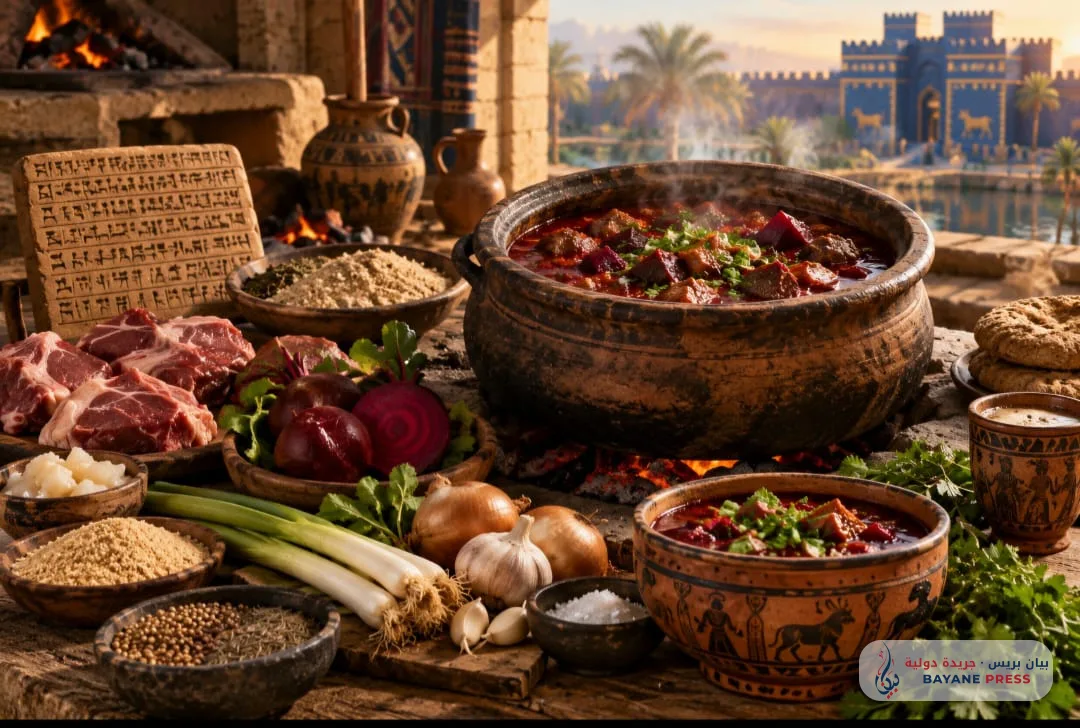
The Yale cuneiform tablets in Babylon, specifically the tablet cataloged under the code "YBC 4644" and dated around the year 1730 BC in the Old Babylonian period, represent the oldest culinary cookbook written in the form of comprehensive executive recipes in the human cultural record. These clay tablets, found in Mesopotamia and written in the Akkadian language and the complex cuneiform system, are not limited to listing food ingredients, but rather describe the exact chronological sequence for cooking meals for the royal court and priestly banquets, headed by the famous recipe for "Tuho" stew, a rich meat broth characterized by its deep crimson color and complex flavor combining the sweetness of earthy roots, the sharpness of aromatic spices, and cereal fermentation.
This confirmed Babylonian recipe is based on harmonious ingredients that reflect advanced Mesopotamian agriculture; the preparation begins by using tender pieces of fatty lamb extracted from the leg or shoulder, abundant amounts of rendered animal fat, red beetroot roots that give the dish its distinctive crimson color and historic name, in addition to a trio of sulfurous vegetables composed of wild leek, crushed garlic with rock salt crystals, and finely chopped onion. Likewise, a fundamental part of the recipe is "Babir" bread powder, a twice-baked, fermented barley bread used in Babylon and Sumer as an essential thickening agent for sauces and as a rich source of yeasts and caramelized sugars that give the broth a velvety and firm texture.
The cooking process begins by lighting tamarisk charcoal inside a clay hearth and placing a deep ceramic pot, known in Akkadian texts as "Dikaru", over the fire coals. The fat is placed at the bottom of the pot until it melts and its light smoke rises, then the pieces of lamb are introduced to sear them and brown their edges while preserving their internal juices, and subsequently a calculated amount of pure fresh water and crumbled pieces of "Babir" bread are added so they dissolve in the boiling liquid and release their starches. With the rising boil, the garlic mashed with rock salt, the chopped leek are added, and the fresh red beetroot cubes are thrown in, instantly tinting the liquid with a brilliant ruby color and providing a natural sweetness that counteracts the heaviness of the animal fat.
Before the meat reaches its optimal cooking point with half an hour remaining, the fire is lowered by removing some coals and a mixture of toasted and ground coriander seeds, green cumin, and remnants of the dried wild rue plant is added to impart a touch of balanced herbal bitterness, pouring in turn a portion of unfiltered barley beer to dissolve the caramelized sediments at the bottom of the pot and enhance the acidity of the broth. The pot is left covered with a layer of fired clay until the meat is completely tender and falls apart to the touch, the sauce concentrates, its flavors intertwine, and a brilliant layer of spiced oil floats on the surface. This stew was served in decorated ceramic vessels for kings and high priests, garnished with fresh green coriander leaves and crunchy leek stalks, to be consumed accompanied by warm loaves of barley bread fresh out of the clay tandoor ovens.




Comments (0)
No comments yet. Be the first to react!