


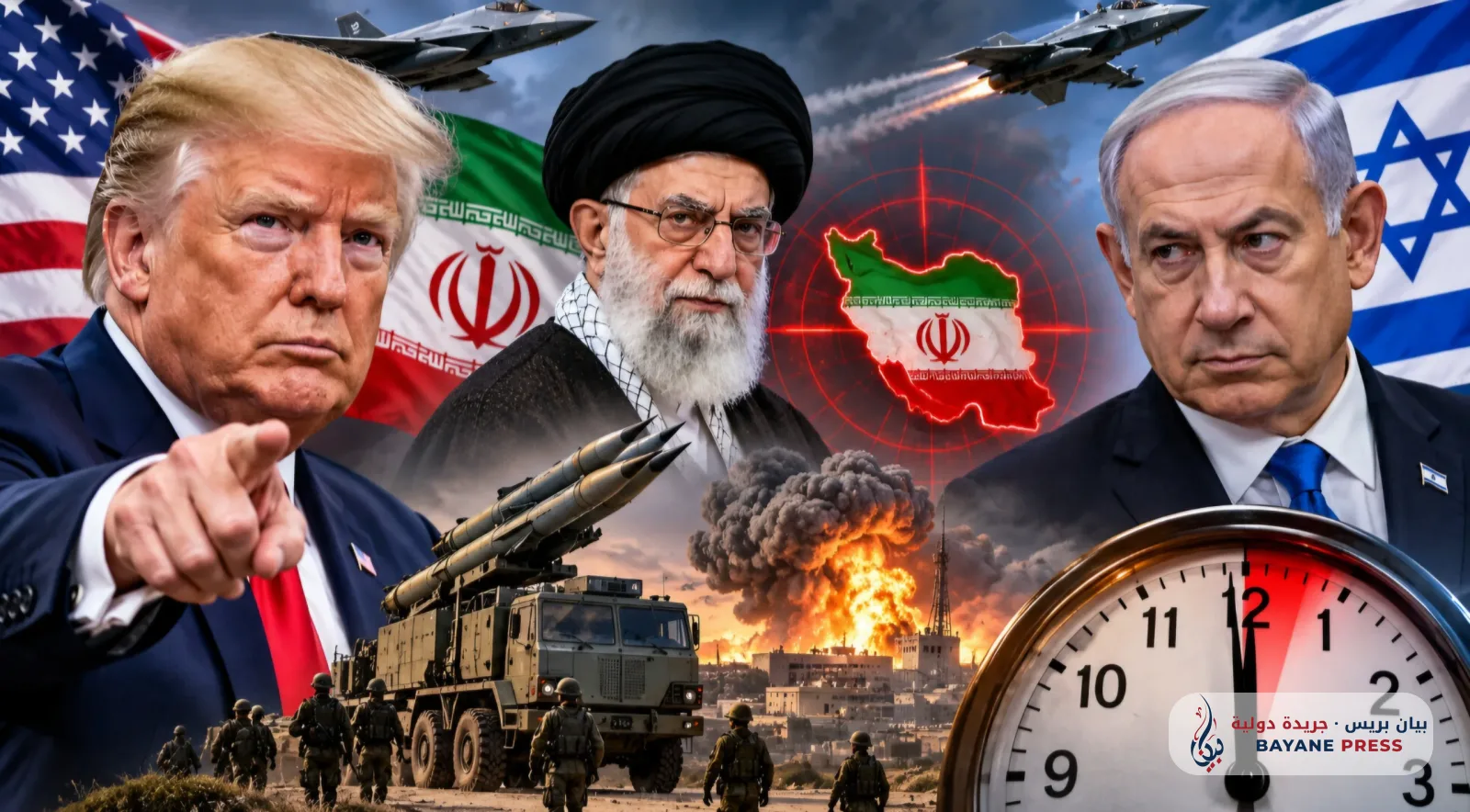
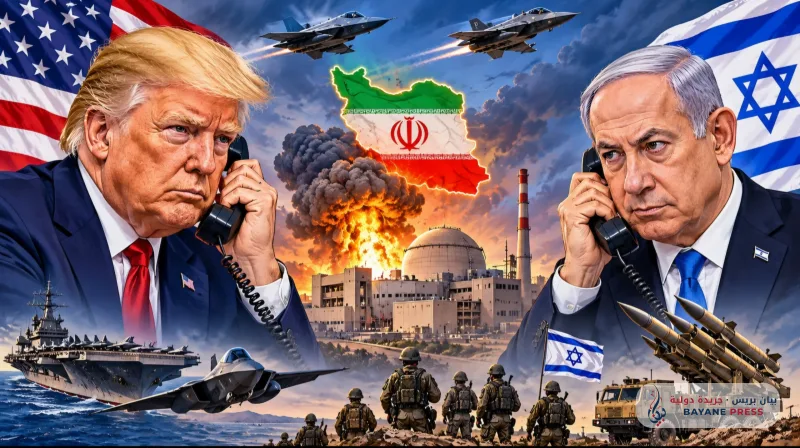
News platforms and news aggregator applications—foremost among them the "Nabd" app, citing media channels including Euronews—circulated reports of advanced U.S. and Israeli preparations to launch a decisive military strike against Iran, speaking of a military plan revealed by Donald Trump to be executed within ten minutes while awaiting the zero hour. Investigating the origin of this narrative and comparing it with official sources and international news agencies reveals that the story falls under the phenomenon of sensational headlines and out-of-context clipping for media engagement purposes. Neither the Pentagon, the Israeli leadership, nor Trump's direct statements have issued any recent announcement regarding a "ten-minute military plan" directed against Tehran. A historical review of the source of this expression reveals that it is a recycling and distortion of a famous incident dating back to June 2019, when Trump, during his presidency, stated that he had stopped an imminent military strike against Iranian targets ten minutes before its execution to avoid disproportionate casualties after Tehran shot down a U.S. drone. This statement was later remixed with his campaign statements in which he criticized Joe Biden's administration and claimed his ability to end conflicts swiftly and decisively, prompting some platforms to frame this scenario as a secret plot agreed upon with Tel Aviv.
On the field and political levels, these leaks conceal deeper backgrounds that go beyond promotional superficiality. Washington, Tel Aviv, and Tehran are waging a highly complex psychological and intelligence war in which misleading leaks constitute one of their main tools. The core of these threats focuses on exerting continuous pressure on Iran to deter it from developing its nuclear capabilities or expanding the circle of regional confrontation, in addition to Tel Aviv utilizing the threat of war as a bargaining chip and pressure tool on decision-makers in the White House to extract qualitative armament support and comprehensive security guarantees, especially during the sensitive phases following the U.S. elections and periods of power transition. Military studies issued by international research centers confirm that striking fortified facilities deep within Iran cannot be reduced to lightning operations with a decisive impact in mere minutes; rather, it requires complex logistical cover, aerial refueling tankers, and bunker-buster bombs possessed only by the U.S. arsenal. This imposes strict constraints that prevent Israel from making unilateral decisions without close coordination with the U.S. Central Command. Consequently, the current scene, far from the noise of digital alarmism, remains governed by calculations of mutual deterrence and fears of a full-scale regional war that no party favors, while the option of calculated and limited strikes remains on the table, governed by post-electoral balance and the outcomes of backchannel diplomacy.

Comments (0)
No comments yet. Be the first to react!