


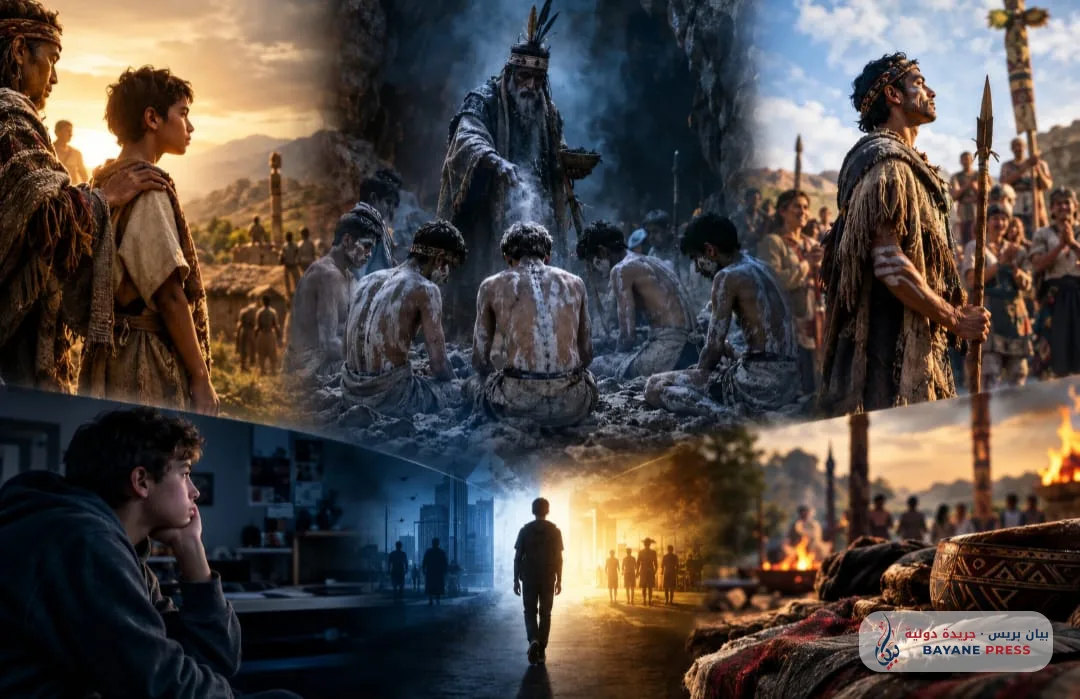
Crucial transformations in human life have occupied a central place in anthropological studies, as traditional and primitive societies have consistently strived to surround these turning points with a dense fence of strict rites to guarantee the security of the social fabric and the stability of their identity. In this context, the French anthropologist Arnold van Gennep formulated his pioneering theory on «rites of passage», which was subsequently developed by the British cultural theorist Victor Turner to reach the height of its analytical depth. This theory is founded on the premise that any existential transition experienced by the individual —such as the passage from the naivety of childhood to the responsibility of adulthood, from the isolation of individualism to the covenant of marriage, or from civil life to priestly and leadership consecration— must inexorably traverse three successive and indispensable structural stages: the separation phase, in which the individual is torn from their previous world and status; followed by the liminal or threshold phase; and, finally, the aggregation phase, in which they are reintroduced into the community's fabric with a brand-new identity and completely different rights and duties.
The intermediate stage, called the liminal phase (derived from the Latin root meaning threshold), holds paramount importance in anthropological analysis, as the initiate finds themselves in this border region suspended between two states: they are no longer a child enjoying protection and indifference, nor have they yet become a man recognized as such within the tribe. In this isolated temporal and spatial space, the subjects undergoing the rite are stripped of their names and clothing indicative of their family origins, and their bodies are often painted with white ash or clay to resemble symbolic specters that mimic the dead, being secluded in remote forests or dark caves far from the gaze of society. This total dispossession aims to erase the former self and practice a kind of symbolic death, for the core of the new identity cannot germinate and take root unless the old grain rots and completely disappears under the weight of isolation, suffering, and shared existential fear.
Within this prolonged threshold purgatory, all class privileges crumble and heads are equalized in absolute poverty and total submission to the authority of the wise elders who impart the rite, generating a unique psychological and social condition that Turner termed communitas. This is a profound human bond that transcends rigid social structures and establishes a pure existential brotherhood uniting the members of the initiatory cohort with an indestructible tie that endures throughout their future lives. Ancient societies understood with their deep intuition that psychological maturity is not quiet biological growth, but a trauma of rupture and a severe test of firmness and endurance. Therefore, they imposed upon the youth the overcoming of acute physical pains —such as deep tattoos, ritual scars, or the suffering of hunger and thirst— so that these physical marks would serve as indelible seals always reminding the individual that one day they died in darkness and were reborn as a being responsible for protecting their tribe. Conversely, this anthropological lens reveals the cause of the crisis of meaning in contemporary societies, as the suppression of these ritual thresholds and symbolic death has fostered the proliferation of prolonged psychological adolescence and fluid identities, where individuals cross the seasons of life without experiencing the decisive moment of transformation that shifts them from egocentrism to the fullness of collective meaning.



Comments (0)
No comments yet. Be the first to react!