


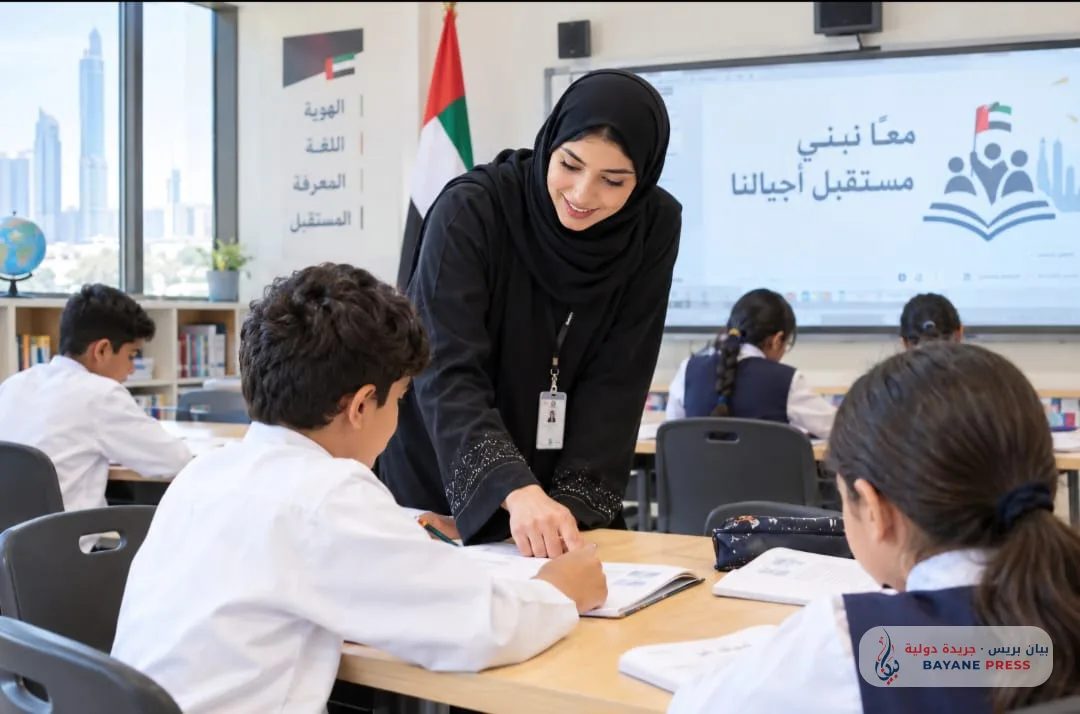
The launch by the Abu Dhabi Department of Education and Knowledge, in close coordination with the Ministry of Human Resources and Emiratisation and the UAE Talent Competitiveness Council «Nafis», of a strategic program aimed at the nationalization of the private sector education, represents a radical transformation in the philosophy of national human resource management and the design of its future pathways. This initiative goes beyond traditional patterns of Emiratisation based on the fulfillment of numerical quotas and administrative formalities, to lay the foundations for a sustainable social and educational impact within a vital system that for decades has relied almost entirely, in its operation and academic construction, on foreign expertise and imported skills.
This promising initiative is part of the comprehensive development vision of the United Arab Emirates, which aims to deconstruct centralized dependence on public employment and reorient national energies toward specialized, high-value-added sectors. Following the tangible successes achieved by Emiratisation strategies in the banking, financial, and technological sectors, education emerges as the most sensitive and influential pillar in shaping social awareness and building future generations. The strength of this initiative is manifested in its formulation based on a triple institutional integration that brings together the Department of Education and Knowledge as a specialized regulatory and legislative body, the Ministry of Human Resources and Emiratisation as the federal umbrella regulating the labor market, and the «Nafis» program with its financial and training arm, embodying an advanced model for unifying policies and resources in the service of sustainable development pathways.
The objectives of this program are not limited to the margins of employment, but are based on consecrating national and cultural identity in a school environment characterized by the diversity of its international curricula, including British, American, the International Baccalaureate, and others, environments that host a large segment of Emirati students. From here, attracting the Emirati teacher allows the teaching of identity subjects, Arabic language, social studies, and moral education with a pulse emanating from a real experience of local culture and heritage, in addition to building solid and effective communication bridges between school administrations and parents to overcome any cultural misunderstanding, and presenting inspiring national models and references that contribute to shaping the student's personality and deepening their sense of belonging within the classrooms and educational activities.
To ensure quality and competitiveness, the program moves away from random hiring by focusing on closing the skills gap through professional training pathways in cooperation with faculties of education and global expertise houses, in order to equip cadres with the most modern teaching methods and digital education strategies, and enable them to obtain accredited professional licenses for teaching in the country, which raises their efficiency and competitiveness to match strict international standards. This training also extends to include organizational and leadership structures, by enabling citizens to assume roles in academic and vocational guidance, psychological counseling, and department management, up to school leadership and effective participation in formulating the internal policies of educational institutions to ensure their alignment with the strategic visions of the State.
This vision would not have been complete without addressing the historical challenges that previously limited the attractiveness of the private education sector for citizens, primarily the differences in financial privileges compared to public education, and the demanding requirements and working hours. The initiative has provided a safety net and qualitative incentives through direct financial support mechanisms from the «Nafis» program, which is responsible for bridging the salary gap between the two sectors, offering childcare subsidies and retirement contributions, in addition to establishing regulatory frameworks that guarantee job stability and clear career paths, and contribute to reshaping social culture toward the teaching profession as a pioneering professional route for building expertise and development.



Comments (0)
No comments yet. Be the first to react!