


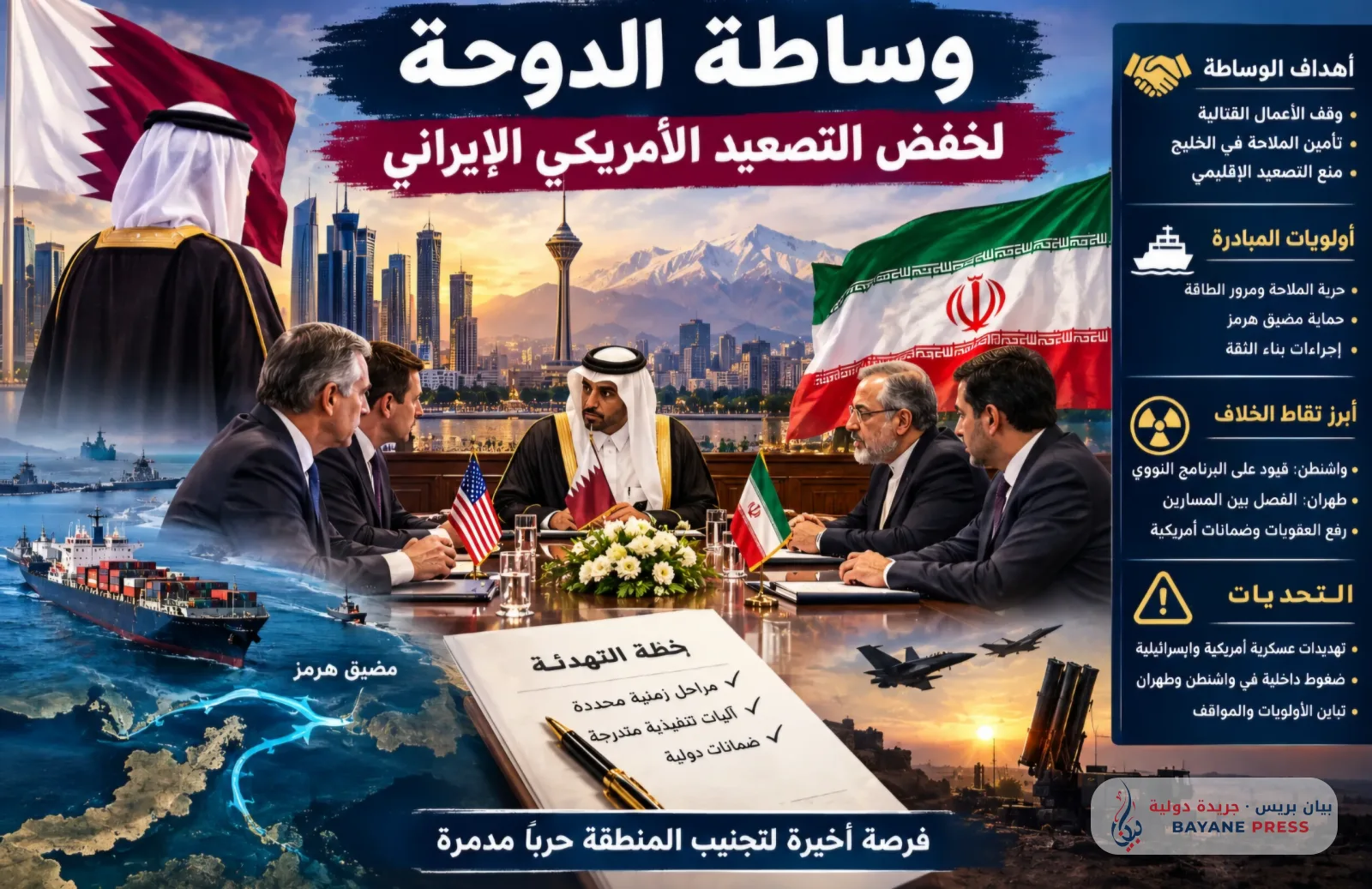
The return of Qatari mediators to the Iranian capital, Tehran, reflects a qualitative intensification of diplomatic efforts aimed at containing the escalating confrontation between the United States and the Islamic Republic of Iran. This round of negotiations, conducted in close and direct coordination with the U.S. administration, comes at a critical and sensitive juncture that tests the ability of backchannel diplomacy to defuse rapidly accelerating military escalation in the region and to forge common ground leading to a draft interim settlement agreement preventing a slide into an open, large-scale regional clash.
Qatari moves are based on a comprehensive draft action plan presented to the Iranian side, which includes progressive implementation mechanisms and specific timelines to test both parties' intentions and their readiness for mutual commitment. This vision is based on dividing the de-escalation path into proposed time stages and precise daily procedures supported by international guarantees, allowing security and military steps to be accompanied by practical confidence-building measures. This provides the parties with room for maneuver and alleviates domestic political pressures surrounding decision-making circles in both Washington and Tehran.
The file of regional navigation security constitutes one of the main pillars of the initiative carried by the Qatari delegation. The proposed provisions focus on stabilizing freedom of maritime movement, securing international trade and energy supply flows in the waters of the Arabian Gulf and the strategic Strait of Hormuz, and shielding these vital waterways from the scope of military targeting. The initiative also prioritizes reaching a formula ensuring the cessation of hostilities and limiting mutual field strikes between Washington and its allies on one hand, and Iran and its allied regional factions on the other, to cut off any miscalculated field maneuvers that could ignite a comprehensive confrontation.
Despite the momentum enjoyed by the mediation, these efforts are colliding with thorny negotiating hurdles, foremost among which are divergent priorities. While Washington insists on incorporating binding restrictions on the Iranian nuclear program and uranium enrichment levels into the core of the first phase of any understandings, the leadership in Tehran refuses to make prior nuclear concessions, considering certain U.S. conditions to infringe upon its national sovereignty and lack realism. In response, Iran insists on a complete separation between the urgent security track and the nuclear file, conditioning any progress on clear and decisive U.S. commitments to lift or substantially ease economic sanctions, alongside guarantees preventing their reimposition, while affirming its rejection of security arrangements without a tangible economic return that ensures the stability of its markets.
The importance of this diplomatic round is magnified by its concurrence with a rising tide of warning rhetoric in U.S. and Israeli circles regarding the readiness of military options and recourse to widespread retaliatory strikes should peaceful settlement pathways falter. Consequently, Qatari mediation efforts in Tehran face an exceptional test, representing a pivotal move in a race against time to tame escalation and forge a difficult balance between Iranian conditions and Western pressures, serving as a decisive opportunity to spare the Middle East a destructive path of military explosion.


Comments (0)
No comments yet. Be the first to react!