

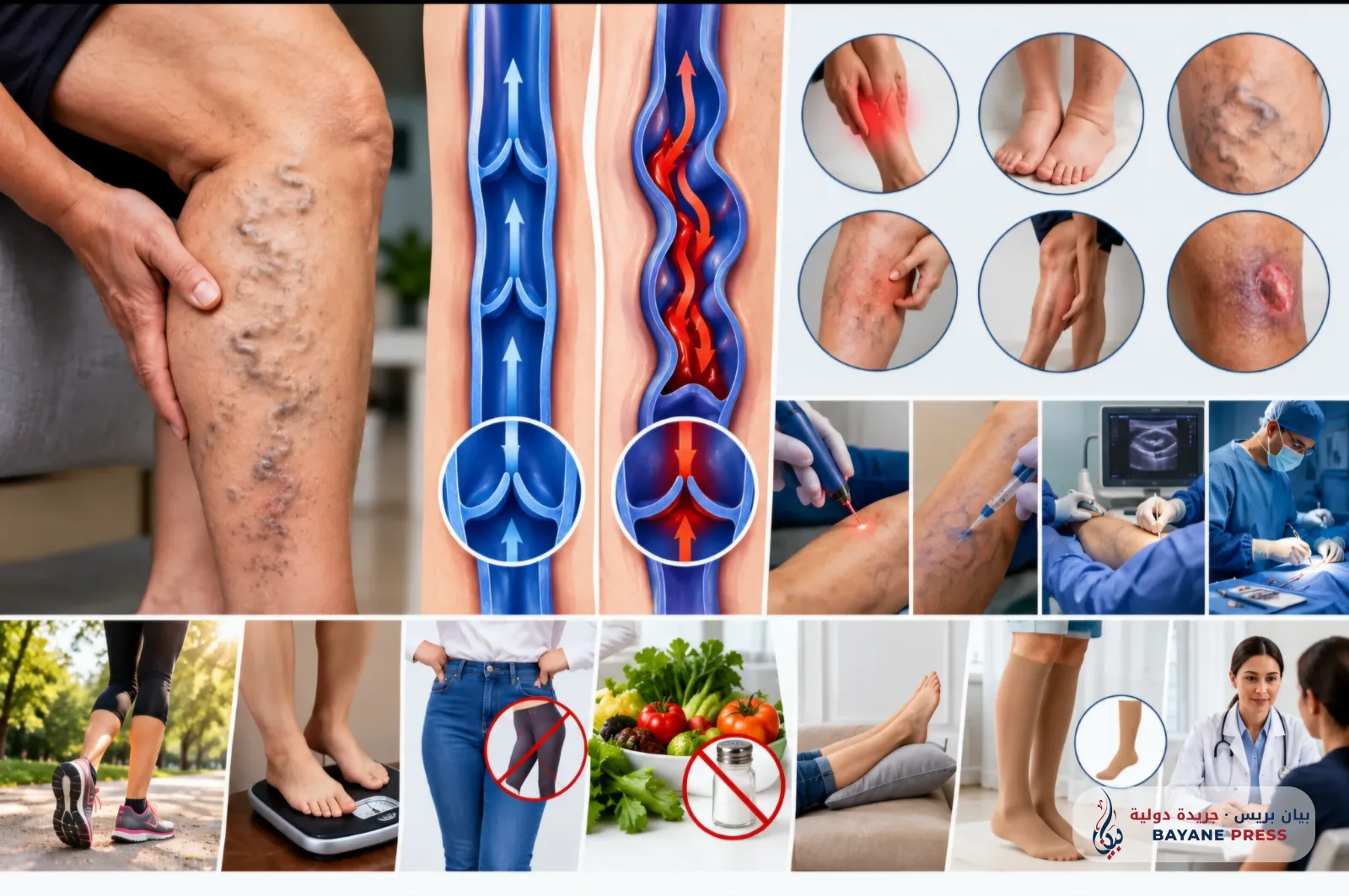
Varicose veins are one of the most common health issues affecting the legs, resulting from weakened small valves inside the veins. This impairs the efficient flow of blood back to the heart, causing it to pool and leading to blood vessel dilation. Medical sources confirm that the primary causes include aging, genetic factors, pregnancy, prolonged periods of standing or sitting, and obesity. Symptoms vary from a feeling of heaviness or aching in the legs, swollen ankles, and the appearance of protruding, twisted veins, to itching and nocturnal cramps. If left untreated, the condition may progress to troublesome complications such as slow-healing skin ulcers, superficial phlebitis accompanied by redness and pain, as well as the potential for minor bleeding upon impact. Fortunately, modern medicine offers precise and safe treatment options to manage this condition, ranging from laser therapy and radiofrequency ablation to close damaged veins, to foam sclerotherapy, and surgical intervention in advanced cases. For effective prevention and to limit the worsening of symptoms, experts recommend adopting a healthy lifestyle that includes regular exercise to stimulate blood circulation, maintaining an ideal weight, avoiding tight clothing, reducing salt intake to limit fluid retention, as well as performing light exercises when sitting, elevating the legs above heart level, and using medical compression stockings after consulting a specialist to ensure vascular health and safety.
Health & Beauty
Live ended
Causes, Symptoms, and Treatment of Varicose Veins
A comprehensive overview of varicose veins: their main causes, associated symptoms, potential complications, and the latest available medical treatments.

By
1 min read




Comments (0)
No comments yet. Be the first to react!