

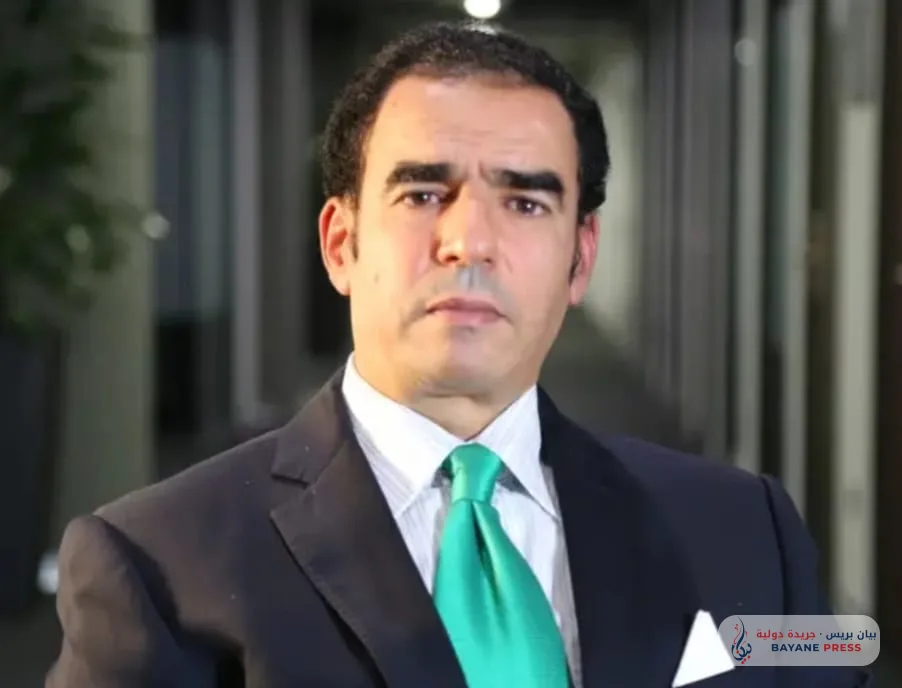
Abdallah Mashnoun
Writer and journalist residing in Italy, political affairs analyst
Interested in Arab affairs, migration issues, and research on thought and Islam.
Contemporary Islamic thought is undergoing a profound cognitive and social crisis, whose main origin is the ever-widening gap between the sacred text—with its universal objectives—and its actual representation in the behavior of some of its followers. When researchers, academics, and scholars address issues of religious thought and social discourse, they face the problem of normative reductionism: reducing religion to formal slogans or dark appearances, stripping it of its moral and spiritual essence. This article sheds light on this duality, critically and courageously addressing behavioral deviations within certain religious spaces and calling upon Muslim communities in the West to adopt an authentic prophetic model based on mercy, honesty, and active, positive integration.
Scientific and research honesty demands self-criticism and soul-searching with complete objectivity, as the academic researcher must clearly distinguish between Islam as an infallible legislative and ethical system and flawed human practice. It is regrettable to observe in some social spaces and mosques manifestations that contradict the essence of the Muhammadan message, where behaviors characterized by verbal violence, disguised ignorance, deep-seated resentment, dishonesty, the spread of backbiting, gossip, and individual selfishness sometimes emerge. Were these ethics the tradition (Sunnah) of our Prophet Muhammad, may peace and blessings be upon him? Did the noble companions and those who followed them in goodness walk this path? A thousand times no! The Prophet, may peace and blessings be upon him, was a walking Quran upon the earth, and the companions were living models of justice, mercy, and human elevation. Turning religion in the minds of some into a means of exclusion and hatred is assassinating the spirit of the Sharia and the global objectives upon which it was established.
This issue acquires a geopolitical and social dimension of paramount importance for Muslims residing in Western societies. Whoever reflects on the daily scene within these societies, especially in the European and Italian spheres, clearly perceives the impact of the mental image projected by the community. Ongoing debates about identity, freedom of faith, and the challenges of integration demand that the resident Muslim be a true ambassador of their religion. Daily dialogue with neighbors, professional transactions, and positive participation in the local social fabric are the real field where the veracity of reformist discourse is tested, far from the isolation of closed ghettos or passive assimilation. The Muslim community does not only represent itself, but constitutes a living facade by which Islam as a whole is judged. The absence of original Muhammadan ethics and their replacement by coldness provides fertile material for entrenching negative stereotypes.
What is required epistemologically and socially is the transition of the Muslim in the West from a mentality of confrontation and justificatory defense to a mentality of civilizational and moral testimony, which is practically embodied in absolute honesty in the workplace, respect for laws, the preservation of neighborly rights, and the presentation of a compassionate human model, far from fanaticism and intellectual extremism. The media are not exempt from this responsibility, as superficial stereotypes often contribute to deepening the gap, highlighting the urgent need for responsible journalism and conscious pens that do not limit themselves to emotional reactions, but delve into the essence of problems and disarm hate speech by highlighting the brilliant and successful models of community members who have demonstrated their competence and real contribution.
Stuck religious discourse suffers from a central plague represented by social tutelage and the scrutiny of others' flaws, where the individual is busy monitoring the mistakes of others and distributing certificates of heresy and deviation as if they held the keys to guidance and misguidance in their hands. The upright prophetic method taught us that the great mission of the message is to guide, not to humiliate; to show mercy, not harshness. Therefore, scholars, preachers, sheikhs, academics, and thinkers are called upon to reorient the compass of religious discourse from the inquisitive question: "What are others doing?", toward the self-reform question: "What has Islam done to my own morals? Have the lights of prophecy been reflected with sincerity, honesty, and humility in our daily behaviors?"
In conclusion, the renewal of religious thought and the restoration of the luminous face of Muhammadan Islam are not achieved through loud slogans or empty appearances, but through a sincere return to the essence of noble prophetic ethics. We urgently need an academic and social discourse that frees religion from the diseases of enclosure, violence, and fanaticism, and presents it to the world as a mercy bestowed upon all humanity. When the West—and before them our own societies—sees Muslims embodying these values as a tangible reality, only then will religious discourse recover its true dignity and be a reason to attract hearts rather than push them away.
Comments (0)
No comments yet. Be the first to react!