


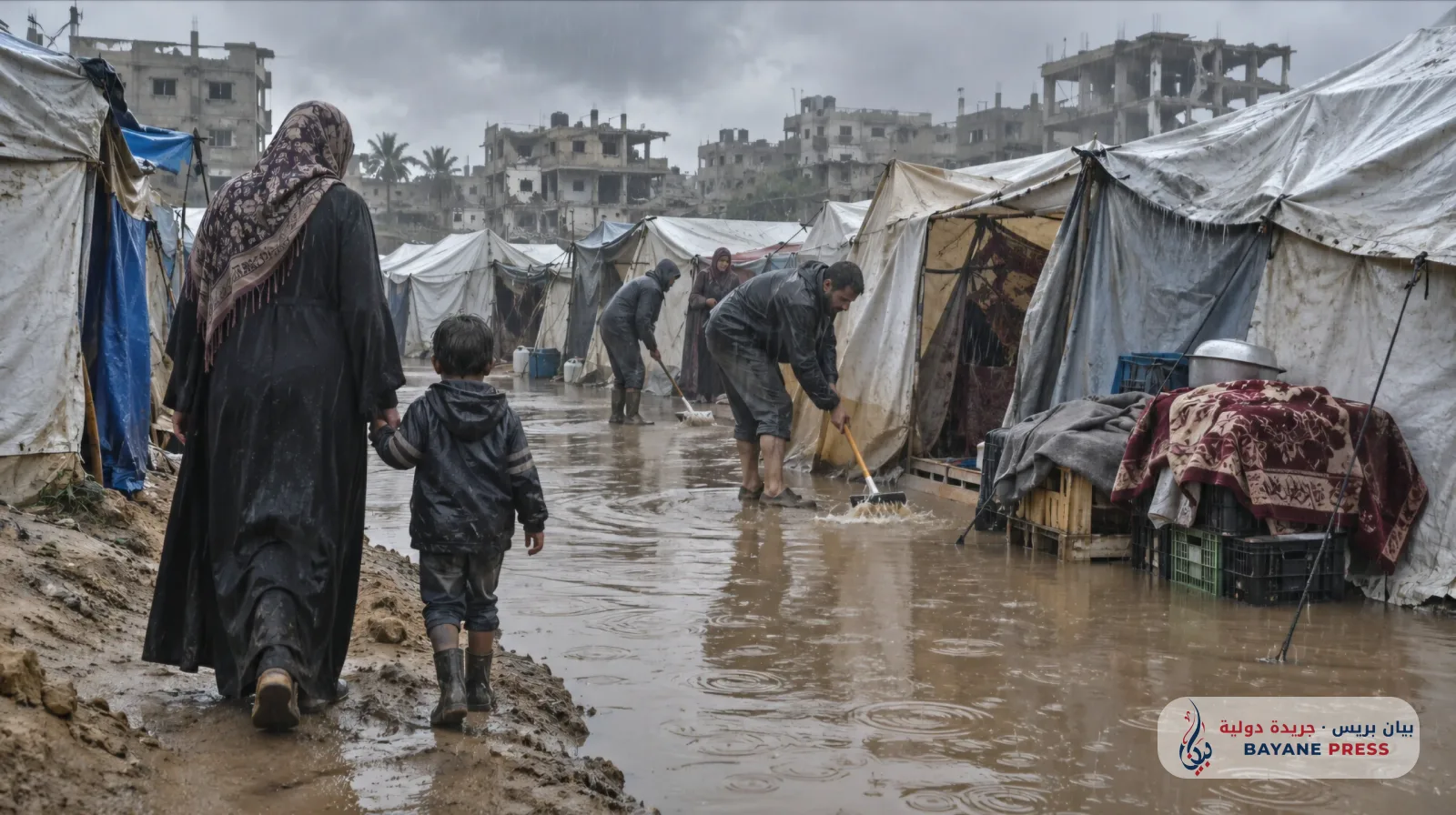
Rainfall in the Gaza Strip is no longer a fleeting weather event; it has become a force that multiplies the tragedy of thousands of displaced people living in tents and shelters that lack the most basic elements of safety and protection. With the widespread destruction of homes, infrastructure, and drainage networks, rainwater has turned into a direct threat that endangers lives and destroys what remains of the belongings of afflicted families, revealing the vast gap between declared humanitarian pledges and what actually reaches implementation on the ground.
This tragedy compels media coverage to go beyond merely broadcasting images of flooded tents and instead investigate the reasons why displaced people are unable to protect themselves from volatile weather. Foremost among these reasons is the continued Israeli restriction on the entry of tents, mobile homes, shelter materials, pumps, and drainage and rescue equipment, which exacerbates the impact of weather depressions. Therefore, accountability is not limited to counting the tents swept away by water; it also concerns the occupation's responsibility for the conditions that deprive the population of protective means, leaving them vulnerable to a tragedy that repeats with every wave of rain.
The disaster brings back questions regarding the implementation of humanitarian commitments outlined in the declaration by US President Donald Trump, the October agreement, the humanitarian protocol, and subsequent understandings—particularly the clauses related to providing shelter, delivering aid, rehabilitating infrastructure, and securing essential life-saving equipment. Media treatment requires a clear comparison between the content of these pledges and what has been achieved in the field, highlighting the distance between stated promises and the urgent needs of the displaced.
The circle of accountability does not stop at the occupation; it also includes the parties that announced their sponsorship or oversight of humanitarian and political understandings, led by the Peace Council and the US administration, as well as individuals involved in the file, including Nickolay Mladenov, Tony Blair, and Jared Kushner. It is necessary to clarify the practical steps taken by these parties to ensure the fulfillment of commitments, the pressure tools used to address the obstruction of shelter and rescue supplies, and to explain why humanitarian warnings continue without a response commensurate with the scale of the danger.
At the heart of this issue, the provision of shelter, food, water, and means of rescue and civil protection remains an urgent human right that cannot be delayed, nor should it be subjected to political bargaining or made conditional on negotiation gains. Turning the basic needs of the population into a pressure tactic represents unacceptable humanitarian blackmail and calls for a clear media stance that rejects the use of aid and shelter as bargaining chips, affirming that the protection of civilians cannot wait for new political consensus.
Appeals issued by municipalities and local institutions form a fundamental entry point for building effective international action, provided they are based on accurate field data that identifies the most affected areas, water accumulation sites, and tents and shelters at risk of flooding, as well as the immediate needs of rescue and drainage teams. The importance of the role of municipalities, Civil Defense, and humanitarian institutions in documenting damages and conveying data to the United Nations and human rights and humanitarian organizations is highlighted here, so that distress calls can transform from a general description of suffering into specific demands that can be followed up and for which the concerned parties can be held accountable.
However, confronting the crisis is not achieved through limited aid or temporary measures that cease when the weather depression ends. There is an urgent need for field intervention that includes opening safe shelters, introducing pumps and drainage and rescue equipment, providing tents and mobile homes, and mobilizing Civil Defense and municipal teams. This must be accompanied by a plan to protect displaced communities from future depressions, shifting relief work from containing the results of the disaster to addressing its causes and preventing its recurrence, without waiting for negotiation rounds or further political meetings to secure life-saving needs.
What Gaza faces goes beyond the cruelty of the rain to the failure of a system of humanitarian commitments that have not translated into actual protection for the population. Hence, the responsibility of the media emerges in combining the reporting of suffering with the documentation of its causes, the identification of responsibilities, and the holding of concerned parties accountable, contributing to the mobilization of international pressure that leads to urgent intervention to safeguard the right of the displaced to shelter, protection, and life.

Comments (0)
No comments yet. Be the first to react!