


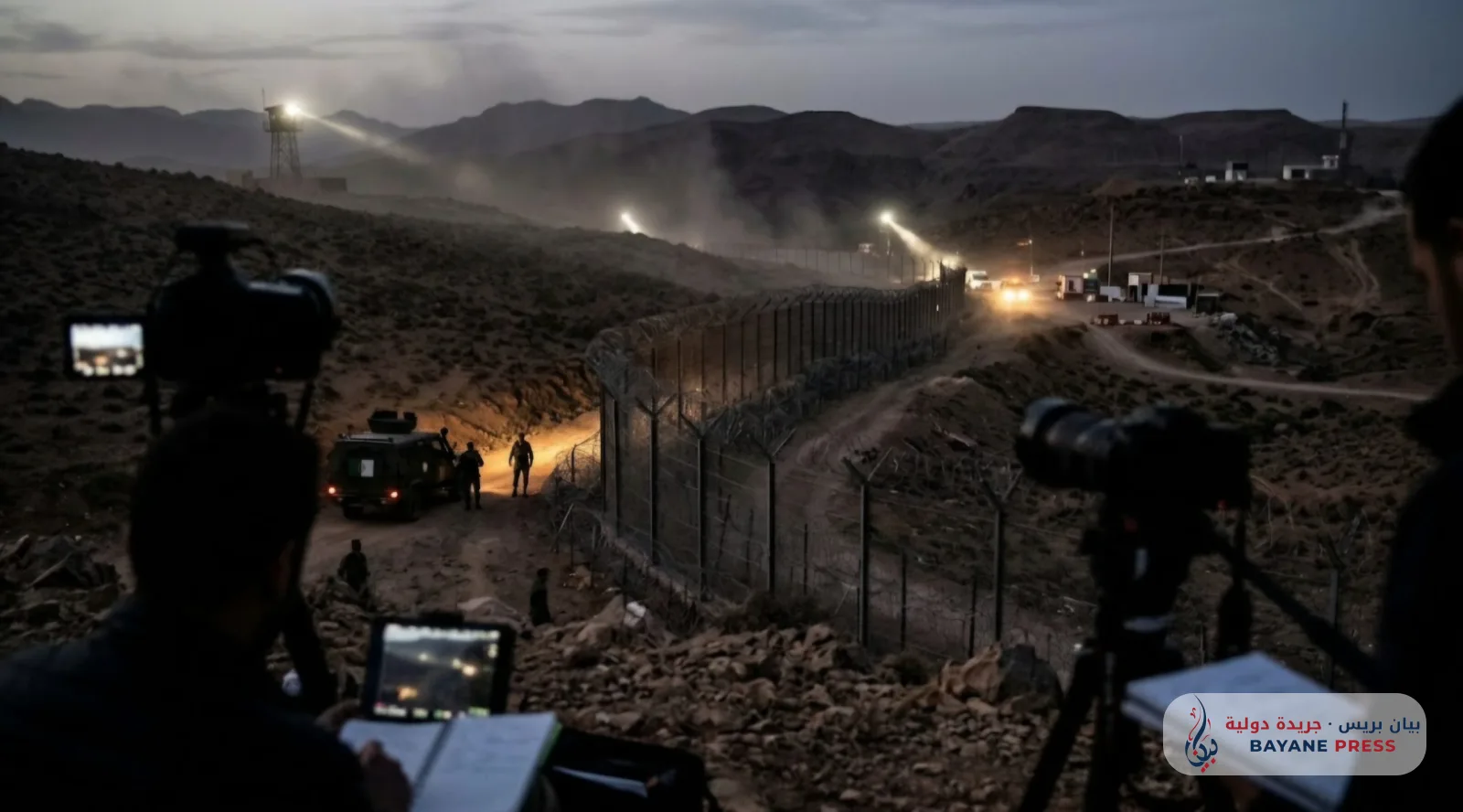
The Algerian press has resumed leveling heavy accusations against Morocco regarding international drug trafficking networks, after the Algerian newspaper «Al-Massa» published an article this Thursday discussing allegations concerning the infiltration of drug money into Moroccan political decision-making circles. This framing brings back to the forefront the issue of weaponizing security files within the context of strained relations between Rabat and Algiers.
The newspaper relied on data attributed to Moroccan media outlets concerning the use of a government official's car—allegedly belonging to an individual facing judicial proceedings in Spain related to international drug trafficking—during an event in the city of Nador. However, the newspaper shifted from presenting these allegations to broader accusations regarding an overlap between smuggling networks and centers of political influence in Morocco, without providing independent judicial evidence to prove this conclusion.
Strikingly, the incident recirculated by the Algerian press is not entirely new. The Moroccan website «Rif Press» had previously published, on September 28, 2026, a report addressing suspicions linked to a car used during an official's visit to Nador. This raises a legitimate question regarding the news value of re-presenting previously circulated data within a new accusatory context.
It cannot be denied that drug trafficking crimes and attempts to infiltrate institutions represent real challenges for any country, including Morocco, which has indeed witnessed prominent judicial files tied to international smuggling networks. Nevertheless, the existence of criminal cases involving individuals or officials does not necessarily imply the responsibility of state institutions or the existence of an official policy protecting those activities. Criminal liability remains personal and is determined by investigations and judicial rulings.
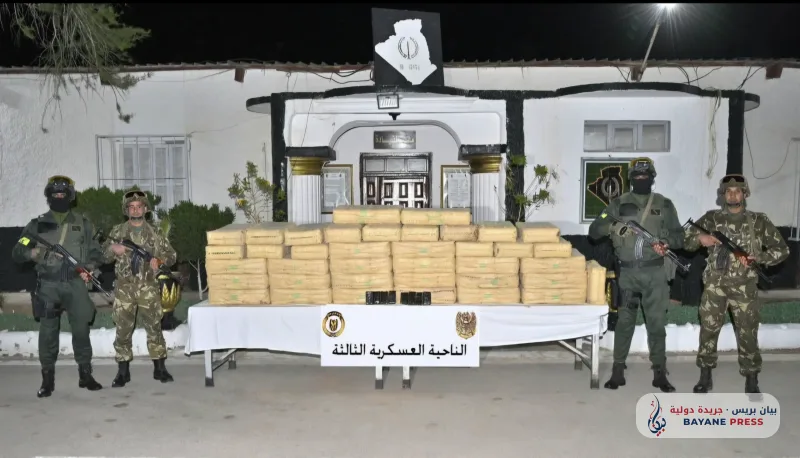
Conversely, an equally important issue arises regarding the readiness of the Algerian media to apply the same standards to accusations targeting influential figures inside Algeria. We have previously addressed in an investigative report suspicions and accusations concerning potential links between elements of the Algerian military establishment and drug smuggling networks, including allegations regarding the Chief of Army Staff, General Saïd Chengriha—accusations that warrant investigation and scrutiny and should not be treated as proven facts without independent, verifiable documentation.
The controversy over this file was renewed after Moroccan media outlets published reports on Wednesday, November 4, regarding leaks and statements attributed to Algerian activists discussing alleged relationships between smuggling networks and certain military leaderships. Despite the gravity of what was contained in those reports, they do not in themselves constitute judicial proof of the involvement of the named individuals, especially in the absence of published original documents that can be examined and verified.
Herein lies the most important question: why do suspicions related to Morocco in certain Algerian coverages transform into sweeping accusations targeting state institutions, while similar allegations inside Algeria demand a search and scrutiny that remain unresolved? Media credibility is not measured by the sharpness of accusations, but by the uniformity of the standards used to examine evidence, regardless of the accused's nationality or political and military position.
Furthermore, adopting language that suggests the security risks facing Algeria originate solely from Morocco fails to provide a sufficient explanation for the nature of organized crime in North Africa and the Sahel region, where the routes of drug trafficking, weapons, and illicit funds intersect across multiple borders, and where criminal networks take advantage of geographical complexities and security and economic conditions.
In reality, combating drugs requires acknowledging the gravity of the phenomenon away from political posturing, alongside the necessity of holding accountable anyone proven responsible, whether civilian, military, or politically influential, in Morocco, Algeria, or any other country.
The issue is not the Algerian press's right to uncover corruption files within Morocco—this is a legitimate right whenever it is based on documented information—but rather the danger of turning individual accusations into collective judgments that serve a ready-made political image. Drugs have no nationality, organized crime does not recognize borders, and any attempt to confine responsibility to a single party may obscure more important questions about the real extensions of the networks and their beneficiaries on both sides of the border.
Comments (0)
No comments yet. Be the first to react!