

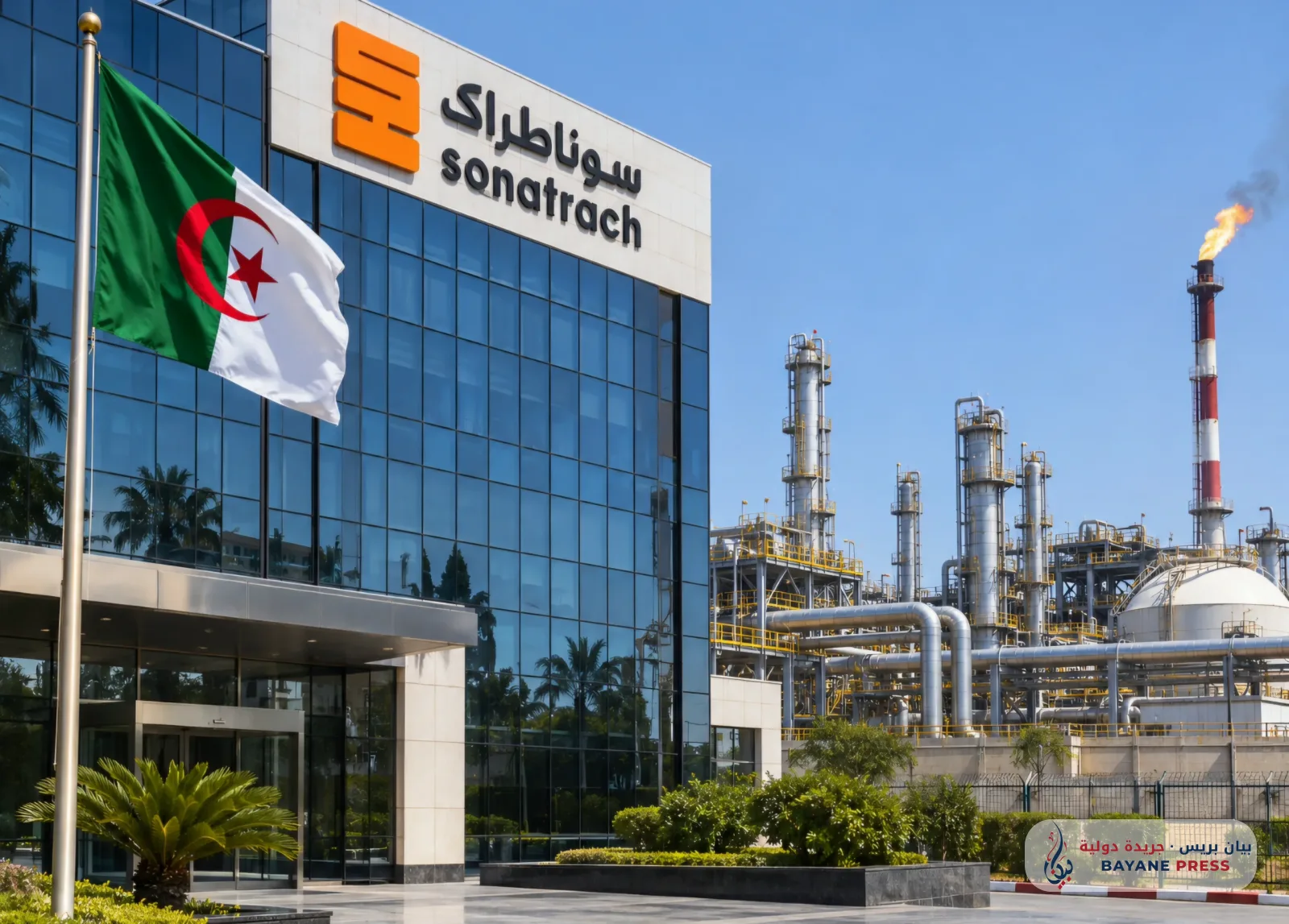
The repercussions of the economic and diplomatic crisis between Algeria and France are expanding to the hydrocarbons sector, as new data reveals that a French service company linked to the Algerian "Sonatrach" group has been impacted, in a development reflecting the shift of trade restrictions from consumer and food sectors to industrial and strategic activities.
This development comes as Algerian authorities tighten import procedures for goods and services from several countries with which they have political tensions, primarily France, placing French companies operating in the Algerian market under increasing difficulties regarding licensing, supply, and the fulfillment of contractual obligations.
Information that emerged on November 18, 2026, indicates that a French operator working with "Sonatrach" has been affected by these restrictions, as their impact extended to services related to the energy sector. However, full details regarding the identity of the project, the volume of financial obligations, and the fate of the contract have not been clarified to an extent that allows for confirming a definitive termination or the company's withdrawal from all its activities in Algeria.
These developments are not isolated from the broader decline in trade exchanges between the two countries. The value of French exports to Algeria fell during August and September 2026 to approximately 466 million euros, compared to 707 million euros during the same period in 2025, representing a decline of nearly 34 percent, with the drop rising to about 43 percent compared to the corresponding period in 2024.
Difficulties have also extended to the grain sector, which was one of the most prominent areas of trade cooperation between the two countries, after French wheat exports to Algeria declined sharply, coinciding with complaints from food industry companies regarding the complexities of obtaining necessary licenses to import raw materials and production components.
An internal document dated September 30, 2026, issued by an Algerian water desalination company affiliated with the "Sonatrach" group, reveals instructions to prohibit the import of goods and services directly or indirectly from countries with which diplomatic relations have been severed or which are classified as unfriendly. Although the document does not mention France by name, its content raises questions about the reflection of political trends on the commercial transactions of public institutions.
These developments coincided with a French move toward the European Commission, requesting it to study the extent to which Algerian restrictions comply with the obligations stipulated in the Association Agreement between Algeria and the European Union, in a step that threatens to escalate the trade dispute to a European institutional level.
This tension is linked to a series of political and diplomatic disputes, including Paris's position supporting Moroccan sovereignty over the Sahara within the framework of the autonomy proposal, in addition to judicial and security files that have deepened the distance between the two capitals in recent years.
The arrival of these restrictions in the vicinity of the hydrocarbons sector raises economic questions that go beyond bilateral relations, given that major energy projects require technical services, equipment, and specialized expertise, which are sometimes difficult to replace without additional costs or changes in implementation timelines.
Conversely, Algeria enjoys the right to regulate its foreign trade and diversify its economic partners; however, employing trade restrictions in the context of diplomatic disputes opens a debate about their impact on the investment climate and their consistency with international agreements.
The Algerian-French crisis is no longer limited to political statements and the summoning of ambassadors; it is now casting its shadow over industrial and commercial relations, at a time when companies operating between the two countries face an increasing challenge of separating the stability of economic interests from the volatility of diplomatic positions.

Comments (0)
No comments yet. Be the first to react!