


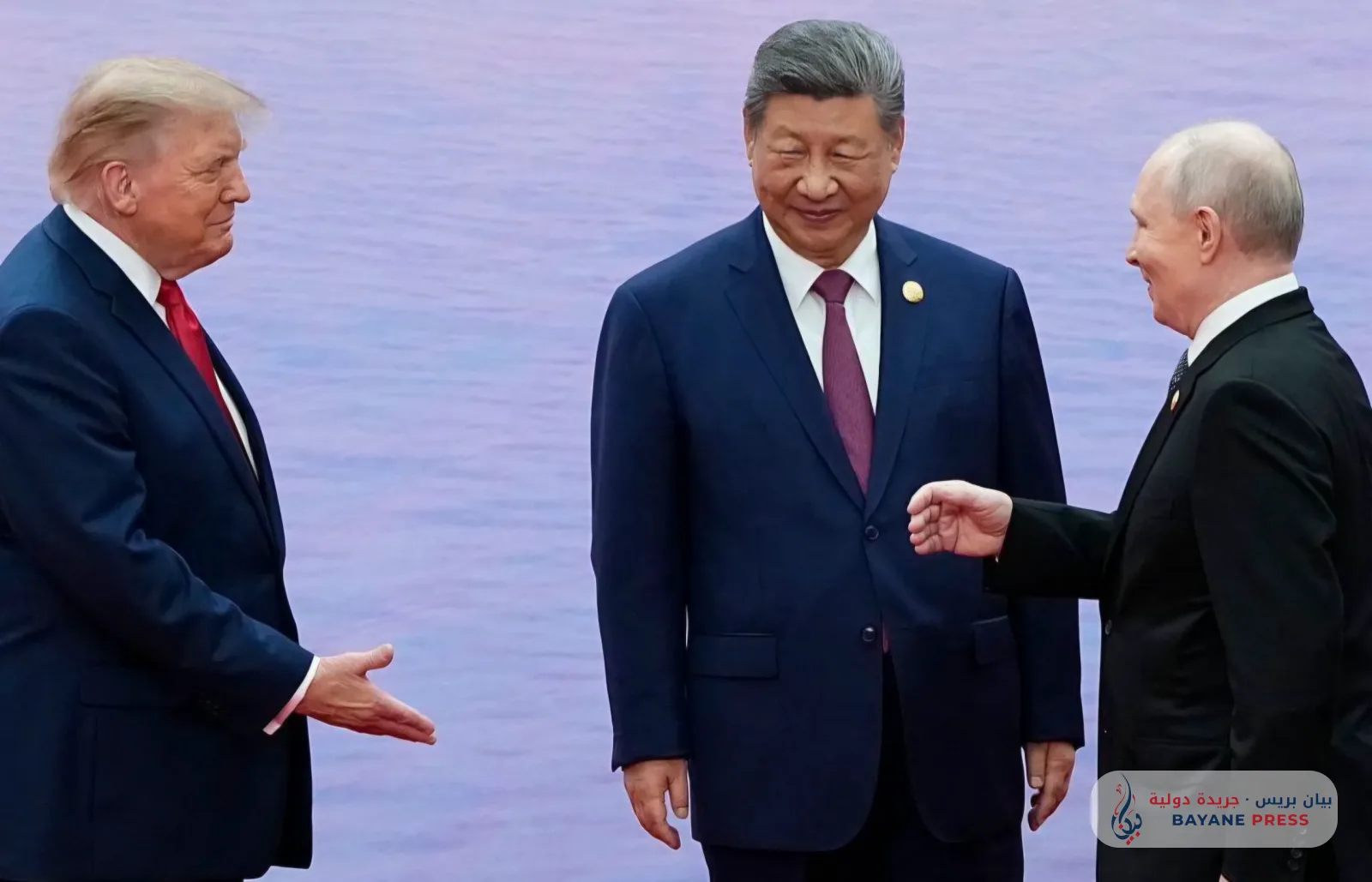
In an extraordinary diplomatic scene, US President Donald Trump, Russian President Vladimir Putin, and Chinese President Xi Jinping met on Thursday, November 19, 2026, in the Chinese city of Shenzhen. This was the first trilateral summit of its kind at the level of the three nations' leaders, held on the sidelines of the Asia-Pacific Economic Cooperation (APEC) forum. The meeting's significance went beyond bringing three superpowers to one table; it extended to the thorny issues surrounding it, from the nuclear arms race and the Russia-Ukraine war to the conflict with Iran, as well as trade and technological tensions and the future of an international system where parties are vying for influence and interests.
The meeting came at a time when fears are mounting that regional crises could slide into broader confrontations, amid declining trust between major powers and the growing use of economic sanctions, technological restrictions, and military pressure in managing international relations. Thus, the summit gained a dimension that transcends traditional discussions, serving as a test of Washington, Moscow, and Beijing's ability to find common ground to address differences without abandoning their strategic interests.
Inside the "Kailin Villa" complex, the three presidents sat at a round table, where opening remarks revealed a difference in priorities, despite the declared agreement on the importance of dialogue. Trump emphasized that the United States, Russia, and China possess exceptional capabilities that qualify them to discuss reducing nuclear weapons and limiting the risks of their use, considering the meeting a historic opportunity to open a new path toward peace. He acknowledged that abandoning nuclear arsenals is not an easy decision, but stressed the necessity of discussing this issue given the threat strategic weapons pose to global security.
Putin invoked the shared history of the three nations during World War II, pointing to their responsibility for maintaining international peace and security. He affirmed the existence of overlapping interests that can be built upon to settle regional disputes, primarily the Ukrainian war, alongside cooperation on energy issues and international stability. His remarks reflected Moscow's keenness to remain a key party in any new global security arrangements, without including an announcement of specific concessions on contentious files.
In contrast, Xi Jinping focused on the responsibility of major powers to prevent international conflict, considering that their harmony contributes to global stability, while their rivalry leads to widespread turmoil. He called for efforts to prevent the outbreak of a nuclear war, emphasizing that the ultimate goal must be to build a world free of such weapons. However, the Chinese president did not explicitly address the Ukraine and Iran files in his opening remarks, reflecting diplomatic caution in dealing with crises where Beijing has intertwined interests with opposing parties.
The nuclear armament file occupied a central position at the summit, especially after the expiration of the "New START" treaty in February 2026, the last major agreement that imposed limits on US and Russian strategic nuclear weapons. The treaty's expiration has renewed fears that the world is entering a new phase of an arms race, in the absence of a binding contractual framework to limit the world's two largest arsenals.
Published estimates indicate that China possesses more than 600 nuclear warheads, compared to a stockpile exceeding five thousand warheads for both the United States and Russia, when counting various categories of nuclear warheads. This disparity explains part of Beijing's reluctance to join trilateral negotiations under equal terms, as it believes its arsenal size is still far from the American and Russian levels. Therefore, any future agreement will face challenges related to quantitative limits, inspection and verification mechanisms, and mutual security guarantees, in addition to differing perceptions regarding strategic deterrence.
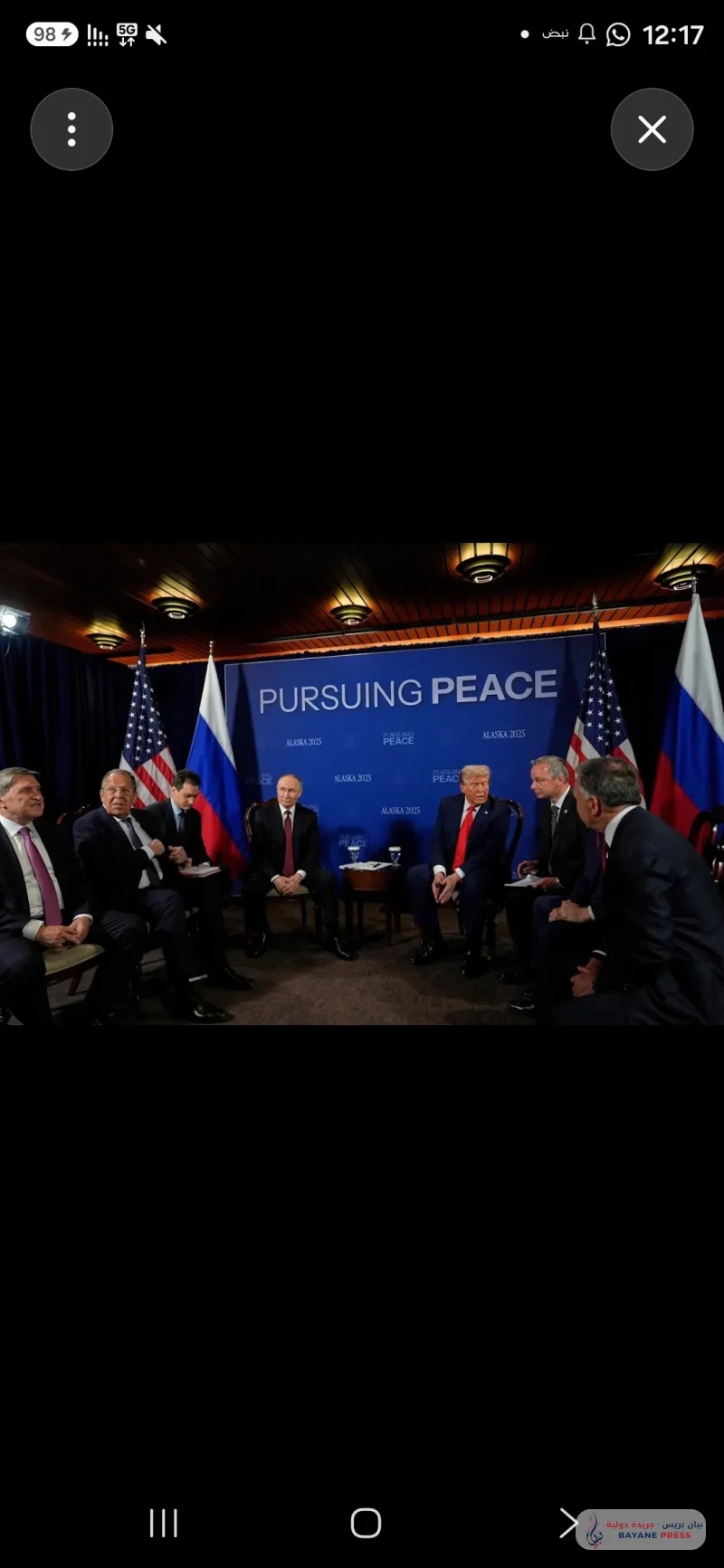
The summit was preceded by bilateral talks between Trump and Putin that lasted about forty minutes, focusing specifically on the war in Ukraine and US-Russian relations. Trump described his Russian counterpart as a friend with whom he has a long-standing relationship, expressing hope that the talks would yield positive results or at least pave the way for a new negotiating start. However, the meeting did not lead to the announcement of a specific agreement on a ceasefire or conflict resolution.
The Ukrainian war holds exceptional importance in Russian and American calculations due to its link to the future of European security and Moscow's relationship with NATO, as well as its military, economic, and humanitarian repercussions. Between Washington's efforts to push for a settlement path and Russia's adherence to its security and political demands, differences over territory and security guarantees remain among the most prominent obstacles to ending the war. Furthermore, the absence of Ukraine and its European allies from the trilateral meeting raises questions about the limits of any understanding the major powers might reach regarding a conflict whose results directly affect the sovereignty of an independent state and the security of the European continent.
In the Middle East, Iran emerged as one of the sensitive files Trump wanted to raise, particularly the repercussions of the war on maritime security and oil flow through the Strait of Hormuz. During his bilateral talks with Xi Jinping, the US President spoke of a common interest in ensuring the continued supply of energy through this maritime corridor, stressing the need to prevent Iran from acquiring a nuclear weapon. However, these statements did not include a Chinese announcement of agreement with all American positions toward Tehran.
The difficulty of reaching a trilateral understanding on Iran lies in the different nature of the relationships it has with Washington, Moscow, and Beijing. China has economic and energy interests with Tehran, while Russia maintains political, military, and strategic relations with it, whereas the United States views the Iranian nuclear program and Tehran's military capabilities from a different security perspective. Nevertheless, the three parties share an awareness of the danger of energy market disruption and the expansion of regional confrontation, which may open the door to limited understandings related to de-escalation and the protection of maritime corridors.
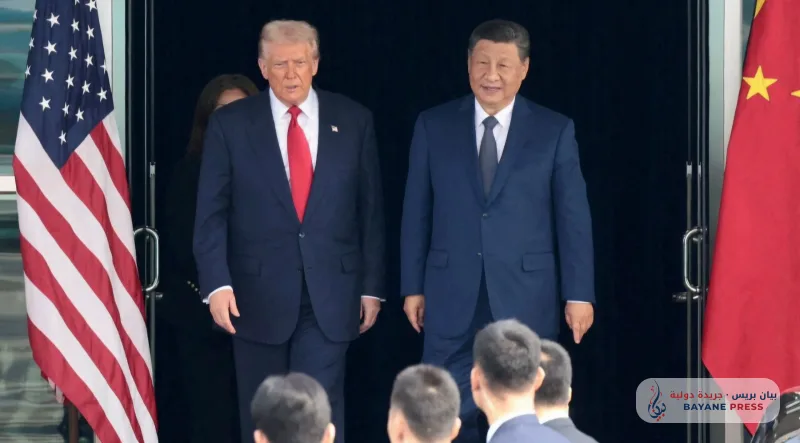
The bilateral meeting between Trump and Xi Jinping revealed more specific details regarding US-Chinese relations. The Chinese president emphasized that the relationship between the two countries has seen relative improvement, calling for managing differences in a constructive manner, maintaining political and economic communication, and expanding cooperation in areas where interests intersect. The discussions included trade, anti-narcotics efforts, and some cross-border security issues, alongside the risks of artificial intelligence and the need to keep this technology under human control.
Taiwan was one of the most sensitive issues in the talks, as Xi warned against taking steps that could lead to a major setback in bilateral relations. According to the official Chinese account, Trump affirmed that the United States does not support Taiwan's independence, a formula that must be understood within the framework of the Chinese statement, without being considered in itself an announcement of a new change in US policy. This file's importance is increasing given the island's position in the Asian security equation and its pivotal role in the advanced semiconductor industry, making any tension around it have global military and economic repercussions.
On the trade side, Trump praised his personal relationship with the Chinese president, recalling his first visit to Beijing in 2017, and pointing to the understandings reached during previous meetings, including efforts to achieve greater balance in trade exchanges and reduce some customs duties. He also expressed interest in increasing Chinese purchases of American agricultural products and expanding cooperation in energy and technology. The Chinese side announced that the two parties agreed to prepare an action plan to strengthen relations based on strategic stability, respect, fairness, and reciprocity.
However, these understandings do not eliminate the escalating economic and technological competition between the two countries, especially in the fields of electronic chips, advanced computing, and artificial intelligence. The United States seeks to protect its technological superiority and enhance supply chain security, while China works to reduce its reliance on foreign technologies and expand its industrial capabilities. This competition reveals that the economic conflict is no longer just about tariffs and markets, but has become linked to controlling the technologies that will define the features of future economic and military power.
In a related context, Trump raised the issue of the International Criminal Court during the trilateral summit, criticizing its performance and considering that it exceeds its limits, as part of his talk about protecting state sovereignty from international institutions whose influence he opposes. These statements gain special significance in light of the arrest warrant issued against Putin in March 2023, regarding accusations related to the illegal deportation and transfer of Ukrainian children, accusations that Moscow denies. Raising this file reflects a broader disagreement over the relationship between national sovereignty and international criminal justice, without the American or Russian political position resulting in the cancellation of the court's legal jurisdictions or the obligations of the states party to its statute.
One of the most prominent factors surrounding the meeting is the strategic rapprochement between Russia and China, which was reaffirmed during a meeting between Putin and Xi Jinping on November 18, on the eve of the trilateral summit. Both sides stressed expanding cooperation in trade, energy, and investment, strengthening coordination on international issues, and pushing toward a multipolar world order. This rapprochement gives Beijing and Moscow wide space to coordinate their positions, despite their differing priorities, at a time when Washington is trying to manage competition with China and negotiate with Russia on outstanding security files.
The differences between the three powers are also evident in their view of managing the global economy. While Beijing calls for expanding trade and economic openness, Moscow criticizes Western sanctions and their repercussions on international relations, while Washington insists on using tariffs, technological restrictions, and sanctions as tools of its foreign policy. These disparities reflect a struggle over the rules governing trade and economic influence, which overlaps with political and military competition in a way that makes separating economy and security extremely difficult.
The Shenzhen summit brought back comparisons to the 1945 Yalta Conference, which brought together the leaders of the United States, Britain, and the Soviet Union during World War II, and contributed to shaping the international arrangements for the post-war period. This comparison is based on fears that understandings between major powers could lead to arrangements that affect the interests of other countries without their direct participation. However, the difference in historical circumstances, the interconnectedness of the global economy, and the complexity of current alliances make the talk of a new division of the world as an inevitable result of the summit a conclusion that lacks sufficient evidence.
For Europe, the discussions touch on the future of the Ukrainian war and security guarantees for the continent, while Asian countries are following the developments of US-Chinese relations and their repercussions on the regional balance. As for the Middle East, countries are waiting to see what the dialogue might produce in terms of steps that limit escalation and maintain the security of maritime corridors and the stability of energy markets. The effects of any potential economic or technological understanding extend to developing countries and emerging economies that are affected by changes in trade, investment, and global supply chains.
As much as the Shenzhen meeting carried diplomatic significance, its announced results remained below the level of major agreements that could cause an immediate shift in the international system. According to information available at the time of writing this article, no comprehensive final trilateral agreement had been issued regarding reducing nuclear arsenals, ending the Ukrainian war, or settling the Iranian crisis. In contrast, more specific bilateral understandings emerged, particularly between Washington and Beijing, with continued dialogue on common strategic issues.
A political reading of this meeting reveals that the relations between the United States, Russia, and China are based on a delicate equation that combines competition and the mutual need to avoid direct confrontation. None of the three countries can ignore the influence of the other two on international security and the global economy, nor do they seem prepared to abandon their core interests in exchange for general understandings that do not include clear guarantees.
The Shenzhen summit remains a prominent milestone in major power diplomacy, but it is not an announcement of the birth of a new world order. It opened a window for dialogue at a moment when the risks of wars and economic divisions are increasing, and placed on the table files that require decisions beyond political pleasantries. The real test will begin when statements move to detailed negotiations and enforceable and verifiable agreements, and when it becomes clear whether the three powers are capable of turning their overlapping interests into international stability, or whether the competition for influence will remain the most influential factor in shaping the features of the next phase.

Comments (0)
No comments yet. Be the first to react!