


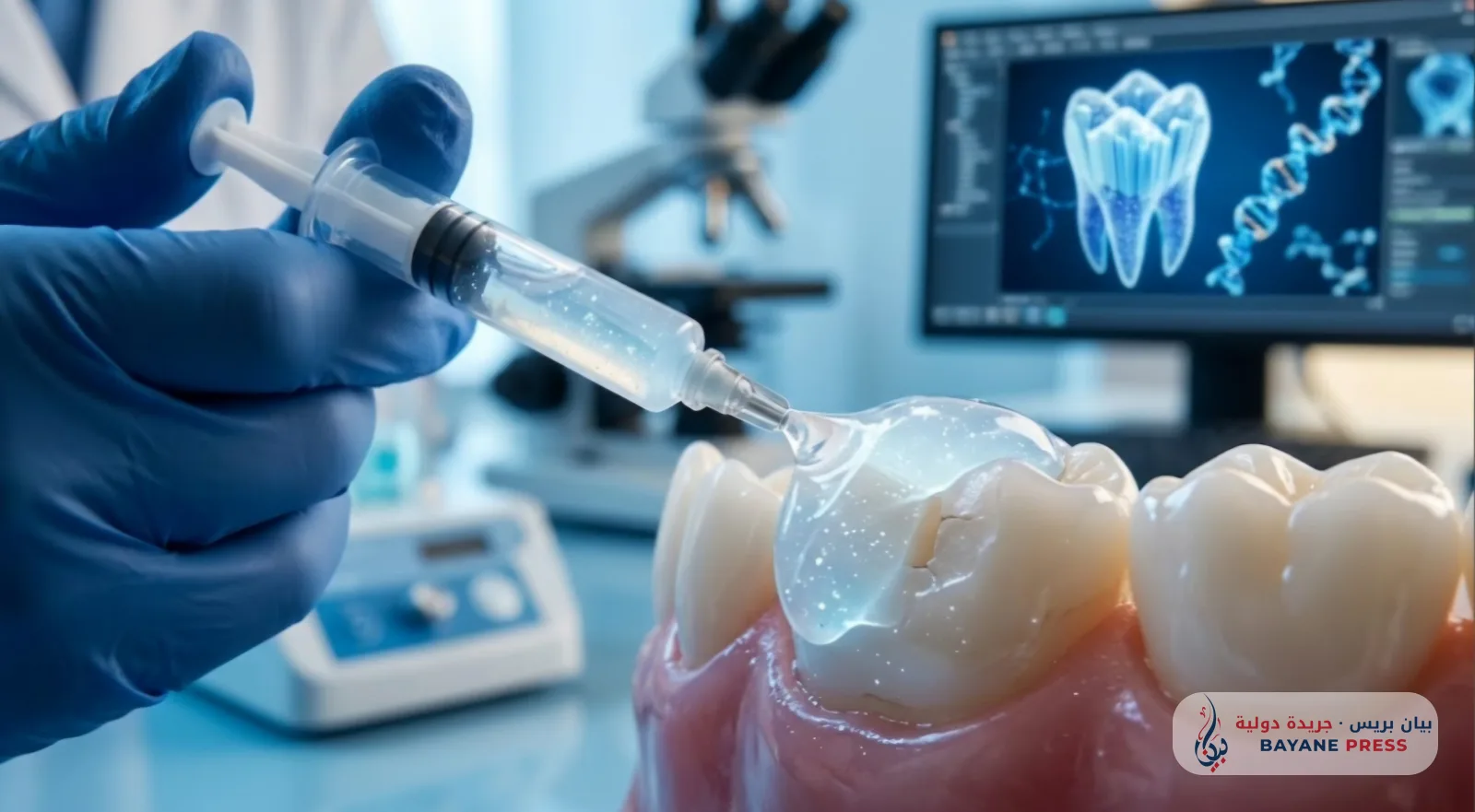
Dentistry may witness a significant scientific transformation in the coming years, after British researchers succeeded in developing an innovative protein material capable of stimulating the reconstruction of damaged tooth enamel. This achievement opens new horizons for treating erosion and decay, and raises the possibility of reducing future reliance on traditional fillings.
This development is based on a study conducted by scientists at the University of Nottingham, published in the scientific journal Nature Communications on November 4, 2025, before media coverage of its results was renewed during November 2026. The technique is based on a fluoride-free protein gel that mimics the biological processes responsible for tooth enamel formation during childhood.
The importance of this discovery lies in the fact that tooth enamel, which acts as the natural protective shield for teeth, cannot automatically rebuild lost parts once its growth is complete. However, the new material works to form a microscopic layer over damaged areas, helping to attract calcium and phosphate present in saliva and directing them to form organized mineral crystals that resemble the original structure of the enamel.
Laboratory experiments showed that the formed mineral layer was able to restore mechanical properties close to natural enamel, including resistance to pressure and friction. The results also revealed the possibility of using the technique to cover exposed dentin with an enamel-like layer, which may contribute in the future to reducing tooth sensitivity to cold and heat.
According to the specialized medical journal British Dental Journal, the importance of this innovation is not limited to adding minerals to the tooth surface, but extends to reorganizing them according to a microscopic geometry that mimics the natural composition of enamel, which represents an advancement compared to some traditional remineralization methods.
However, talk of the end of dental fillings is still premature. According to the U.S. National Institute of Dental and Craniofacial Research (NIDCR), early stages of mineral loss can be treated with preventive measures, while cavities resulting from advanced decay require restorative interventions. The new study has not yet proven the gel's ability to replace these fillings in patients.
Despite the encouraging results, the technique still requires clinical studies to confirm its safety and long-term effectiveness. If these tests succeed, dentistry may gradually shift from merely replacing damaged tissues with synthetic materials to restoring some of their natural properties, in a transformation that could change the future of preventive and restorative treatments.



Comments (0)
No comments yet. Be the first to react!