


Irritable Bowel Syndrome (IBS) is one of the most common digestive disorders worldwide and one of the most impactful on the daily lives of those affected. This is not due to a direct danger to bodily organs, but rather because of the recurrent pain, bloating, and bowel movement disturbances it causes, which can last for many years. Despite the prevailing belief that it is a modern disease linked to the pressures of contemporary life, medical history reveals that similar symptoms were known centuries ago, long before modern medicine was able to understand its true nature and distinguish it from organic bowel diseases.
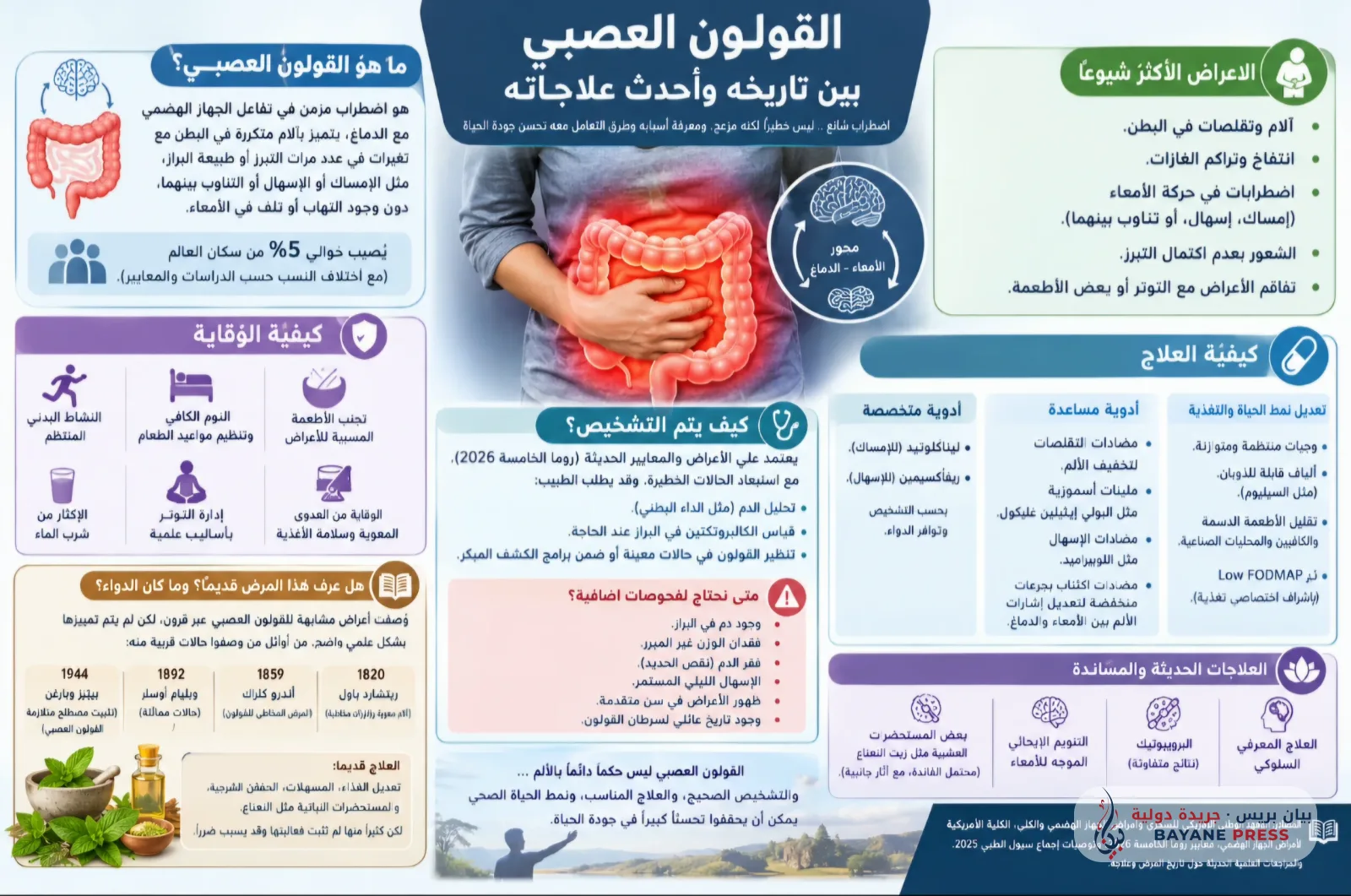
Irritable Bowel Syndrome, scientifically known as Irritable Bowel Syndrome and abbreviated as "IBS", is defined as a chronic disorder in the interaction between the digestive system and the brain. It is characterized by recurrent abdominal pain accompanied by changes in the frequency of bowel movements or the consistency of stool, whether in the form of constipation, diarrhea, or alternating between the two. Unlike ulcerative colitis or Crohn's disease, IBS does not inherently cause destructive inflammation or visible damage to the intestinal tissues, nor is it a direct cause of colon cancer. A scientific review published in 2025 indicates that it affects about five percent of the global population, with percentages varying depending on diagnostic criteria and the studies relied upon.
The peculiarity of this disorder lies in the delicate relationship connecting the brain to the intestines through a complex network of nerves and chemical signals. Increased sensitivity of the digestive system and abnormal contractions of the intestinal muscles can lead to the sensation of pain even in the absence of any visible organic disease. Furthermore, research points to potential roles played by gut microbiota imbalance, genetic and environmental factors, previous intestinal infections, as well as anxiety and psychological stress, which can intensify symptoms without necessarily being the primary cause of the disease. Therefore, reducing IBS to a purely psychological condition is considered an inaccurate medical interpretation.
Its most prominent symptoms manifest as abdominal cramps, bloating, gas accumulation, and a feeling of incomplete evacuation, alongside bowel irregularities that vary from patient to patient. Symptoms may worsen after certain meals or during periods of psychological stress, while sometimes improving after a bowel movement. According to the "Rome V" criteria published in 2026, diagnosis is based on the presence of recurrent, non-continuous abdominal pain or discomfort, occurring at least three days a month over the past three months, associated with at least two of three features: defecation, a change in stool frequency, or a change in stool form, provided that symptom onset occurred at least six months prior to diagnosis.
However, proper diagnosis requires attention to red flags that warrant further investigation, particularly blood in the stool, unexplained weight loss, iron-deficiency anemia, persistent nocturnal diarrhea, new-onset symptoms at an older age, or a family history of colon cancer. A doctor may use blood tests to screen for celiac disease related to gluten, measure inflammatory markers or fecal calprotectin when necessary, while colonoscopy is reserved for cases with indicative signs or according to age-appropriate screening programs and risk factors.
Historically, some medical writings point to early descriptions of abdominal pain, bloating, and bowel irregularities; however, these descriptions are insufficient to prove that those individuals suffered from IBS in the modern scientific sense. British physician Richard Powell is considered one of the first to provide a medical description close to this disorder in 1820, when he discussed intestinal pain and mucous secretions without any obvious inflammation to explain the symptoms. In 1859, physician Andrew Clark described conditions he named mucous colitis, and the renowned physician William Osler later addressed similar cases in his medical textbook published in 1892. The term "Irritable Colon Syndrome" did not become established in medical literature until the 20th century, notably through the work of Peters and Bargen in 1944.
Historically, treatment relied on limited methods, including dietary modification, the use of laxatives, enemas, and certain herbal preparations intended to relieve cramps and gas. Peppermint has been used in traditional medical practices to treat digestive disorders and spasms, and some 19th-century physicians recommended avoiding specific foods and resorting to bowel-clearing methods. However, many of these practices lacked scientific trials to prove their efficacy and safety; indeed, some could exacerbate symptoms, particularly with the frequent and unnecessary use of laxatives or enemas.
With the advancement of medicine, the therapeutic approach has changed radically, now focusing on identifying the nature of symptoms and their triggers rather than seeking a single universal drug suitable for all patients. Modern medical recommendations emphasize the importance of eating regular, balanced meals, drinking adequate amounts of water, and reducing foods proven to trigger symptoms in the individual patient, such as heavy meals, caffeine-rich drinks, and artificial sweeteners. Soluble fiber, particularly psyllium fiber, may also help improve bowel regularity, whereas a sudden increase in insoluble fiber may worsen bloating and gas.
Among the most notable therapeutic developments is the adoption of the low fermentable oligosaccharides, disaccharides, monosaccharides, and polyols diet, known as the "Low FODMAP" diet. This approach is based on reducing specific types of sugars found in certain foods, including onions, garlic, certain fruits, and lactose-containing dairy products. Clinical studies have shown its ability to alleviate symptoms in a number of patients, though it is not recommended to be followed strictly and permanently. It typically begins with a temporary restriction phase lasting about three to six weeks, followed by the gradual reintroduction of foods to determine individual tolerance, preferably under the supervision of a dietitian.
In terms of pharmacotherapy, treatments vary depending on the subtype of IBS. Antispasmodics may be used to relieve pain, osmotic laxatives such as polyethylene glycol to improve constipation, or anti-diarrheal medications like loperamide to control bowel movement frequency, though they do not necessarily treat all symptoms. In some moderate or severe cases, a doctor may prescribe specialized medications such as linaclotide for constipation-predominant IBS, or rifaximin for certain diarrhea-predominant cases, depending on diagnosis and medical availability. Low doses of tricyclic antidepressants are also sometimes used to modulate pain signals between the gut and the brain, even in individuals who are not depressed.
Research has not stopped at medications; psychological and behavioral therapies tailored for IBS, including cognitive behavioral therapy and gut-directed hypnotherapy, have shown benefits for some patients, particularly when symptoms persist despite conventional interventions. As for probiotics, or beneficial bacteria, study results remain mixed, and there is insufficient evidence to consider all probiotic formulations a guaranteed treatment. The same applies to circulating herbal remedies, though there is evidence of potential benefit from certain preparations such as enteric-coated peppermint oil capsules, which may cause side effects like heartburn and are not suitable for everyone.
Regarding prevention, no proven method currently guarantees the prevention of IBS due to the multitude of factors associated with its onset. However, adopting a healthy lifestyle can help reduce symptom flare-ups and improve quality of life. This includes regular physical activity, adequate sleep, regular meal timings, avoiding excessive stimulants, monitoring trigger foods, and managing stress using appropriate scientific methods. Furthermore, preventing intestinal infections through food safety and personal hygiene gains additional importance, as some cases of IBS develop following acute intestinal infections.
Modern medical data confirms that IBS, despite its chronic nature, is not a permanent sentence to pain and suffering, and that many sufferers can achieve noticeable improvement when they receive an accurate diagnosis and an individualized treatment plan combining proper nutrition, pharmacotherapy when needed, and behavioral support. Between traditional treatments known to medicine for centuries and scientific approaches that have evolved up to 2026, the fundamental truth remains that treating IBS is not based on a magic pill or a single drug, but rather on a precise understanding of the gut-brain axis, treating the patient as a whole person deserving of care and follow-up far from alarmism or oversimplification.


Comments (0)
No comments yet. Be the first to react!