


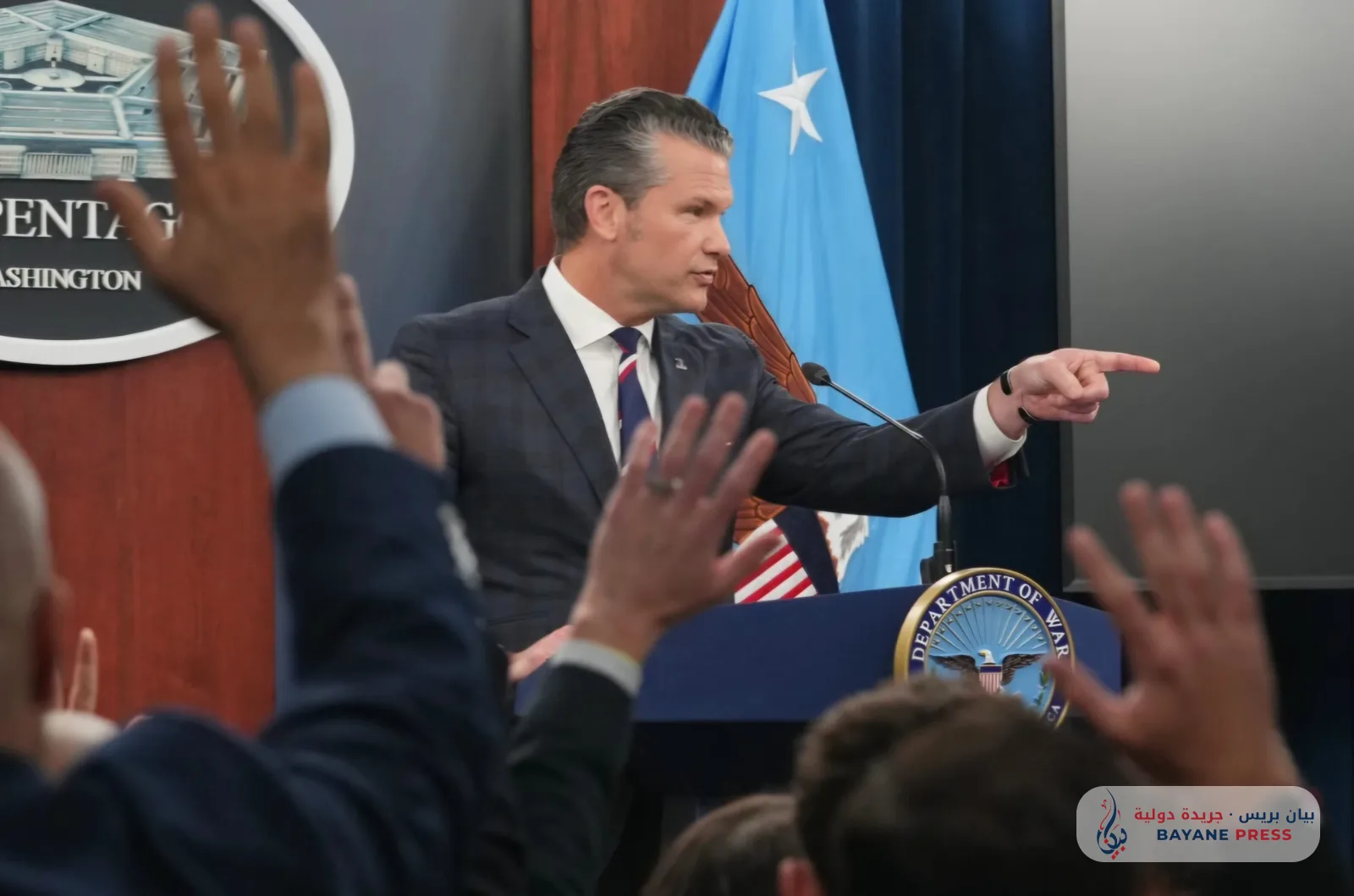
Washington witnessed a sharp political confrontation within the U.S. House of Representatives after Republicans succeeded, on Tuesday, November 10, 2026, in thwarting an attempt to impeach Defense Secretary Pete Hegseth, amid accusations related to his management of the war against Iran and the exceeding of his constitutional powers, in a development reflecting escalating divisions within the American political establishment regarding the cost of the war and the responsibility of military leaders for its consequences.
The House of Representatives voted by a majority of 211 votes to 204 in favor of referring the impeachment resolution to the Judiciary Committee, a procedural move that stalled efforts for a direct vote on censuring the Secretary. Ironically, the initiative came from Republican Representative Thomas Massie, who presented eight articles of impeachment against Hegseth, most notably regarding waging war on Iran without Congressional authorization, violating protocols intended to protect civilians, and accusations related to U.S. military operations in Latin America and abuse of power.
The move followed the electoral defeat suffered by Republicans in the midterm elections, amid growing criticism of the Iranian war and its economic repercussions, particularly rising energy prices. This has prompted some political circles to demand accountability for those responsible for military decisions, led by the Secretary of Defense, who has become one of the most prominent defenders of President Donald Trump's administration strategy in the confrontation with Tehran.
Facing these pressures, Hegseth rejected the accusations during a press conference held at the Pentagon, dismissing the impeachment attempt as a political maneuver targeting the U.S. administration, and asserting that military operations were carried out in accordance with legal authorities. President Trump also announced his full support for the Secretary and praised the voting result that prevented the impeachment proceedings from moving forward.
Although Republicans succeeded in protecting Hegseth from the current attempt, the file is not politically closed, as Democrats may reintroduce it after taking the majority in Congress early next January. This confrontation reveals the widening repercussions of the war with Iran within Washington, where disputes are no longer limited to the management of military operations, but have extended to the accountability of those responsible for them and the limits of the President's authority to make war decisions without the approval of the legislative branch.



Comments (0)
No comments yet. Be the first to react!