


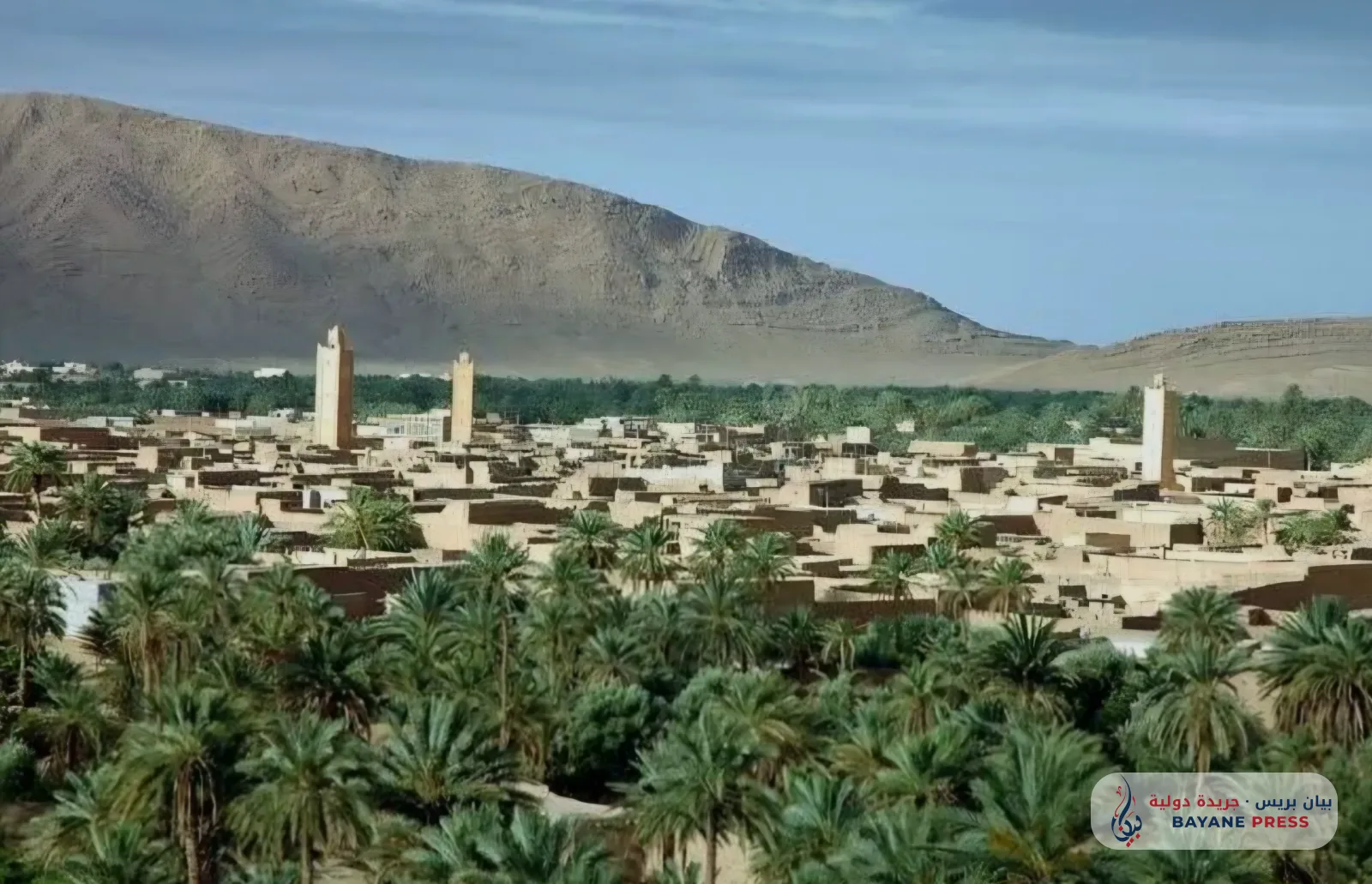
The roots of the city of Figuig, located on the extreme eastern borders of Morocco, run deep into ancient history. It emerged as a strategic desert oasis and a pivotal station on the old caravan routes that connected North Africa to the heart of the continent. Throughout the ages, this settlement has formed an impenetrable human and cultural fortress, narrating the details of a unique coexistence between authentic Amazigh and Arab traditions amidst a belt of rugged mountains and vast oases. It played a prominent historical and militant role in defending Morocco's eastern borders, enduring intense colonial bombardment and pressure at the beginning of the twentieth century, during which it remained a supply station and a safe haven for resistance movements and the Liberation Army. To manage its affairs with wisdom and complete independence, Figuig allowed its inhabitants for centuries to rely on an ancient democratic system represented by the "Council of the Jamaa," a small local parliament comprising the notables and elders of the ksours (fortified villages) to enact customary laws, resolve disputes, and organize security and agricultural affairs by total consensus.
The city's most famous landmarks and unique urban planning are distributed among seven ancient ksours built of mud and straw according to ingenious local engineering that ensures natural cooling in summer and heating in winter, such as Ksar El Abidat, Ksar El Maiz, and Ksar El Zagam. These ksours are connected in their depths by a complex network of underground tunnels and passages that penetrate the foundations of the buildings, serving as secret routes for defense and the transport of supplies and water during times of war and siege, without the enemy ever detecting the movements of the inhabitants. In addition to this defensive engineering, the people of Figuig developed a unique irrigation system based on the ancient "Khettara" water network, managed with extreme precision through "sundials" and specific time slots measured in minutes to cope with environmental scarcity. Furthermore, the oasis served as a high-level scientific and cultural link connecting major centers of learning like Fez and Marrakech with the depths of the Sahara, where some families' private libraries still hold rare manuscripts on jurisprudence, history, and tribal lineages.
Behind the impenetrable walls of the ksours, the oasis harbors hidden worlds that add to its charm and mystery; from the architecture of interconnected rooftops that link together like suspended paths, allowing women to move, visit neighbors, and exchange dishes and news across the entire oasis without needing to descend into the narrow alleys and lower passages, thus creating an independent female social space, to the legacy of long-standing historical coexistence with Jewish families who settled in Figuig for generations, engaging in trade and jewelry making to stimulate economic and cultural exchanges, as well as popular legends inherited about the great water springs and their hidden spiritual guardians. These profound details merge into a cultural identity and local cuisine that celebrates traditions through famous dishes such as the authentic Figuig "Trid" with chickpeas and raisins, and the festive "Berkoukes," which is a symbol of winter authenticity and Amazigh New Year celebrations, alongside traditional onion bread and the luxurious types of dates produced by the rich palm groves, ensuring that Figuig remains a forgotten jewel pulsing with the authenticity of the eastern desert and its living treasures.


Comments (0)
No comments yet. Be the first to react!