


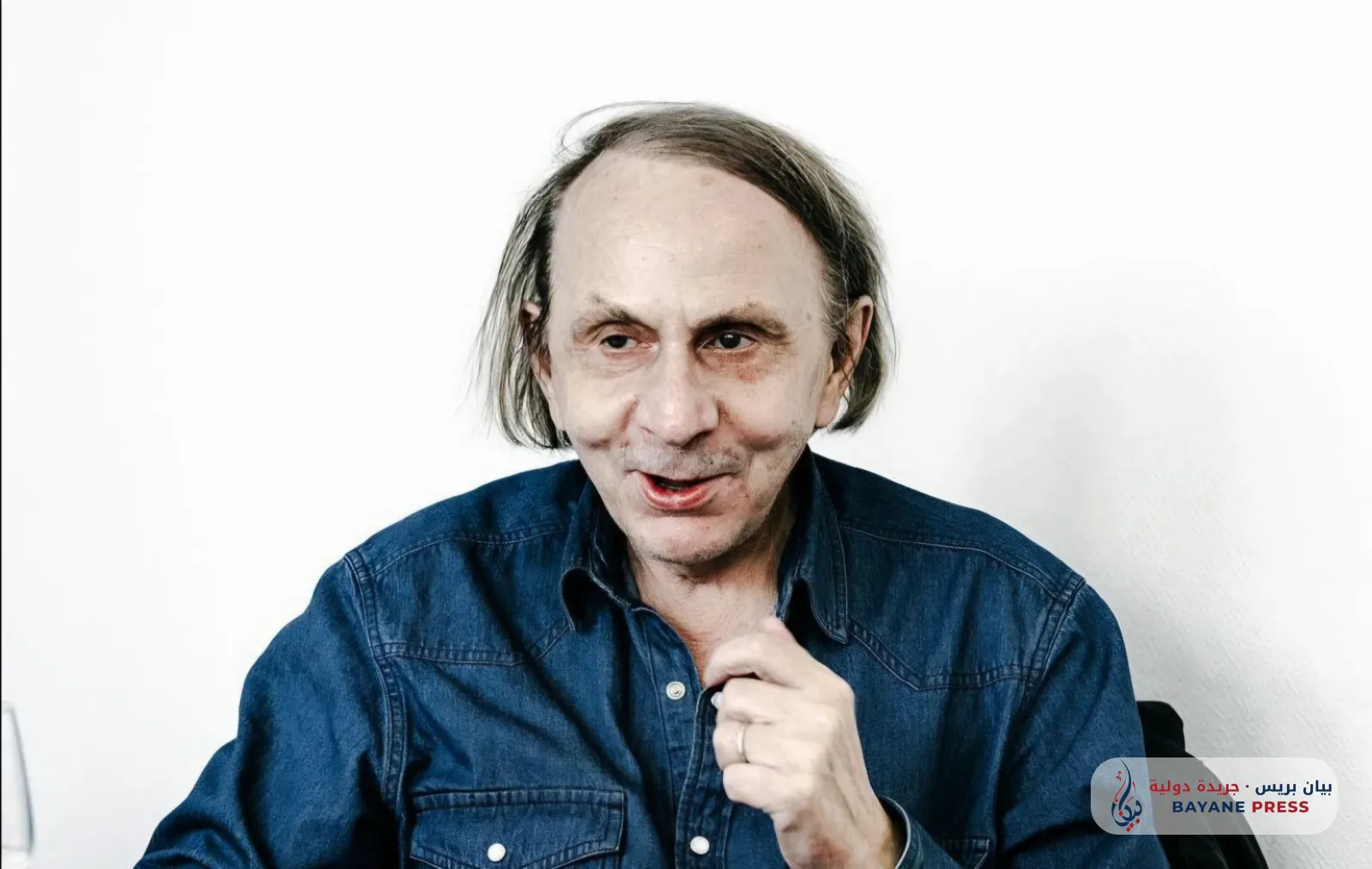
The French judiciary has brought the controversial novelist Michel Houellebecq back to the center of public debate, after an investigating judge at the Nanterre court decided, on Tuesday, November 10, 2026, to formally indict him on suspicion of complicity in inciting discrimination, hatred, or violence against a group of people based on their religious affiliation or origins, following remarks he made about Muslims in France.
The facts of the case date back to November 2022, when the magazine "Front Populaire" published a lengthy dialogue between Houellebecq and philosopher Michel Onfray, covering issues of immigration, Islam, and French identity. The interview contained statements in which the author portrayed Muslims negatively and spoke of the possibility of attacks targeting mosques and places where Muslims gather, in terms that sparked widespread human rights and religious protests.
These statements prompted the French Council of Muslim Worship (CFCM) to file a legal complaint in January 2023, while the Movement Against Racism and for Friendship between Peoples (MRAP) continued its legal proceedings against the author, considering that the content of the dialogue exceeded the limits of intellectual debate and constituted statements that could be considered incitement punishable under French law.
In contrast, Houellebecq's lawyers, Thibault de Montbrial and Louis Cailliez, rejected the accusations against him, asserting that the phrases under investigation do not contain any explicit or implicit call for violence or hatred, and that they fall within the scope of freedom of opinion and expression. The defense criticized what it described as an expansion of turning intellectual disagreements into judicial disputes.
The French novelist had previously attempted to contain the controversy following a meeting in January 2023 with Chems-Eddine Hafiz, the rector of the Great Mosque of Paris, who later decided to withdraw the legal proceedings he had initiated. In the same year, Houellebecq also published a book titled "Quelques mois dans ma vie" (A Few Months of My Life), in which he revisited the crisis and provided clarifications regarding some of his phrases, which he described as unfortunate.
However, this withdrawal did not include the other complainants, as the French Council of Muslim Worship and the MRAP continued to pursue the case until it reached the stage of the author's formal indictment.
This case raises a broad debate regarding the legal limits of freedom of expression in France, especially when literary and intellectual positions intersect with issues of religion, identity, and the protection of individuals from discrimination. It also brings back to the fore the old controversy that accompanied a number of Houellebecq's works, most notably the novel "Submission," which addressed political and social transformations in French society.
The formal indictment of the novelist does not mean a conviction has been issued; rather, it represents a stage of the judicial investigation during which the competent authorities must evaluate the statements, evidence, and positions of the parties before determining the legal outcome of the case.


Comments (0)
No comments yet. Be the first to react!