

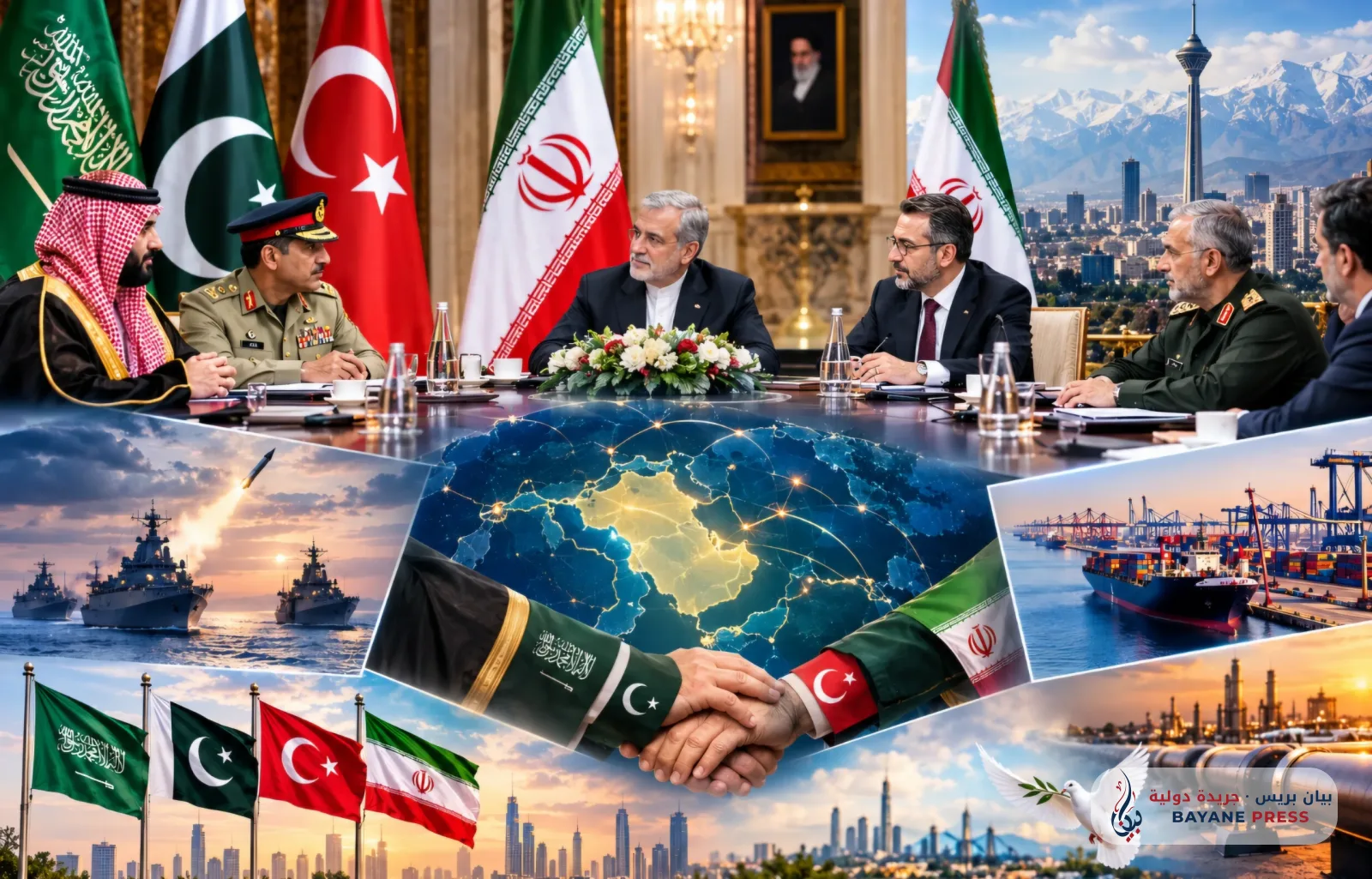
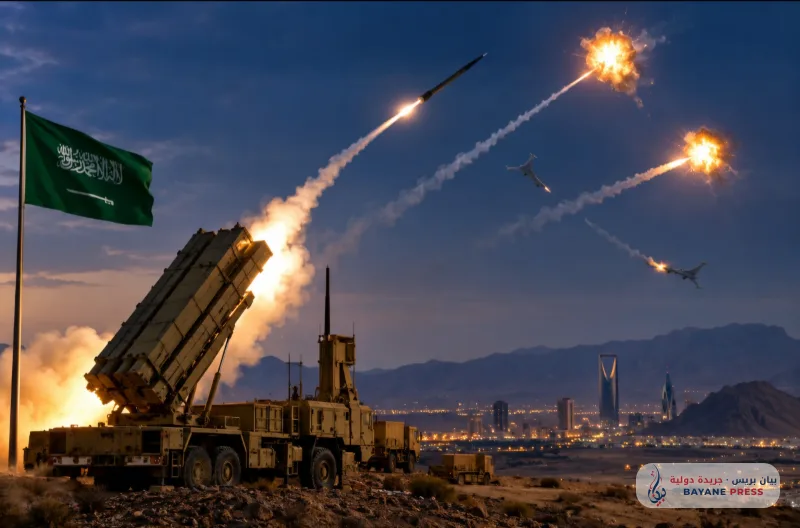
The high-level momentum hosted by the Iranian capital, Tehran, outlines a strategic shift in the architecture of regional relations, as its implications transcend the framework of transient security coordination to establish a new phase of "bloc diplomacy" capable of imposing stability equations in the Middle East. The meeting between Saudi Defense Minister Prince Khalid bin Salman, Pakistani Army Chief Asim Munir, and Turkish Intelligence Chief İbrahim Kalın with the Iranian leadership—details of which were revealed to state television by Ali Bagheri Kani, Deputy Secretary-General of Iran's Supreme National Security Council—reflects the transition of the "Mecca Agreement" nations from a reactive stance to collective political initiative as a cohesive bloc speaking the language of supreme interests. This direct communication, the first of its kind at this level since the recent Houthi escalation, gains its political dimensions from its precise timing with Riyadh's interception of a new wave of missiles and drones, carrying a firm diplomatic message that violating the sovereignty of any party will be met with a unified solidarity stance obligating all to the swift deployment of forces and the use of all means to protect territorial integrity. This is based on the political and constitutional legitimacy acquired by the Mecca Agreement for Joint Defense, after the Turkish parliament and the Pakistani side approved it on the principle that any aggression targeting a member is considered an attack on all.
In a political reading of the outcomes of this momentum, the Iranian leadership, headed by Masoud Pezeshkian, realizes that openness to the "Mecca Agreement" bloc represents a strategic exit to break any international isolation and fortify its regional front in light of the collapse of previous understandings, the resumption of mutual strikes with the United States, and Tehran's firm refusal to hold any talks with Washington before fulfilling all its demands. From this perspective, the talks are expected to lead to a "comprehensive political understanding" based on the principle of exchanging sovereign guarantees and protecting economic arteries. Under this, Tehran would commit to exercising its political influence to curb the Houthi escalation, halt targeting of Saudi territory, and secure waterways and global energy supplies, in exchange for the commitment of the Saudi-Turkish-Pakistani triad to adopt a policy of positive neutrality and ensure their vital areas do not become a launchpad for any American targeting of Iran. This politically decouples the trajectory of the Iranian-American conflict from the trajectory of regional stability and the security of international trade.
On the diplomatic front, the summit is expected to result in the institutionalization of political and security dialogue between Tehran and the tripartite bloc through permanent communication channels that prevent the region from sliding into comprehensive chaos and enshrine the principle of "participatory regional security" stemming from the region's capitals of decision-making. This consensus will also grant a weighty political mandate to Pakistan's role—capitalizing on the preliminary visit that brought together General Asim Munir and President Pezeshkian—for Islamabad, by virtue of its traditional mediating role, to lead a quiet diplomatic movement with Washington, backed by a Saudi-Turkish cover and the card of energy market stability and maritime corridors, aiming to freeze escalation and return to the negotiating table according to a balanced political equation that preserves state sovereignty and makes the decision of peace and stability a purely regional affair.
Comments (0)
No comments yet. Be the first to react!