

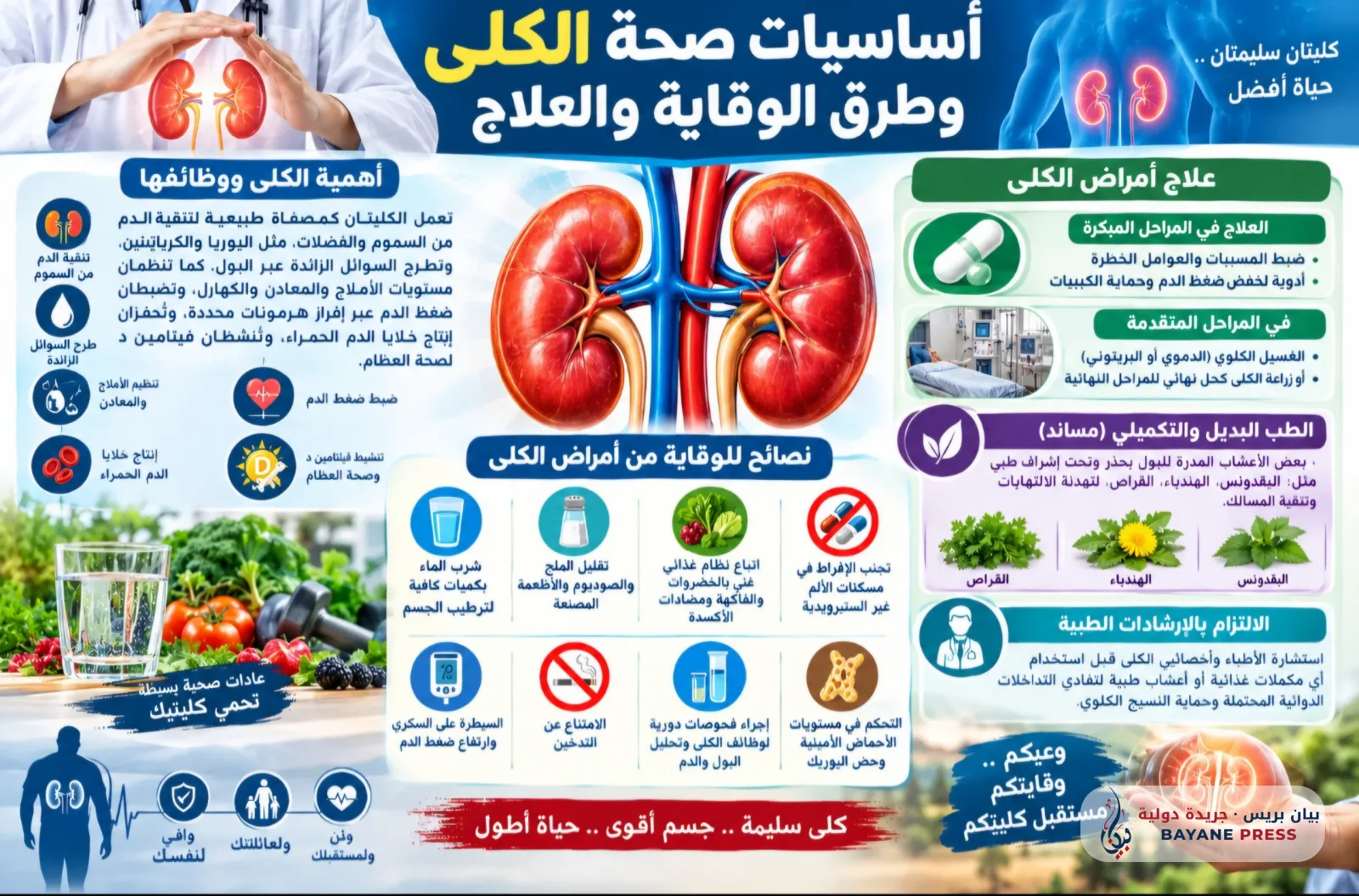
The kidneys play a vital and essential role in sustaining life and maintaining the body's internal environment. They act as a natural filtration system that works tirelessly to purify the blood of toxins and metabolic waste products such as urea and creatinine, while excreting excess fluids through urine. Their functions are not limited to waste removal alone; they also regulate the levels of essential salts, minerals, and electrolytes, efficiently control blood pressure by secreting specific hormones and systems, stimulate the production of red blood cells by encouraging the bone marrow, and activate vitamin D, which is necessary for bone health and integrity. To protect these sensitive organs and prevent damage, a strict preventive approach must be followed. This relies on maintaining adequate hydration by drinking plenty of water to facilitate the kidneys' work in flushing out impurities, reducing the consumption of salts, sodium, and processed foods to prevent blood vessel strain and high blood pressure, and ensuring the inclusion of dietary patterns rich in antioxidants and fresh leafy vegetables to support the health of the microvasculature nourishing the kidneys. It is also crucial to avoid the frequent and excessive use of non-steroidal anti-inflammatory drugs (NSAIDs), which cause severe damage to the filtering cells, effectively control chronic conditions such as diabetes and hypertension, and completely abstain from smoking. Furthermore, close attention must be paid to regular laboratory tests, such as kidney function tests to check the glomerular filtration rate (GFR) and measuring the albumin-to-creatinine ratio in the urine to detect any early abnormalities before they worsen, as well as controlling amino acid and uric acid levels to prevent the formation of painful kidney stones. In the event of kidney injury or dysfunction, modern medical treatment is based on precise strategies ranging from controlling underlying causes and prescribing specific medications to lower blood pressure and protect the glomeruli, to advanced stages requiring major therapeutic options such as hemodialysis or peritoneal dialysis, or resorting to kidney transplantation as a definitive solution for end-stage renal disease. Alongside this, alternative and complementary medicine serves as supportive backing to improve overall efficiency through the cautious use of diuretic herbs under direct supervision to cleanse the urinary tract and soothe inflammation—such as parsley, dandelion, and nettle tea—while strictly adhering to comprehensive dietary modifications and consulting specialists and nephrologists before starting any dietary supplements or medicinal herbs to avoid potential drug interactions that could place additional burdens on the renal tissue and improve the patient's quality of life.
Essentials of Kidney Health and Methods of Prevention and Treatment
An in-depth look at the vital role of the kidneys in the human body, essential preventive measures to protect them, and modern medical and supportive treatments for kidney diseases.

By
2 min read




Comments (0)
No comments yet. Be the first to react!