


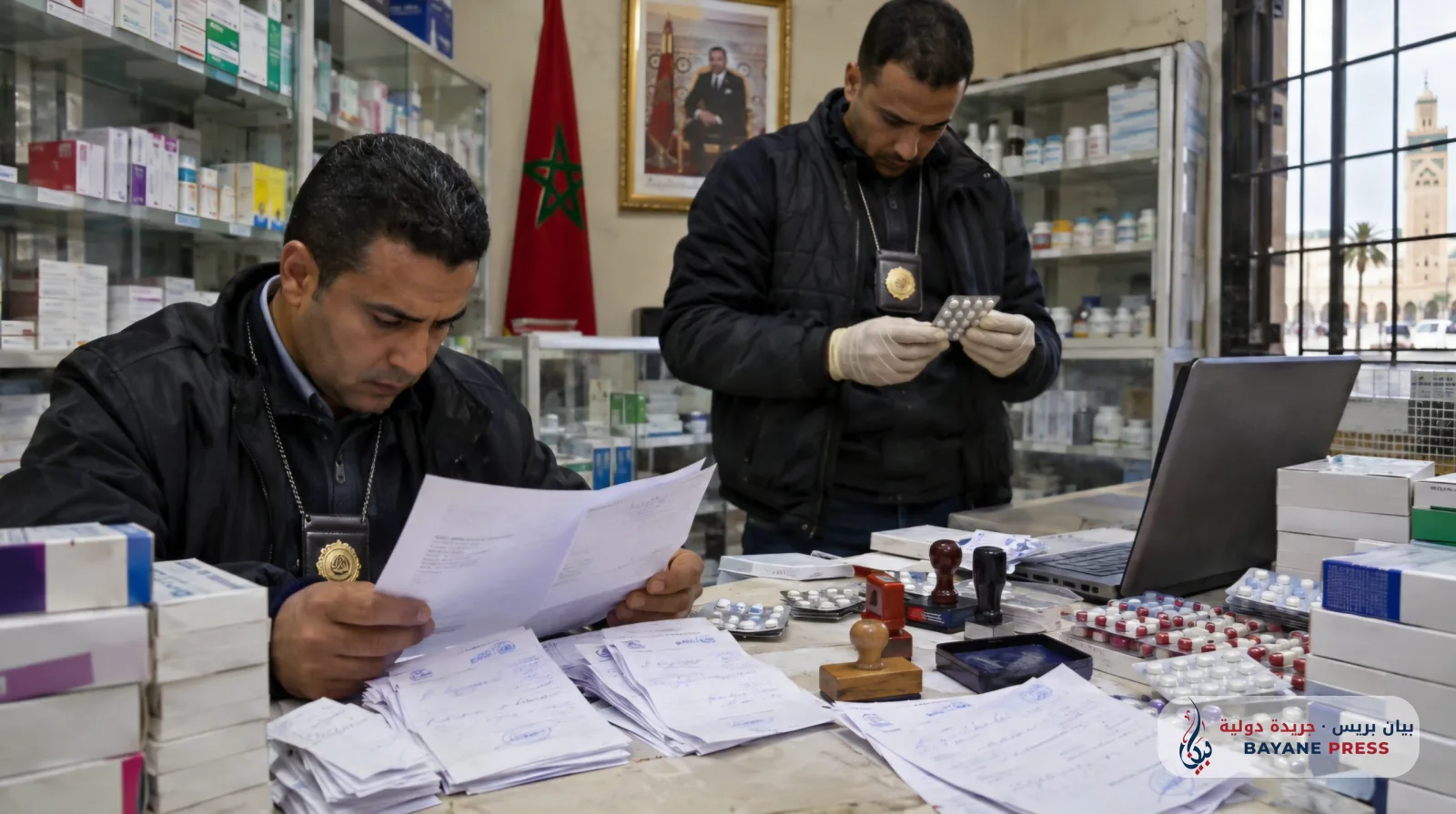
A security operation in Casablanca has uncovered a criminal method based on exploiting forged medical documents to acquire specialized medicines before illegally redistributing them outside official channels, in a case that has raised questions about the risks of illicit drug trafficking and potential loopholes in prescription monitoring.
According to data published on Tuesday, February 3, 2026, judicial police elements in the Bernoussi district managed to track down suspicious activity suspected of relying on forging doctors' stamps and preparing prescriptions containing false data, to obtain medicines from pharmacies and resell them at high prices.
The investigations led to the arrest of two individuals as part of a security operation that extended to the city of Mohammedia, resulting in the seizure of over 600 pills, alongside suspicious medical documents and stamps, and IT equipment suspected of being used to forge prescriptions and documents.
Available data indicates that the suspects targeted medicines with some boxes priced at around 600 dirhams, before putting them back on sale for amounts reaching up to 2,000 dirhams, exploiting the nature of these products and the urgent need of certain consumers outside legitimate medical channels.
This case takes on dimensions beyond mere document forgery or illegal profit-making, given the risks that may arise from trading medicines without medical supervision, especially when dealing with products whose misuse could lead to serious health complications or addiction.
Competent security services are continuing their investigations under the supervision of the public prosecutor's office to determine the potential extensions of this activity, uncover the source of the stamps and documents used, and verify the existence of other parties suspected of contributing to the supply of medicines or facilitating their circulation.
This case underscores the importance of tightening control over the dispensing paths of prescription-only medicines and enhancing means of verifying the authenticity of documents and stamps, to protect health and pharmaceutical institutions and citizens from the risks of forgery and illicit trafficking networks.


Comments (0)
No comments yet. Be the first to react!