

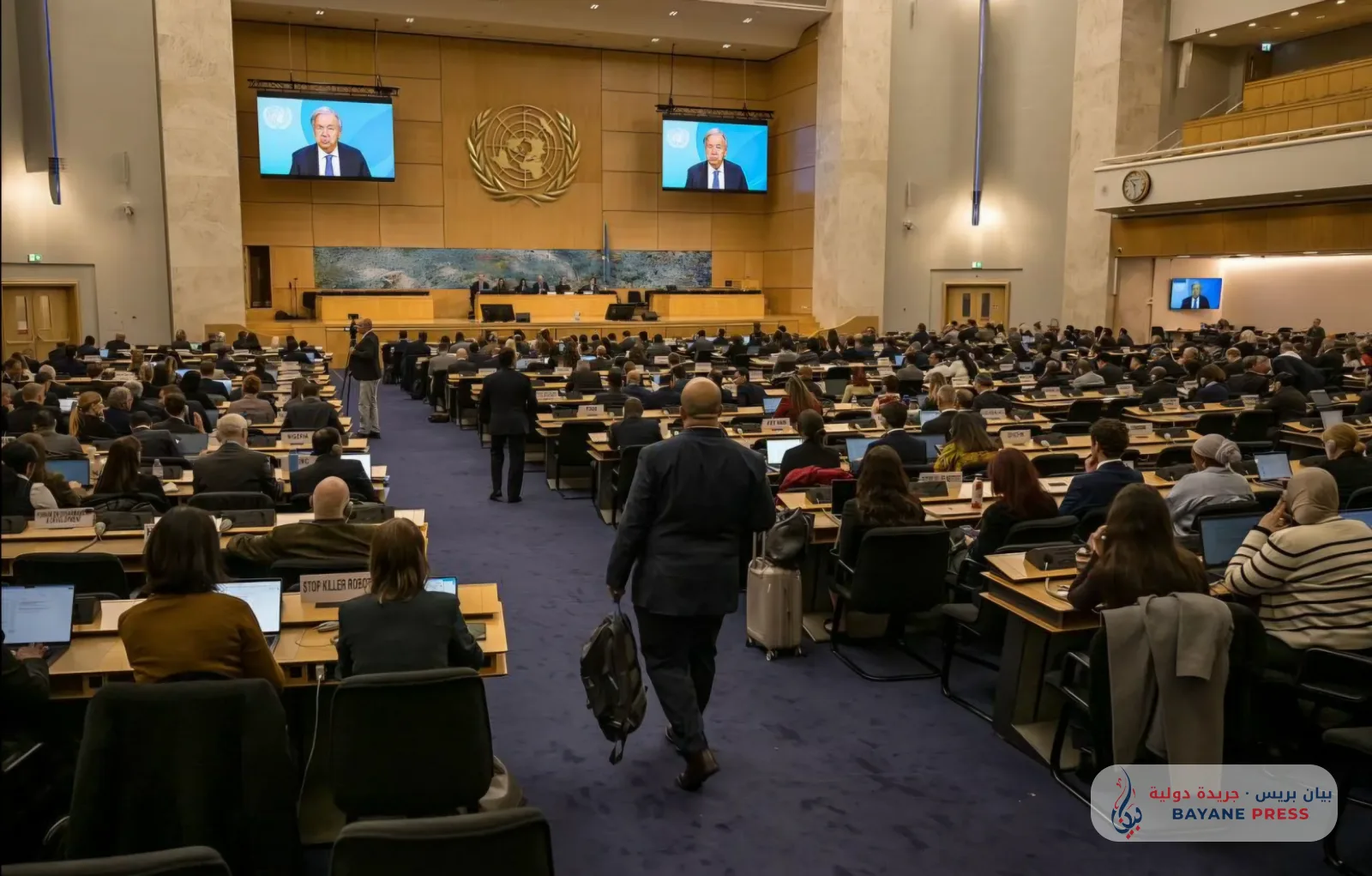
International negotiations in Geneva concluded at dawn on Saturday, November 21, 2026, regarding the regulation of AI-powered lethal weapons, with a limited agreement extending discussions for two additional years. This comes amid disagreements between major military powers and nations calling for binding legal rules to prevent machines from making killing decisions without human oversight.
The agreement followed all-night negotiations at the conclusion of the Seventh Review Conference of the UN Convention on Certain Conventional Weapons, which began last Monday with delegations from around the world.
Reuters reported that nearly one hundred countries supported establishing binding legal controls for the use of autonomous combat systems; however, opposition from the United States, Russia, and Israel prevented a clear commitment to drafting an international treaty in the near future.
These systems include weapons capable of identifying and engaging targets with varying degrees of autonomy, relying on algorithms and sensors, which raises legal and ethical questions regarding responsibility for errors that could result in civilian casualties.
The conference president, Swiss Ambassador Julien Thöni, praised the agreement as a step that allows for continued multilateral cooperation, while human rights organizations expressed disappointment over the lack of more decisive measures.
The "Stop Killer Robots" campaign warned that delaying the drafting of binding legal rules could increase the risks associated with the development of this technology and its proliferation in armed conflicts.
The issue is gaining exceptional importance with the expansion of the use of drones and AI-supported military systems in Ukraine, Sudan, and the Middle East, where technology has become an increasingly influential element in combat operations.
The stalemate in negotiations reveals a growing gap between the speed of technological development and the ability of international institutions to regulate it, especially when the demands for civilian protection conflict with the strategic interests of military powers.
While discussions will continue until 2028, the question remaining before the international community is the extent to which human decision-making can be maintained as the basis for the use of lethal force, before autonomous weapons become a reality that is difficult to subject to common international rules.


Comments (0)
No comments yet. Be the first to react!