

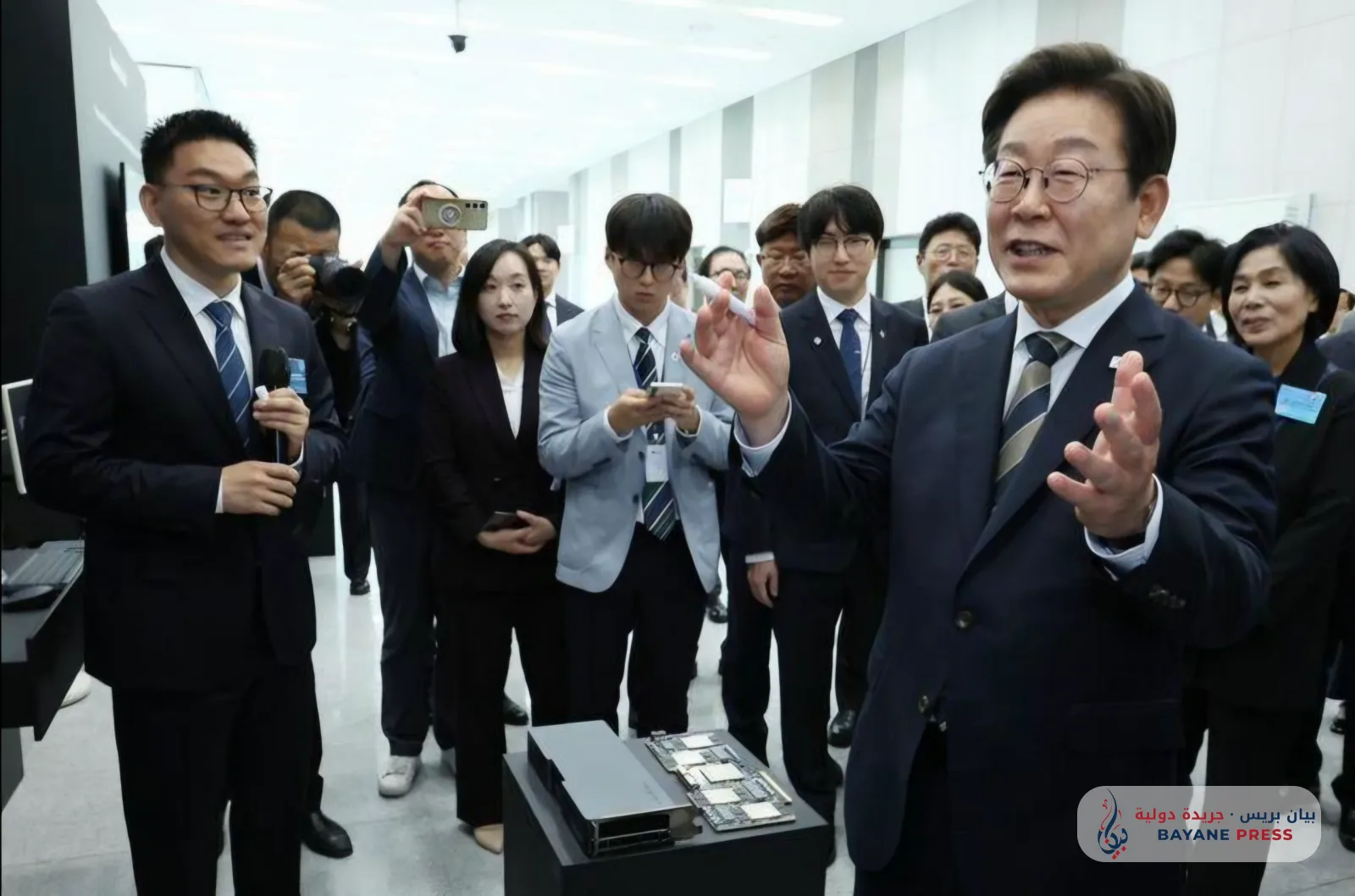
South Korean President Lee Jae-myung announced this Saturday, November 21, 2026, the necessity of accelerating investments in artificial intelligence infrastructure, emphasizing that the speed of completing technological projects has become a decisive factor in global competition, during a field visit to a massive data center under construction in the industrial city of Ulsan, in the country's southeast.
The visit came one day after the conclusion of the Korean President's foreign tour, which included the Philippines and China, at a time when Seoul is seeking to strengthen its position among the leading powers in the development of semiconductors, advanced computing, and industrial applications of artificial intelligence.
The President inspected the project site being implemented by the Korean SK Group and listened to briefings from officials regarding the progress of work and the technical equipment necessary to operate the center, which represents part of a broader strategy to develop data centers outside the capital, Seoul.
According to the Yonhap news agency, the President stressed that data centers have become one of the most important sources of global demand for electronic chips, and also constitute the basic infrastructure for the development of robots, autonomous vehicles, and smart industrial systems.
He confirmed that the success of the project could encourage international technology companies to expand their investments in South Korea, contributing to fostering innovation, stimulating the local economy, and creating specialized job opportunities.
This move comes within the framework of three major development projects aimed at transforming the Chungcheong, Honam, and Yeongnam regions into advanced industrial hubs, thereby reducing economic concentration around the capital and giving other regions a greater role in the digital economy.
The President also discussed challenges related to the shortage of specialized labor in constructing major technological facilities, emphasizing the importance of providing government support to overcome obstacles that might delay project implementation.
The Korean moves reflect an accelerating global trend toward viewing data centers and electronic chips as strategic infrastructure, no less important for the future economy than traditional energy and transport networks.
However, the race to build these facilities poses challenges related to electricity and water consumption and operating costs, as well as the need to develop human talent capable of managing advanced digital infrastructure.
With this move, Seoul confirms that international competition in artificial intelligence is no longer limited to software development, but has also become linked to the ability to provide the industrial and computing infrastructure necessary to operate new technologies on a large scale.


Comments (0)
No comments yet. Be the first to react!