

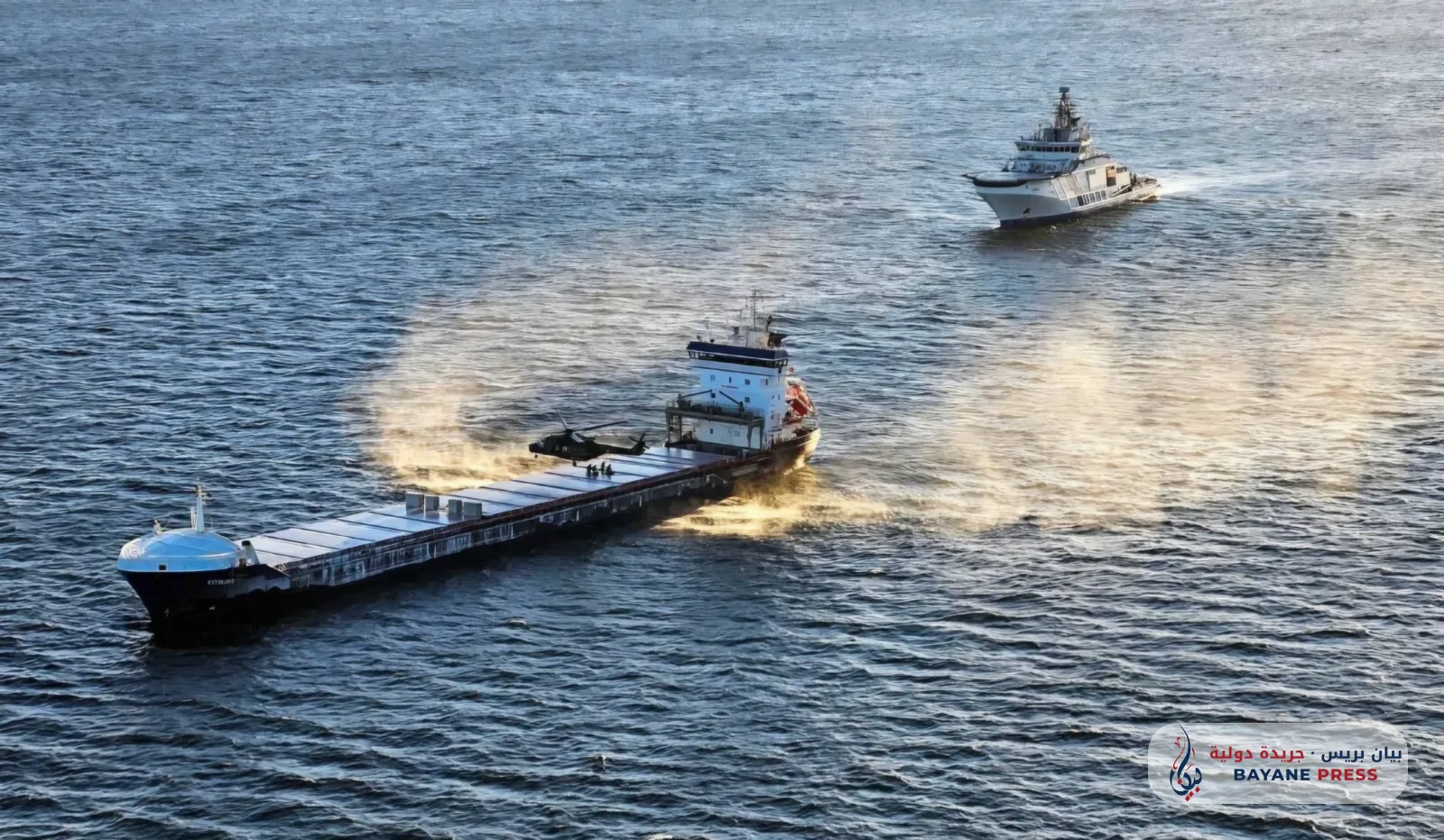
The Baltic Sea witnessed a significant security escalation on the morning of Saturday, November 21, 2026, after a Russian cargo ship was attacked by drones in the Gulf of Finland. The incident caused a fire on board and left the vessel drifting into Finnish territorial waters, raising fresh concerns about the spillover of the Russia-Ukraine war into maritime corridors adjacent to NATO member states.
The Finnish Ministry of Defense confirmed that the vessel, "Sparta II," which was en route from Saint Petersburg to the Russian exclave of Kaliningrad, was attacked in international waters west of Gogland Island. Russian authorities reported that two drones targeted the ship near its maritime borders, causing material damage and a fire that required urgent intervention.
Finnish authorities immediately dispatched border guard and maritime rescue units to the area, imposing temporary restrictions on maritime and air traffic to secure intervention operations and prevent further risks. Competent authorities confirmed that the ship had dropped anchor, while procedures to evacuate its crew were initiated, with no immediate threat reported to neighboring vessels.
A spokesperson for the Finnish Armed Forces suggested that Ukraine might be behind the attack, though there has been no independent confirmation regarding the perpetrators or the direct motives for targeting the ship.
The incident is particularly significant given the vessel's ties to the Russian company "Oboronlogistics," which provides logistical services to the Russian Ministry of Defense, as well as the fact that the ship is subject to U.S. sanctions. However, Finnish authorities have not been able to confirm the nature of its cargo at the time of the attack, amid unresolved speculation regarding the transport of military equipment.
The incident coincided with Finland's announcement of a suspected airspace violation by a Russian helicopter, an event likely linked to surveillance of the damaged ship or an attempt to provide assistance, though no official connection has been confirmed.
The attack has sparked heightened security interest among regional states, with Sweden announcing it is monitoring developments and offering assistance to Finland, while Estonia continues to observe the situation closely. The incident reflects the sensitivity of the situation in the Baltic Sea, where military movements and cross-border attacks are fueling fears of friction that could further complicate the European security landscape.


Comments (0)
No comments yet. Be the first to react!