

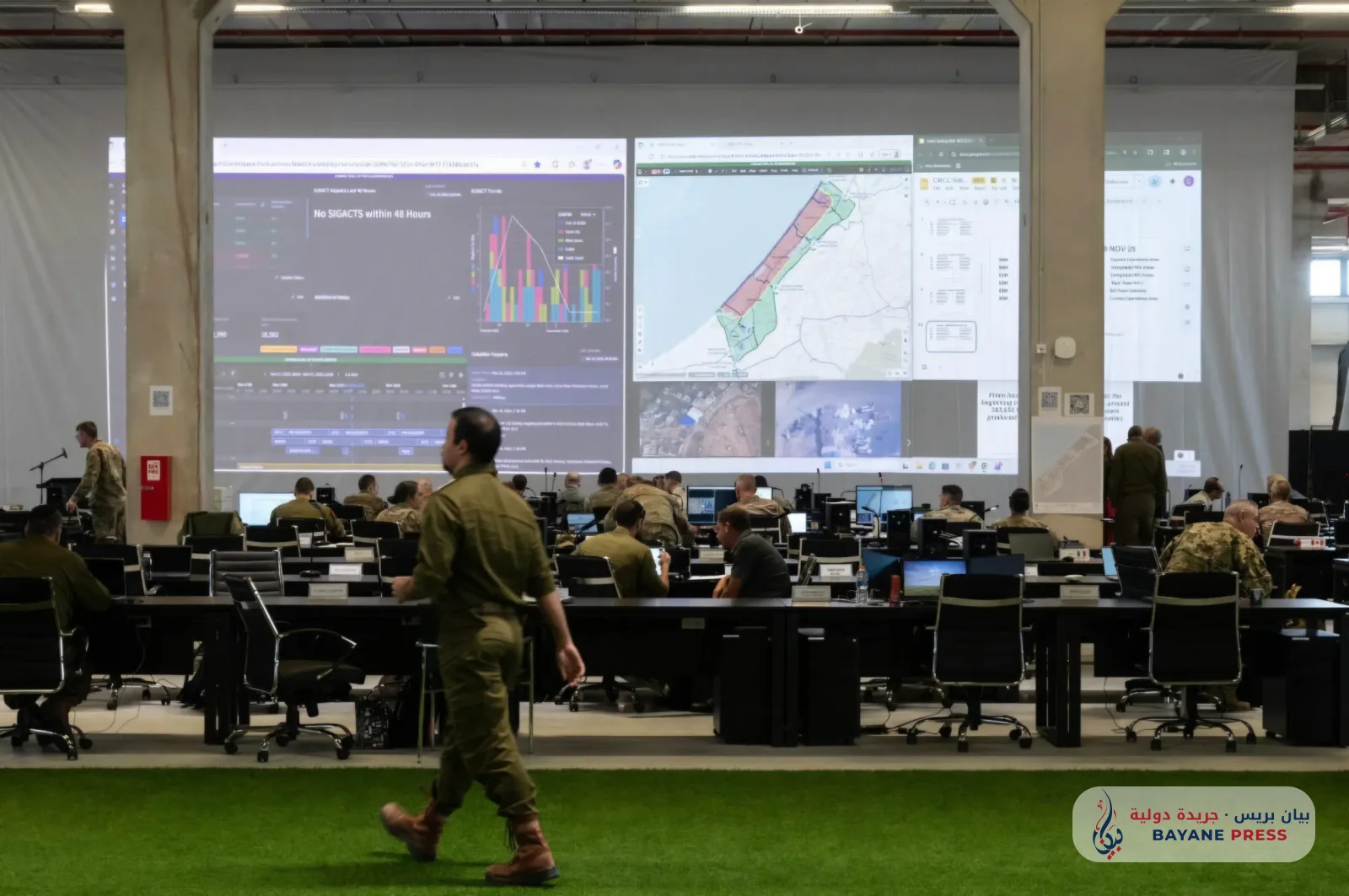
Moroccan participation in the security and humanitarian arrangements related to the future of the Gaza Strip is advancing, after the Peace Council overseeing the international stabilization plan announced, on Friday November 20, 2026, the joining of additional officers from the Royal Armed Forces to the preparatory structure of the international force tasked with contributing to the stability of the Strip.
The "Times of Israel" revealed that three Moroccan officers have arrived in Israel to participate in coordinating medical operations and logistical planning, operating from the international support center for Gaza located in Kiryat Gat, southern Israel.
This step falls within ongoing preparations to form a multinational force, with personnel participating from other countries including Albania and Kosovo, as part of international efforts aimed at securing the post-war phase and supporting stabilization efforts.
However, the newspaper clarified that the Israeli authorities have not yet granted the necessary legal authorization for the deployment of the international force's elements inside the Gaza Strip, meaning that the current participation of Moroccan officers remains limited to preparatory and coordination tasks outside the Strip.
Moroccan engagement acquires special diplomatic importance, given the relations Rabat maintains with international parties concerned with the Palestinian issue, and its ability to contribute to the humanitarian and technical aspects of stabilization efforts.
This presence also reflects a trend towards expanding Morocco's contribution to international initiatives related to regional security, while maintaining the centrality of the Palestinian cause within its foreign policy and its support for a solution based on establishing an independent Palestinian state.
Yet, the success of these arrangements remains conditioned on overcoming the political and security differences hindering the implementation of the stabilization plan, and on ensuring that the international force plays a clear role in protecting civilians and providing favorable conditions for reconstruction.
The importance of the Moroccan step lies not only in the number of participating officers, but in the nature of the role the Kingdom can play within an international framework that still faces significant challenges before transitioning from planning to field implementation.
Comments (0)
No comments yet. Be the first to react!