

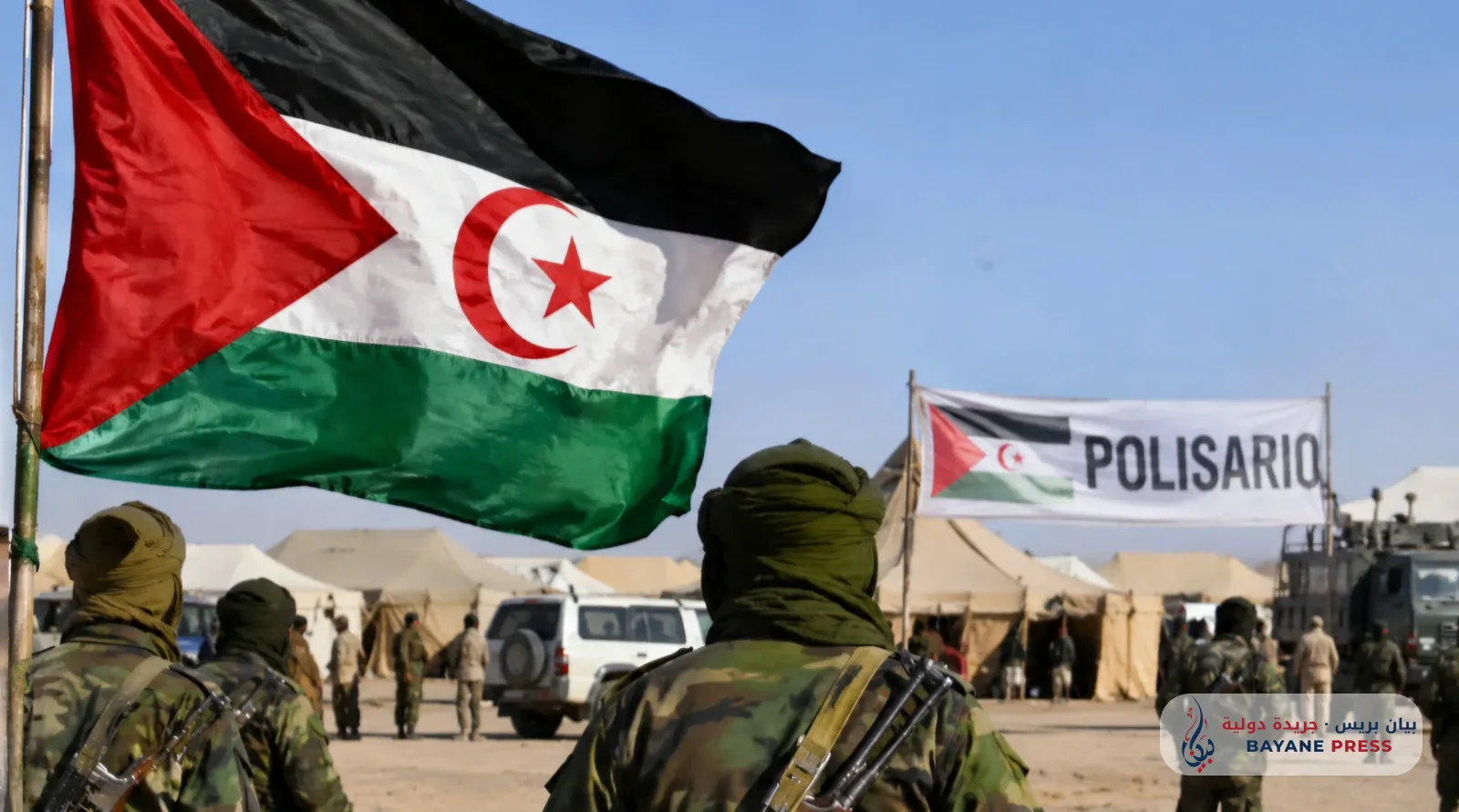
A wave of misleading posts on social media platforms has reignited controversy regarding security developments in the Moroccan Sahara, after Algerian accounts and others supporting the Polisario Front circulated images and information alleging casualties among the Royal Armed Forces, without providing credible evidence to support these claims.
Journalistic verification operations, the results of which were published on November 18, 2026, revealed that some of the images used to promote these narratives are unrelated to the events to which they were attributed. Instead, they had been previously circulated in older contexts, raising questions about the use of visual material outside its original timeframe to lend credibility to unverified military claims.
One of the most prominent cases involved the circulation of images of Moroccan soldiers' funerals, which some accounts presented as documentation of recent human losses in the Sahara region. However, verification showed that some of these images had been used in different contexts, which invalidates their use as evidence for the alleged new events.
The controversial posts were not limited to old images; they also included scenes of human gatherings attributed to Polisario supporters. Digital content analysis revealed indicators that some of these may have been altered using artificial intelligence techniques. While these indicators warrant caution, they are not sufficient on their own to identify the source of the images or to prove all the circumstances of their production.
This wave coincided with the spread of narratives regarding military movements and preparations for confrontations in the region; however, the available data did not provide sufficient independent evidence to substantiate the clashes and human losses mentioned in some posts.
This situation highlights the danger of turning the digital space into a vehicle for promoting unverified military narratives, especially when it concerns a military institution or the safety of its personnel. Reusing old images or taking them out of context can create misleading impressions regarding field developments that have not been proven to have occurred.
Media responsibility in such cases remains tied to verifying the source of images, their date of capture, and matching information with field realities, rather than resorting to exaggeration or treating posts from anonymous accounts as official statements.
In light of the ongoing political dispute over the Moroccan Sahara, these facts confirm that the intensive circulation of images does not turn claims into facts, and that news regarding military losses requires verifiable evidence, not merely narratives circulating in cyberspace.
Comments (0)
No comments yet. Be the first to react!