


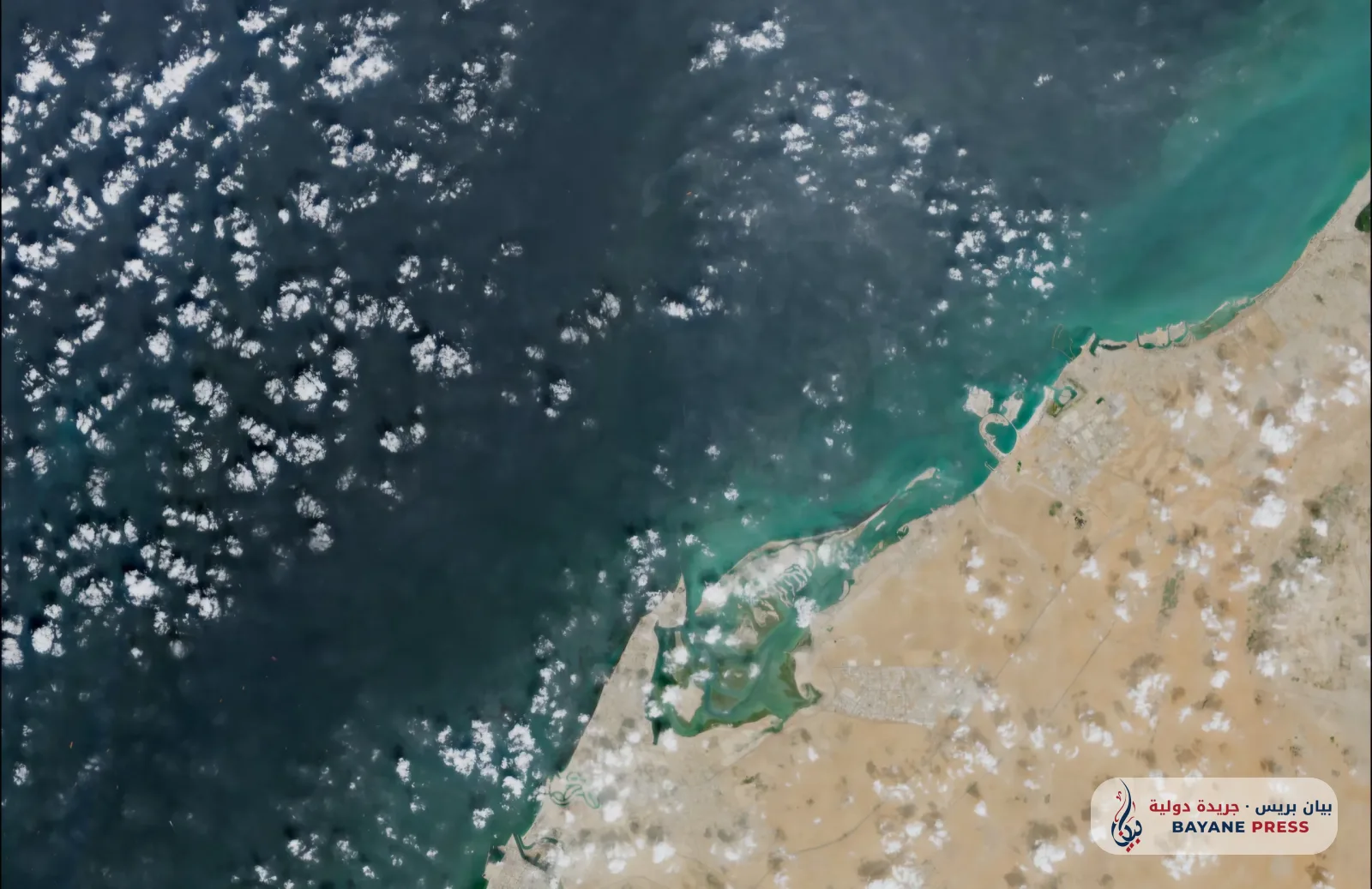
Intensive efforts are ongoing to control the fallout of the oil spill that has heavily impacted the northern coasts of the United Arab Emirates, following an incident where the Panama-flagged maritime tanker "Gem 2" was targeted by an unknown projectile on October 9. This incident generated a wide-scale pollution slick documented by satellite imagery from the European monitoring system "Copernicus" between October 19 and 24, revealing that the black patch stretched at least forty-five kilometers off the coast, posing severe challenges to the marine environment and sensitive coastal habitats.
Driven by marine currents and active wind movements, this oil mass was pushed toward the coastal strip, recording its direct approach to the beaches of the Emirate of Umm Al Quwain, and extending its impact to vital coastal areas in the Emirate of Sharjah, such as Al Hamriyah Beach, as well as the coasts of Ajman, where areas near the sea experienced light oil odors.
Faced with this emergency situation, official authorities and relevant teams from the Ministry of Climate Change and Environment, along with local authorities, swiftly implemented a series of strict precautionary measures. These included the temporary closure of affected beaches and a ban on fishing activities in areas adjacent to the pollution zone, aimed at safeguarding beachgoers and averting any potential risks to biodiversity and marine life. Meanwhile, field emergency and containment operations are moving at a rapid pace to limit further damage and accurately assess the environmental situation. Official assurances have been given that the detected odors do not pose an immediate health risk to residents, while specialized teams are racing against time to clean the territorial waters and restore ecological balance to the affected coasts.




Comments (0)
No comments yet. Be the first to react!